
 E-Paper



Canada’s Trudeau has exposed China’s attempt at hostage diplomacy
Ties between Canada and China have been strenuous since 2018 when Canada arrested Meng Wanzhou, the Chief Financial Officer of Huawei, under the US warrant. After Meng was detained, China arrested Canadian citizens Michael Kovri, a former diplomat, and Michael Spavor, a businessman, on charges of espionage.

 Prefer HTon Google


The bitter recriminations have further plunged the ongoing acrimonious relations between Canada and China to new low. Limiting ties with China, Canada suspended the extradition treaty with Hong Kong. The Canadian decision was prompted by the new security law Beijing imposed on Hong Kong in violation of its international treaty.
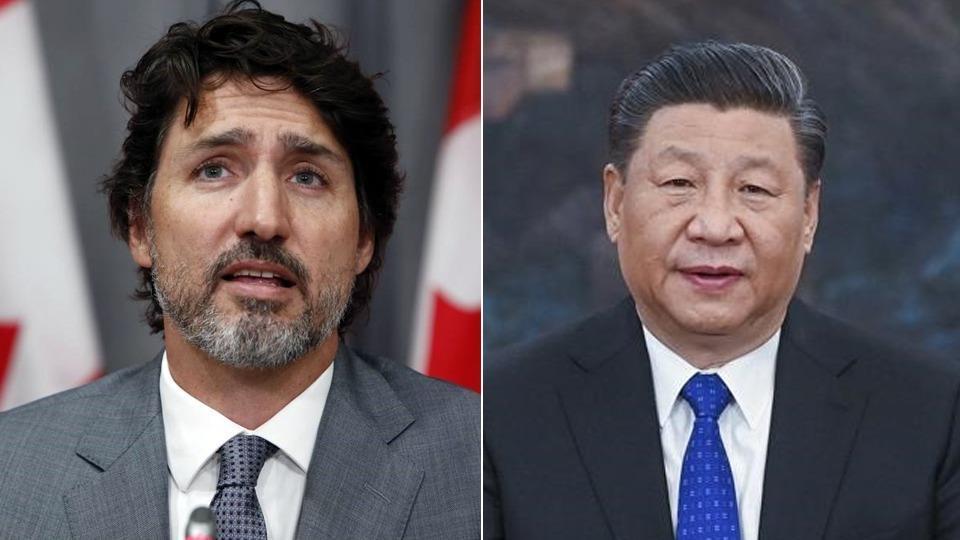
Prime Minister Justin Trudeau on Friday said “effective immediately, Canada will not permit the export of sensitive military items to Hong Kong”. Canada would also assume that all sensitive goods exported to Hong Kong are meant for mainland China, he added further. The Canadian foreign minister termed the new law “a significant step back” for liberty.
The development infuriated China that rebuked Canada for its criticism of the Hong Kong security law while Hong Kong officials expressed disappointment over Canada’s suspension of the extradition treaty.
Ties between Ottawa and Beijing have been strenuous since 2018 when Canada arrested Meng Wanzhou, the Chief Financial Officer of Huawei, under the US warrant. After Meng was detained, China arrested Canadian citizens Michael Kovri, a former diplomat, and Michael Spavor, a businessman, on charges of espionage.
It has been more than 18 months since the Chinese government arbitrarily apprehended two Canadian citizens. It hasn’t even allowed them consular access. Their arrests were widely interpreted as a retaliation for Canada detaining the top Huawei executive and the daughter of the company’s founder on an extradition request from the United States. The US wants to try Meng for fraud relating to her alleged violating sanctions imposed on Iran.
The Chinese reprisal has caused much anguish and frustration in Canada. Interestingly, the two Canadians were chosen randomly to be pawns in a wider game that China has been playing to reshape the world order to one where its desires and sensitivities determine decision-making in other countries. China wants the rest of the world to know that bad things would happen to any country that doesn’t toe its line - would invite arm-twisting in the form of arbitrarily jailing foreigners, straining of trading ties and sending fewer Chinese students. China is employing the same tactics against Australia because it had demanded an investigation of Chinese mishandling of the coronavirus outbreak.
Pressure was also brought upon the Canadian government to settle the issue with China. But Prime Minister Justin Trudeau stayed firm, rejecting suggestions that his government should arrange for the release of the Huawei executive in the hope of securing the release of two Canadians currently jailed in China.
“If the Chinese government concludes that detaining (citizens) is an effective way to gain leverage over Canadians and the Canadian government, to randomly arrest Canadians, then no Canadian will be safe,” Trudeau said. Any regime anywhere would be likely to start arresting “random Canadians” to press diplomatic goals, he said. “To demonstrate to China that they can just arrest Canadians and they can get what they want out of Canada - even for us going against the independence of our judicial system - would be absolutely unacceptable,” Trudeau added.
PM Trudeau’s forceful rejection of the prisoner swap plan exposes the Chinese Communist Party’s style of “hostage diplomacy”. For China, the Huawei executive is a highly-valued individual due to her position as a senior executive in a company with strong links to the party, securing her release is not an
aim in itself. It merely forms part of Beijing’s broader international objectives. The Trudeau government feels that submitting itself to the release of Meng would instead likely increase China’s antagonism towards Canada. It would also make Canadians in China less safe, and conditions less stable for Canadian businesses that export to China. With one norm successfully broken, Beijing would actively target Canada for the next.
Prime Minister Trudeau correctly insisted that it would not legitimise China’s hostage-taking and place more Canadians at risk. The Canadian government recognises the importance of preventing China’s belligerent behaviour from becoming normalised. By doing so, Canada has completely exposed the Chinese government’s game plan that hostage-taking is an acceptable diplomatic tool.


