
 E-Paper



Galwan Valley face-off: Indian, Chinese military officials meet to defuse tension
Indian and Chinese officials have been meeting regularly as part of a phased de-escalation strategy to ease tensions that had persisted since May 5.

 Prefer HTon Google


Indian and Chinese military officials met on Thursday morning to resolve the issues related to the violent face-off in Galwan Valley area in which 20 Indian soldiers were killed.
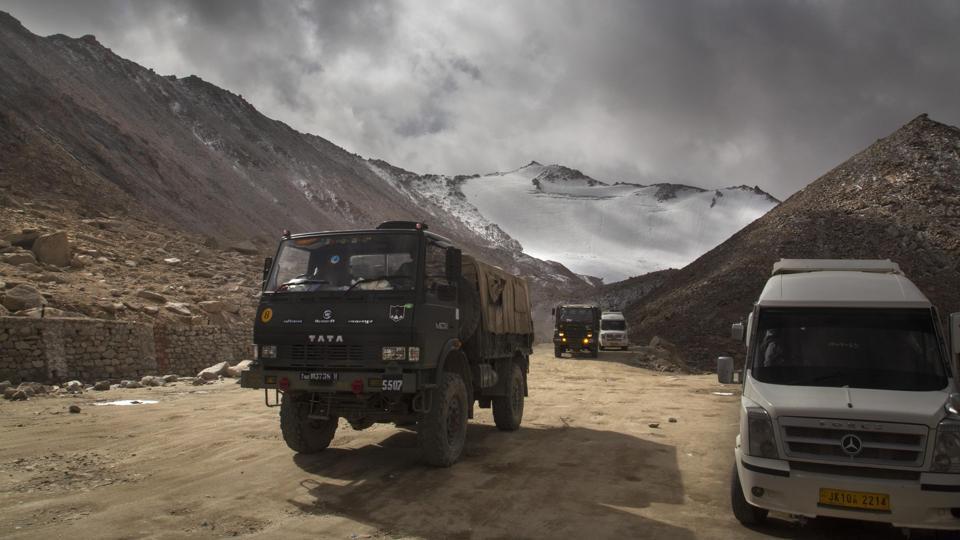
The Major General-level officers met at Patrol Point 14, which witnessed the seven-hour-long clash on Monday night. A meeting was held on Wednesday too.
This is part of the efforts by both the countries to defuse the tense situation at the border.
Thursday’s meeting is seventh one between the military officials since the stand-off at the contested Line of Actual Control (LAC) last month and second since the Galwan Valley clash.
The clash began at around 7 pm on June 15 when an Indian Army squad of about 50 soldiers, led by Colonel Santosh Babu, reached a contested site near what is known as Patrol Point 14.
The soldiers were unarmed, as part of a protocol between the two sides.
Also read | Behind Galwan’s bloody face-off, China’s plan to interdict gateway to Karakoram
The Chinese soldiers were supposed to have withdrawn from the location under a de-escalation plan discussed by senior commanders from both sides on June 6. “But the Indian squad found the Chinese troops, in violation of that understanding, did not pull back and their tents and an observation post was still around,” said a person aware of the developments.
It was when Colonel Babu and his team confronted the Chinese soldiers about their continued presence at the site that the clash broke out, this official said, adding that the situation swiftly escalated as the Chinese soldiers refused to vacate their positions and the Indian soldiers removed the tents and the observation post that were on the Indian side of the LAC.
In a matter of minutes, the soldiers were locked in hand-to-hand fighting that triggered a seven-hour violent face-off involving reinforcements from both sides. The clashes spread out from the Patrol point 14 area to a nearby narrow ridge overlooking the river. It was here that both sides suffered casualties, second of the three officials Hindustan Times spoke to, said.
Indian and Chinese officials have been meeting regularly as part of a phased de-escalation strategy to ease tensions that have persisted since May 5. The plan was discussed between Lieutenant General Harinder Singh, commander of Leh-based 14 Corps, and Major General Liu Lin, commander of the People’s Liberation Army (PLA) in the South Xinjiang region in a meeting on June 6.


