
 E-Paper



PM Modi’s Srinagar rally signals change in the Valley
Prime Minister Modi's Thursday rally in Srinagar drew unprecedented crowds, signalling a shift towards peace post-Article 370 abrogation.


The unprecedented crowds at Prime Minister Narendra Modi’s rally at Bakshi stadium at Srinagar on Thursday will not only give sleepless nights to Rawalpindi GHQ but are also indicative of the peace dividend in the Valley after the abrogation of Article 370 five years ago.
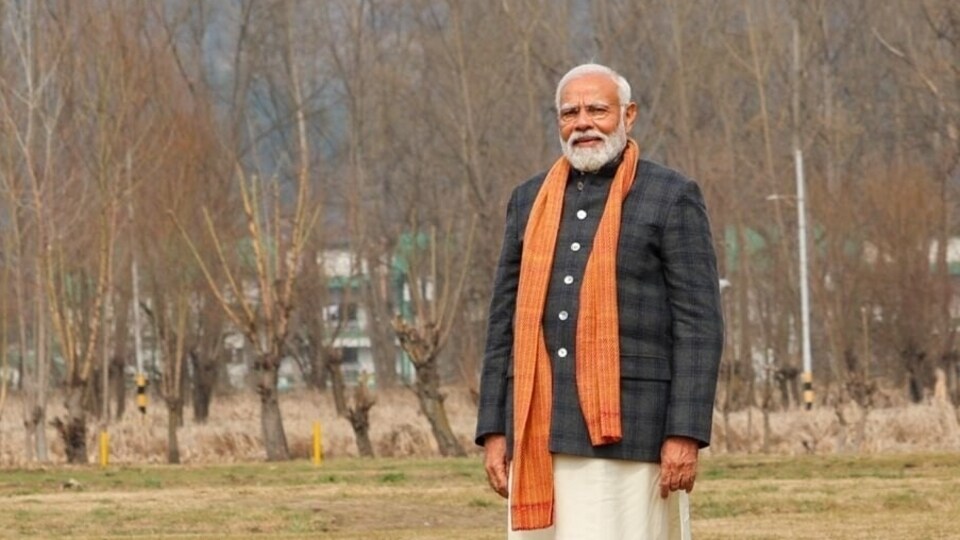
Credible reports reaching Delhi indicate that there were no less than 30,000 people at the stadium venue, another 10,000 at the Sher-e-Kashmir Convention Centre, and some 30,000 at the district headquarters of the UT, who saw PM Modi through video conferencing. For the first time in the past decades, there was no internet shut down, no hartal call, no stone pelting and no Pakistan-sponsored terrorist attack to greet the PM while on the way to Srinagar. This is not to say that the large number of attendees were government employees, but for the first time in decades, people were seen wearing saffron turbans and waving saffron flags in Srinagar.
Also Read: PM Modi in Srinagar: 'Congress was misguiding Jammu and Kashmir on Article 370’
According to authoritative Kashmir observers, the crowd was largely there to listen to PM Modi, who they think implements everything that he promises without any conditionalities. “The public feels that abrogation of Article 370 has brought them more benefits from the government and the realization that the temporary article only got them terror attacks and violence. Even though the Pakistan-sponsored terrorists may retaliate in the near future, the message from the public was clear. There was no strike with educational institutions functioning normally in the state,’ said a Kashmir watcher.
Fact is that if the Indian Army and the BSF are able to prevent infiltration from across the LoC, particularly in the Rajouri-Poonch sector and consequently prevent terrorist attacks, the Valley has decided to move towards peace and believes in PM Modi.
While there was a public expectation that Modi would make Kashmir-centric announcements and subsidy schemes, the PM also surprised them by not mentioning the word Pakistan in his public speech. Prime Minister Atal Bihari Vajpayee offered Pakistan a hand of friendship after the ‘Operation Parakram’ armed mobilization on April 18, 2003. Prime Minister Manmohan Singh launched the Srinagar-Muzaffarabad bus service at a public rally on April 7, 2005, after Pak-sponsored terrorists set fire to the iconic Tourist Reception Centre and created mayhem in Srinagar.
| Prime Ministers | Venue | Date |
| Atal Bihari Vajpayee | Sher-e-Kashmir Stadium | 18-04-2003 |
| Manmohan Singh | Sher-e-Kashmir Stadium | 7-04-2005 |
| Narendra Modi | Sher-e-Kashmir Stadium | 7-12-2014 |
| Narendra Modi | Sher-e-Kashmir Stadium | 7-11-2015 |
| Narendra Modi | Bakshi Stadium | 7-03-2024 |
It has been five years since Article 370 was abrogated by the Modi government and already the Valley is looking forward to a peaceful growth and future. The erstwhile powerful political dynasties of Kashmir have been side-lined and Pakistan is in dire straits with political instability, Islamic radicalization and economic crisis. The large crowds at PM Modi’s rally indicate that change has finally come to Kashmir.
