
 E-Paper



Best telescopes for viewing planets and galaxies: Find the perfect pick for you with our detailed buying guide
Are you gravitating towards telescopes and want to buy one? Then read on to get detailed insight on the best telescopes for viewing planets and galaxies.

 Prefer HTon Google


Our Picks
Our Picks
| Product | Rating | Price |
|---|---|---|
Celestron - 70mm Travel Scope DX - Portable Refractor Telescope - Fully-Coated Glass Optics - Ideal Telescope for Beginners - Bonus Astronomy Software Package - Digiscoping Smartphone AdapterView Details  | ₹13,980 | |
 | ||
telescope SSEA TELESCOPE Multiple magnification optionsView Details | ||
| ||
telescope Celestron 21061 AstroMaster 70AZ Refractor TelescopeView Details | ||
| ||
Celestron 21044 PowerSeeker 76 Reflector TelescopeView Details | ₹11,990 | |
| ||
telescope Pullox 175X 262X 350X Malty Power Reflector AstronomicalView Details | ||
| ||

Research-Backed Choices
Every product we recommend is chosen through a combination of Primary Research and Secondary Research.
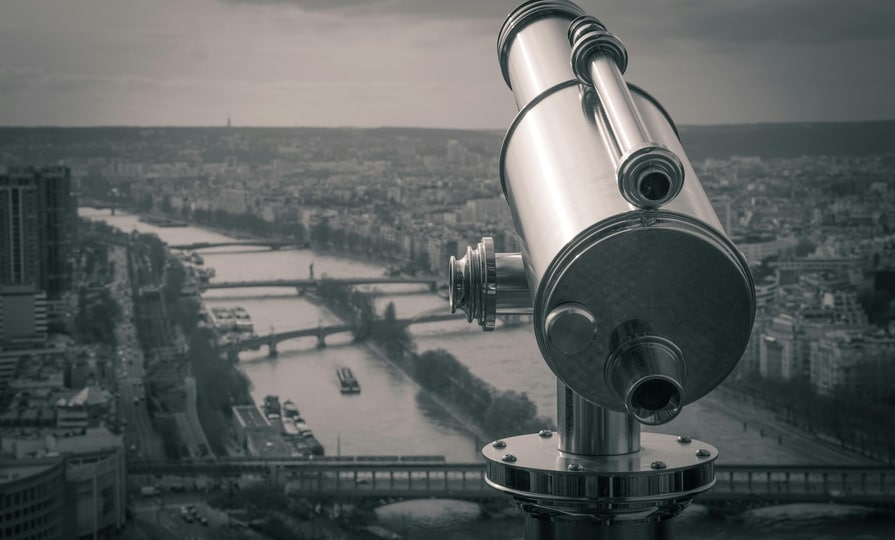

The night sky can be mesmerising if viewed properly, and we all, at some point, have wondered what the universe holds apart from us. This fascination can be quenched if you own a telescope and have the liberty to view the night sky and its secrets from the comfort of your home.
When choosing a telescope for viewing planets and galaxies, consider several key factors to ensure a rewarding experience. The best options combine high-quality optics with user-friendly features. For beginners, there are affordable and easy-to-set-up options that provide good performance without breaking the bank.
Ultimately, the best telescope will depend on your specific needs, whether you're interested in detailed views of planetary surfaces or the expansive beauty of distant galaxies.
We will cover all the details you need to know before you choose the right telescope for viewing planets and galaxies for yourself. Let’s dive into it:
What is a telescope?
A telescope is an optical instrument designed to observe distant objects by collecting and magnifying light. It uses lenses, mirrors, or a combination of both to provide a clearer, enlarged view of celestial bodies like stars, planets, and galaxies, enhancing our ability to explore the universe.
What do telescopes do?
Telescopes help us see things in space that are too far away or too faint for our eyes alone. They make planets, stars, galaxies, and nebulae look bigger and clearer, helping scientists study them and letting people explore the wonders of space.
What are the different types of telescopes available?
Refractor Telescopes:
These use lenses to gather and focus light, producing sharp, high-contrast images. They are especially effective for observing planets, the moon, and binary stars. Known for their durability and low maintenance, refractors are typically more expensive per inch of aperture compared to other types.
Features/Specifications of Refractor Telescopes:
Objective lens diameter: Typically 60mm to 150mm
Long focal lengths: 700mm to 1200mm
Low maintenance and durable
Sealed tube to prevent dust and moisture
Pros and cons of Refractor Telescopes:
| Pros | Cons |
| Sharp, high-contrast images | Higher cost per inch of aperture |
| Durable and low-maintenance | Heavier and longer, less portable |
| Sealed tube prevents dust and moisture | Limited aperture size compared to others |
Top picks of refractor telescopes:
Also read: Kickstart your passion for photography with the best camera for beginners, top 7 affordable picks
Reflector Telescopes:
These use mirrors to collect light, making them ideal for viewing faint, deep-sky objects like galaxies and nebulae. Reflectors can have larger apertures at a lower cost than refractors, but they require regular alignment (collimation) and have an open tube design that needs more maintenance.
Features/Specifications of Reflector Telescopes:
Primary mirror diameter: Typically 100mm to 400mm
Shorter focal lengths: 500mm to 1200mm
Open tube design, requiring regular alignment (collimation)
Generally more affordable per inch of aperture compared to refractors
Pros and cons of Reflector Telescopes:
| Pros | Cons |
| Larger apertures for lower cost | Requires regular alignment (collimation) |
| Excellent for deep-sky observation | Open tube design susceptible to dust |
| Generally lighter and more portable | May need more frequent maintenance |
Top picks for Reflector telescopes:
Also read: Best small cameras: Top 5 picks for on-the-go memory capture for avid travellers everywhere
What are the different parts of a telescope?
A telescope consists of several key parts that work together to gather and focus light for observation:
Objective Lens or Primary Mirror: The main optical element that gathers light. In refractor telescopes, it's a lens at the front of the tube. In reflector telescopes, it's a mirror at the bottom of the tube.
Eyepiece: The lens or set of lenses you look through to view the magnified image formed by the objective lens or mirror.
Tube: The cylindrical structure that houses the optical components and protects them from external elements.
Focuser: The mechanism that allows you to adjust the position of the eyepiece to achieve sharp focus.
Mount: The support structure that holds the telescope and allows it to be pointed at different objects in the sky. It can be manual (requiring adjustment by hand) or motorised (computerised for automated tracking).
Finder Scope: A smaller, secondary telescope mounted on top of the main telescope used to locate and centre objects before viewing through the main eyepiece.
Diagonal (optional): In refractor telescopes, a mirror or prism is placed at a 45-degree angle to redirect the light path for more comfortable viewing.
These components vary in design and complexity depending on the type and purpose of the telescope.
Who can use a telescope?
Telescopes are suitable for beginners of all ages who have an interest in exploring the night sky. Whether you're a child fascinated by stars or an adult starting a new hobby, telescopes can provide an accessible and enriching experience. A basic understanding of how to set up and use a telescope, along with the patience to learn about the sky, is all you need to get started.
Why does using a telescope help?
Using a telescope helps because it enhances our ability to observe and understand the universe in several ways:
Magnification: Telescopes magnify distant objects, making them appear closer and larger, allowing us to see details that are impossible to observe with the naked eye.
Light Gathering: Telescopes collect more light than our eyes, enabling us to see fainter objects and details that would otherwise be invisible.
Resolution: By focusing light through precise optics, telescopes provide sharper and clearer images, revealing fine details on planets, stars, and galaxies.
Exploration: Telescopes enable us to explore celestial objects beyond Earth, from observing planets in our solar system to distant galaxies millions of light-years away.
Education and Inspiration: Using a telescope fosters curiosity and a deeper understanding of astronomy, encouraging learning about the cosmos and our place within it.
Overall, telescopes expand our vision beyond what's visible to the unaided eye, opening up a world of discovery and wonder in the night sky.
What can you explore using a basic beginner's telescope?
Moon: Observe lunar craters, mountains, and plains in detail.
Planets: See the cloud bands of Jupiter, its moons, Saturn's rings, the phases of Venus, and the reddish surface features of Mars.
Star Clusters: View clusters like the Pleiades (Seven Sisters) or the Beehive Cluster (M44) as collections of stars.
Nebulae: Detect glowing clouds of gas and dust, such as the Orion Nebula (M42), where stars are born.
Galaxies: Catch glimpses of nearby galaxies like the Andromeda Galaxy (M31), appearing as faint, fuzzy patches of light.
Double Stars: Observe pairs of stars that orbit each other closely.
Comets and Asteroids: Track the movements of these transient objects as they pass through the solar system.
Premium telescopes for viewing planets and galaxies:
There are a few high-end telescopes which are a little high on the price bracket but the perfect telescopes for viewing planets and galaxies if you want to pursue this as a serious hobby and are not worried about the budget. While a serious stargazing enthusiast might have a list of even higher-priced and better-constructed scopes for you to explore, these are also worth checking out:
Top picks for Premium Telescopes
Some frequently asked questions about the best telescopes for viewing planets and galaxies:
Which telescope can see Jupiter?
Most telescopes, even small beginner telescopes, can see Jupiter and its major features. Jupiter is bright and large enough in the night sky that it's visible through a wide range of telescopes. For optimal viewing, telescopes with at least a 70mm aperture can show Jupiter's cloud bands and its four largest moons, known as the Galilean moons.
Can telescopes see planets?
Yes, telescopes are designed to see planets in our solar system. Depending on the size and quality of the telescope, you can observe planets like Jupiter, Saturn, Mars, Venus, and others. Telescopes reveal details such as surface features on Mars, the rings of Saturn, cloud bands on Jupiter, and phases of Venus, enhancing our understanding and appreciation of these celestial bodies.
What is a Barlow lens?
A Barlow lens is an accessory used in telescopes to increase the magnification of eyepieces. It's placed between the telescope's focuser and the eyepiece. Barlow lenses typically come in 2x or 3x magnification factors, effectively doubling or tripling the telescope's magnification without changing the eyepiece. This helps in observing objects in greater detail.
Top picks for Barlow lens:
Similar articles for you:
Best DSLR for professional photography: Top 8 picks with high-end camera
Best cameras for photography: Capture the best moments with our top 6 picks
Best laptops under ₹50000: Top 8 choices for enhanced productivity
Milton water cooler: Your 6 best travel-friendly companions
Best backpack for men: Explore the top 8 spacious and durable options perfect for travel and work
At Hindustan Times, we help you stay up-to-date with the latest trends and products. Hindustan Times has an affiliate partnership, so we may get a part of the revenue when you make a purchase. We shall not be liable for any claim under applicable laws, including but not limited to the Consumer Protection Act, 2019, with respect to the products. The products listed in this article are in no particular order of priority.


