
 E-Paper



Photos: Gotham City’s changing landscape in cinema over the decades
Gotham City, home to Batman, in its cinematic depiction through the decades, has been inspired by the cities of New York and Chicago. Locations used as inspiration or filming locations for Gotham City in the live-action Batman films and television series have included New York, New Jersey, Chicago, Vancouver, Detroit, Pittsburgh, Los Angeles, Glasgow, London, Toronto, Liverpool, and Hong Kong. A look at how the city's landscape has featured in the film franchise over the decades.
Updated on: Dec 13, 2020 11:37 AM IST


Share via


Copy link

1/11
 View Photos in a new improved layout
Updated on Dec 13, 2020 11:37 AM
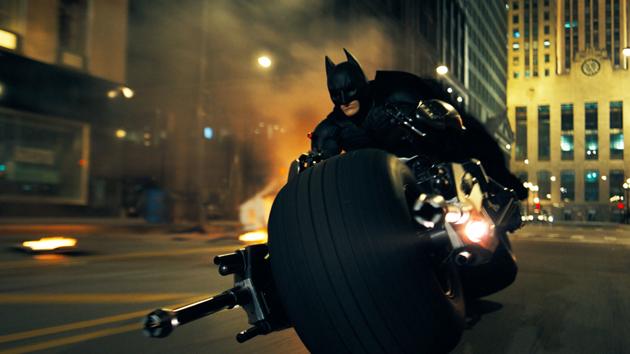
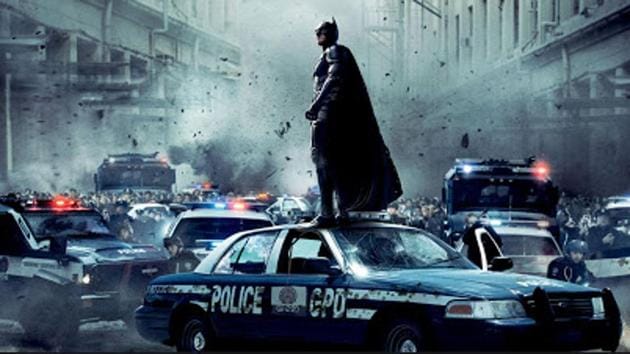
A still from “The Dark Knight Rises,” 2012. Directed by Christopher Nolan, the filming took place in locations including Jodhpur, London, Nottingham, Glasgow, Los Angeles, New York City, Newark, and Pittsburgh. Nolan’s Gotham City depiction was a departure from Tim Burton’s films in the Batman franchise -- giving it the look of a darker metropolis with its winding, lonely alleys. (Courtesy Warner Bros. Pictures)
2/11
 View Photos in a new improved layout
Updated on Dec 13, 2020 11:37 AM
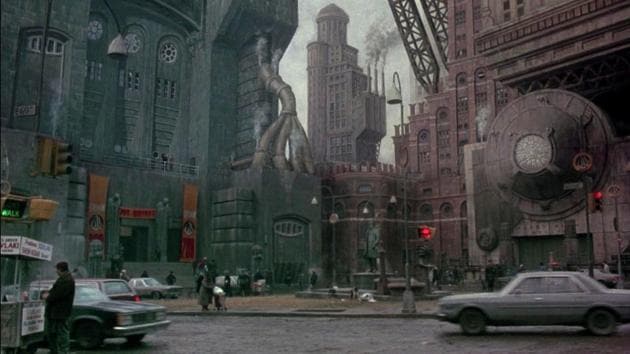
A still from “Batman,” (1989). Director Tim Burton visualized Gotham City like a giant metropolis full of art deco buildings with obvious dirt and decay, and a mix of several architectural styles, where buildings almost looked down upon its residents. (Courtesy Warner Bros. Pictures)
3/11
 View Photos in a new improved layout
Updated on Dec 13, 2020 11:37 AM
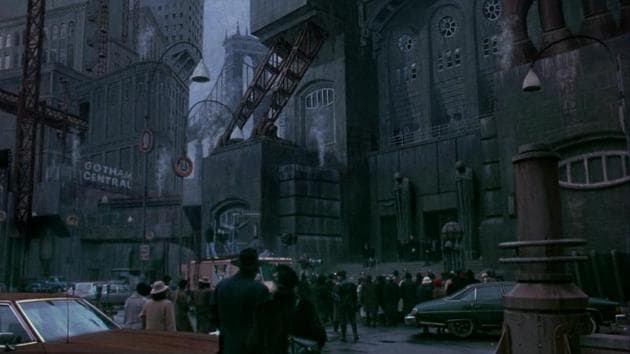
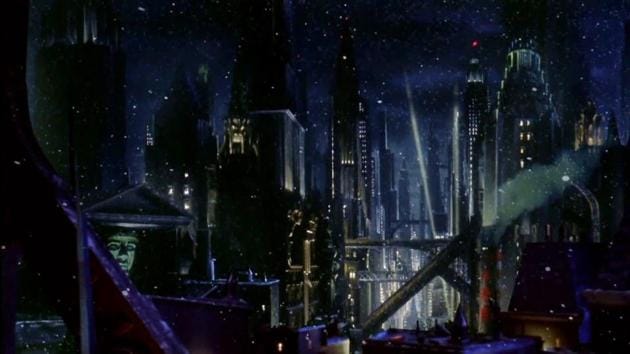
A still from “Batman,” (1989). Fritz Lang’s 1927 film “Metropolis” was thought of as an obvious reference for Burton’s Gotham City. Production designer Anton Furst famously described the desire to “make Gotham City the ugliest and bleakest metropolis imaginable. An essay in ugliness. As if hell erupted through the pavement and kept on going.” (Courtesy Warner Bros. Pictures)
4/11
 View Photos in a new improved layout
Updated on Dec 13, 2020 11:37 AM
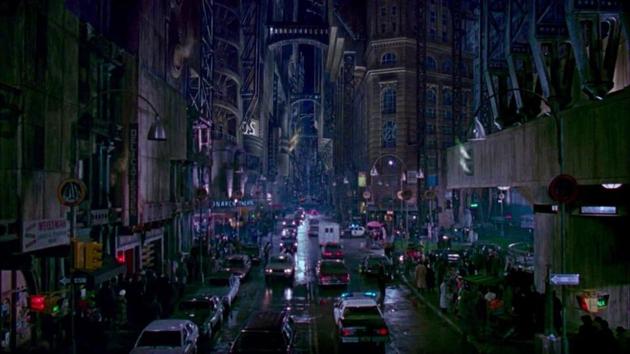
Gotham City in “Batman Returns,” (1992). Bo Welch who collaborated with Tim Burton on set design for the film described “fascist architecture” and the “World’s Fair” as two main influences on his design for the city, resulting in much more theatrical sets and the appearance of large statues throughout Gotham. (Courtesy Warner Bros. Pictures)
5/11
 View Photos in a new improved layout
Updated on Dec 13, 2020 11:37 AM
A still from “Batman Returns,” (1992). Bo Welch’s Gotham, save for a few blocks of city landscape built for the Batmobile to zip around, was largely created indoors. According to Welch, Gotham Plaza, was conceptualized as a ”demented caricature” of New York’s Rockefeller Center. (Courtesy Warner Bros. Pictures)
6/11
 View Photos in a new improved layout
Updated on Dec 13, 2020 11:37 AM
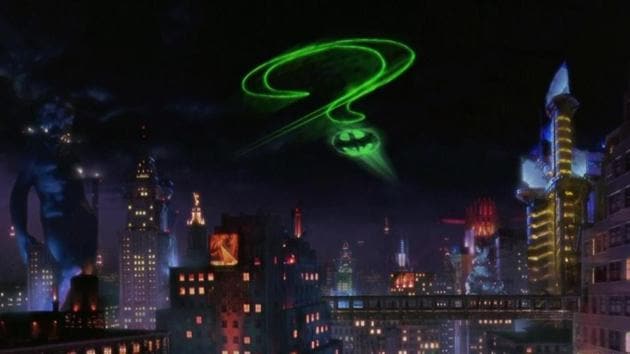
A still from “Batman Forever,” (1997). Director Joel Schumacher and production designer Barbara Ling’s vision for Gotham City was to move it as far away from the aesthetics of the previous films. The new Gotham City needed lots of personality and Ling’s design was a mix of Golden Age comics, 1930s New York architecture and modern-day Tokyo-- with a lot of neon. (Courtesy Warner Bros. Pictures)
7/11
 View Photos in a new improved layout
Updated on Dec 13, 2020 11:37 AM
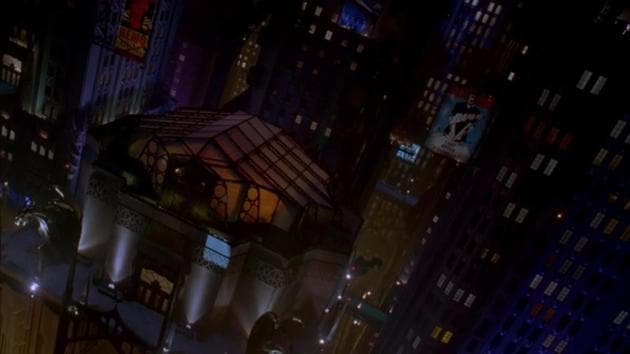
A still from “Batman & Robin,” (1997). Barbara Ling, working on her second Batman movie as production designer, said, “I wanted to add even more architectural extremes than we did for Batman Forever. It’s still holding true to the spirit of Russian constructivists, but we wanted to weave in more of an art nouveau feeling.” (Courtesy Warner Bros. Pictures)
8/11
 View Photos in a new improved layout
Updated on Dec 13, 2020 11:37 AM
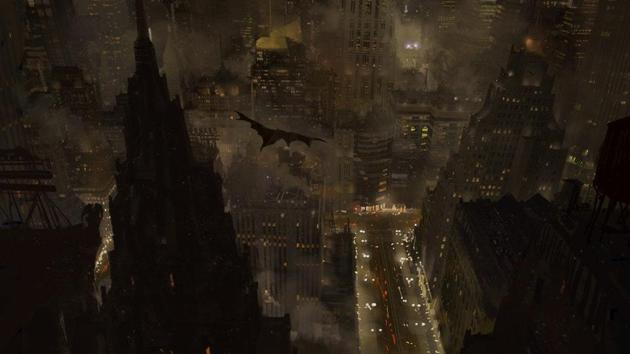
A still from “Batman Begins,” (2005), the first of Christopher Nolan’s trilogy. Nathan Crowley, production designer for the trilogy, not only redesigned the Batmobile, but also gave Gotham City a very modernist stroke of landscape. (Courtesy Warner Bros. Pictures / DC Comics)
9/11
 View Photos in a new improved layout
Updated on Dec 13, 2020 11:37 AM
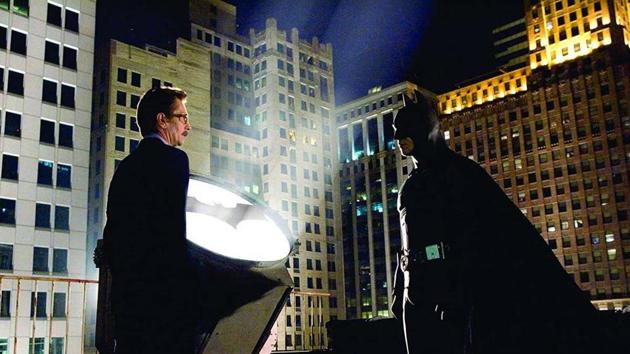
From “Batman Begins,” (2005). Production designer Nathan Crowley said they had an unusually long time to design Batman Begins – three months – compared to the rest of the films. “On Batman Begins, I struggled with trying to make sure we didn’t destroy the comic book-ness of what Batman was,” he said of the process. (Courtesy Warner Bros. Pictures / DC Comics)
10/11
 View Photos in a new improved layout
Updated on Dec 13, 2020 11:37 AM
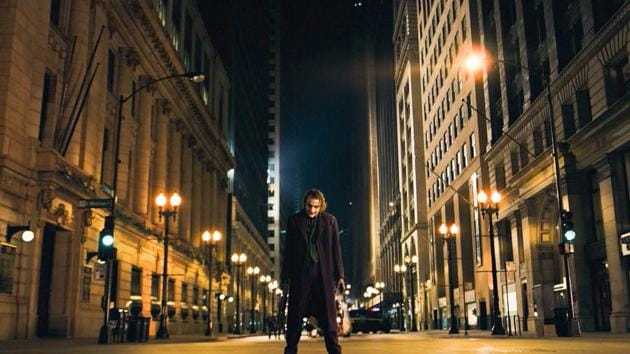
From “The Dark Knight,” (2008). Production designer Nathan Crowley told The Collider in an interview that in comparison to Batman Begins, there was a much larger scope for The Dark Knight because the sequel’s story involved Harvey Dent and politics and government, they got to use a lot of federal buildings and 1960s architecture. (Photo by Stephen Vaughan / DC Comics)
11/11
 View Photos in a new improved layout
Updated on Dec 13, 2020 11:37 AM


