
 E-Paper



‘Mission Rhumi 2024’: India to launch 1st reusable hybrid rocket on August 24
The rocket will be launched from Chennai using a mobile launcher and will carry “3 Cube Satellites and 50 PICO Satellites to a suborbital trajectory.”

 Prefer HTon Google


India is set to launch its first reusable hybrid rocket – RHUMI 1 – on August 24, developed by the Tamil Nadu-based start-up Space Zone India. The rocket will be launched from Thiruvidandhai in Chennai using a mobile launcher and will carry “3 Cube Satellites and 50 PICO Satellites to a suborbital trajectory.” This launch, scheduled for 7 am on Saturday, is a collaboration between Space Zone India and the Martin Group and is designed to focus on flexibility and reusability.
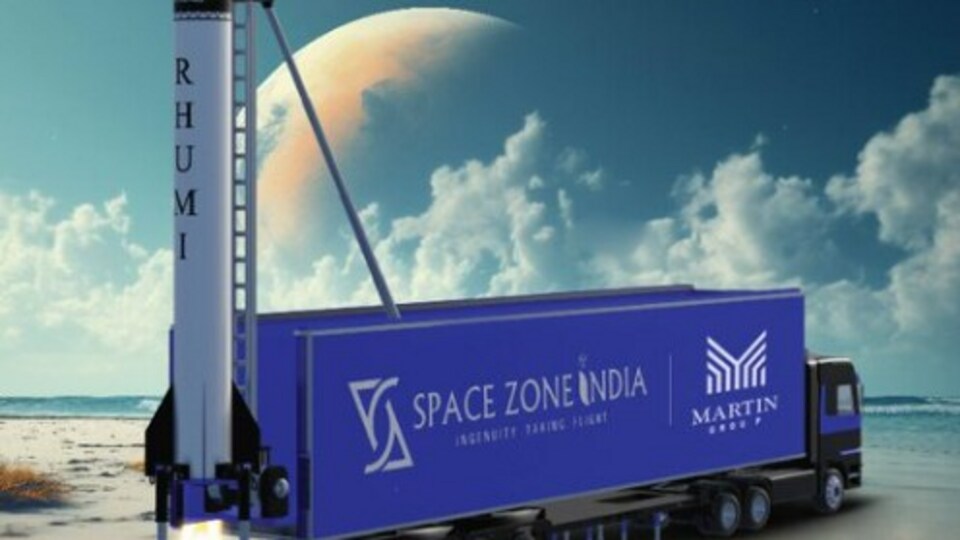
According to a report by Money Control, the RHUMI series of rockets, which includes RHUMI-1, RHUMI-2, and RHUMI-3, is engineered to reach altitudes ranging from 1 km to 500 km.
This event marks the third collaboration between the Martin Group and Space Zone India. In 2023, as part of the ‘Dr. APJ Abdul Kalam Students Satellite Launch - 2023’ mission, over 2,500 students from government, tribal, and public schools across the country collaborated to design and build a student satellite launch vehicle. This mission included a payload of 150 Pico satellite research experiment cubes. In 2021, during the ‘Dr. APJ Abdul Kalam Space Research Payload Cubes Challenge 2021,’ 100 FEMTO satellites developed by 1,200 students were successfully launched.
Key features of RHUMI-1
- The rocket’s launch angle can be precisely adjusted between 0 to 120 degrees, allowing accurate trajectory control.
- A cost-effective, innovative, and eco-friendly descent mechanism uses CO2 to ensure the safe recovery of rocket components.
- The rocket’s applications extend beyond space exploration, impacting fields such as agriculture, environmental monitoring, and disaster management.
- The three cube satellites being sent will monitor atmospheric conditions, including cosmic radiation, UV radiation, and air quality, according to the Money Control report.
- Pico satellites will analyse environmental factors like vibration, accelerometer data, altitude, ozone levels, toxic content, and molecular bonding, contributing to a deeper understanding of atmospheric dynamics.
- The rocket utilises a hybrid propulsion system that combines solid fuel with liquid oxidizer technologies to ensure environmental safety.
- Space Zone India Founder and CEO Anand Megalingam highlighted that this system is reusable, offering a more sustainable and cost-effective approach to satellite launches.


