E-Paper



Madrid travelogue: How to roam the Spanish capital, where to visit and what to eat


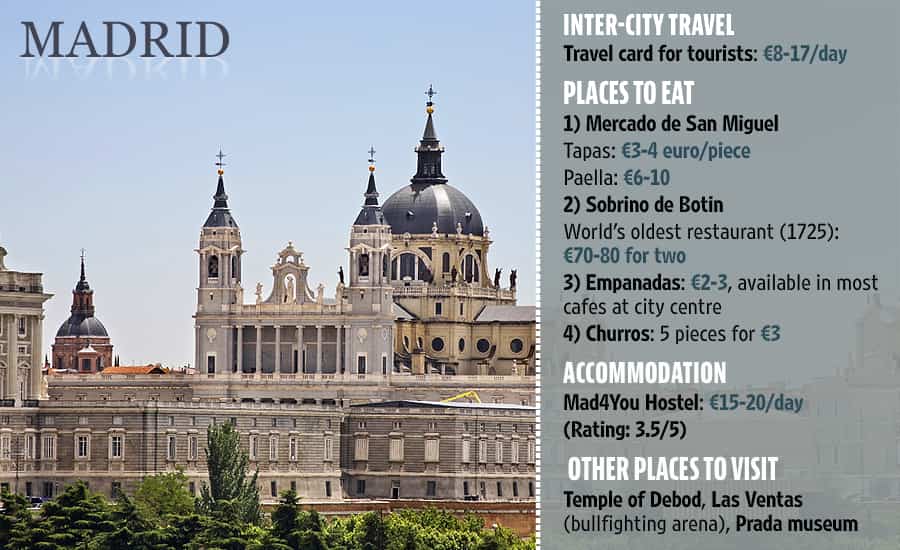
Madrid is for those who love big cities, prefer every meal with a sangria and love lazing around in cafes under a winter sun.
Three degrees and biting winter winds were not the ideal time to travel in. But there I was after half-a-decade of obsessing over all things Spanish -- including the tongue-twister language -- finally in Madrid. Exhaling wisps of air with every breath and tightening a fat muffler around my neck, I repressed the giddy need to say ‘Hala Madrid’ and walked out of the airport.
It took just half-an-hour to recognise Spain wasn’t for the planners or for those who mapped out exhaustive itineraries. Nobody seemed to scuttle around with a schedule, and not many were in a hurry to get somewhere, anywhere. This Mediterranean brew was meant to be experienced with a lazy strut and viva la vida attitude.
Visiting Portugal? Here’s your guide to Porto and Lisbon
Mornings were languorous, as if all of Madrid’s inhabitants were itching for night to return. But it only took warmth of the overhead sun to get the city out of its concrete cocoons, lit up in yellows and reds. Boulevards – airy and dotted with orange trees that served no utility – were flooded with people handsomely crunching on 3-for-1-euro churros and talking in expressive pitches; as if no job and no duty in the world were big enough to worry over. Even pet dogs seemed to have embraced the aura because regardless of their size they trotted mushily towards every friendly passerby.
Like Geoffrey Chaucer’s pilgrims, my first steps took me to the imperial might of Madrid: Palacio Real, from where I (wrongly) imagined the Spanish monarch trying to stamp Catalonia’s calls for independence. The palace, free for public viewing for two hours on weekdays and chargeable at other times, was more suited for European high tastes of Vienna than Spanish joviality. Its majestic white façade opened to a large courtyard where visitors, bundled up in coats and boots, lounged about on benches as a golden carousel fluttered its hypnotic lullaby to children’s delight. The fantasy I’d crafted of Spain was weaving into reality, and it had been just half a day.
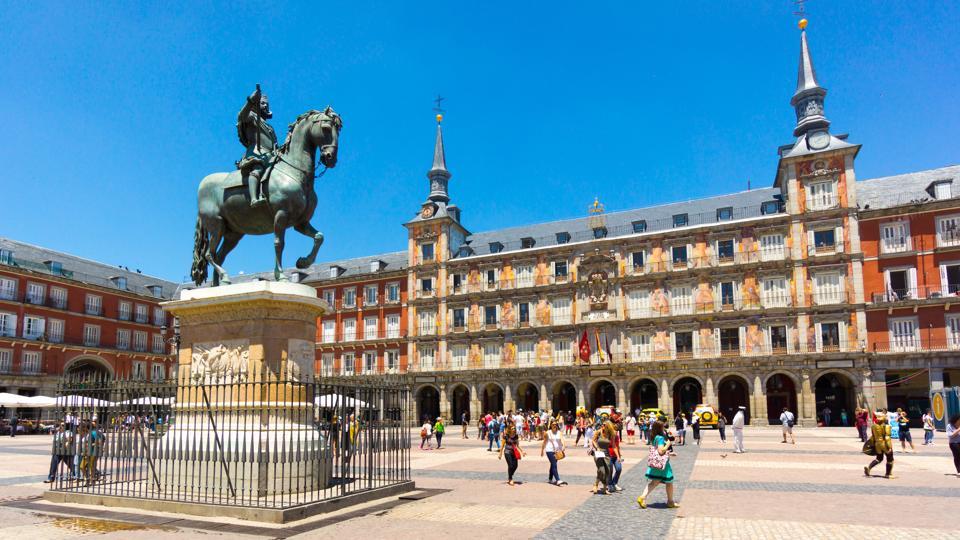
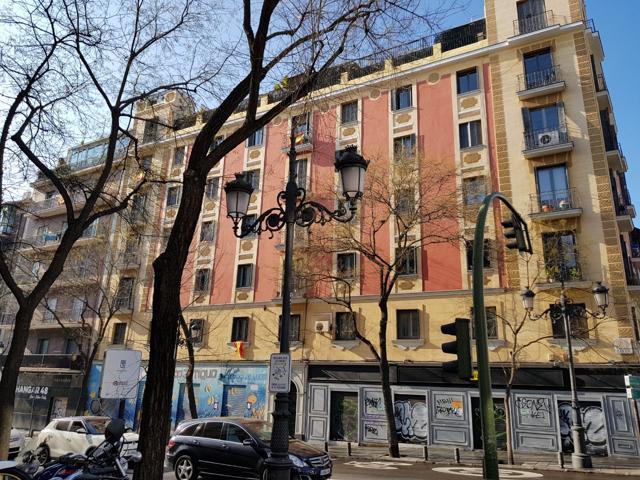
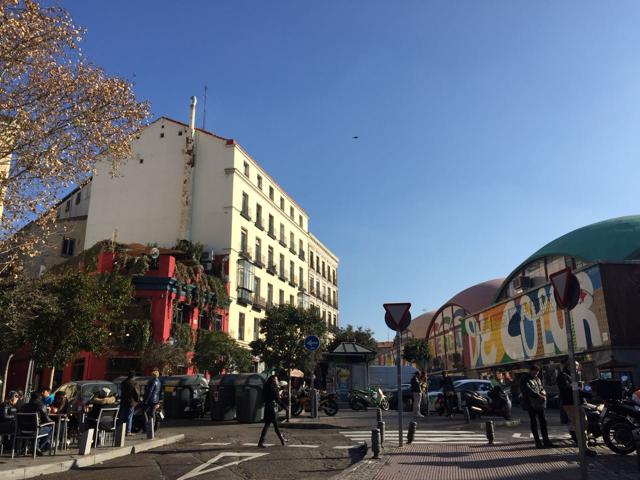
Deeper into the heart of Madrid, I couldn’t stop gaping at stray pieces of tiled mosaics and urban graffiti that thrived on outer walls of restaurants and pink market complexes. I stepped into Plaza Mayor, a 16th century square flanked by shops and cafes under its porticos, and an explosion of colours blew up in my sight. Children squealed with laughter as life-sized pandas and polar bears danced. On another side, clowns blew bubbles into the air as parents scurried around and tourists tried to capture most of this madhouse with selfie sticks. Back at the city centre, Puerta de Sol – the other famous public square -- was only a shade as lively as Plaza Mayor although it was the inception point for most free walking tours.
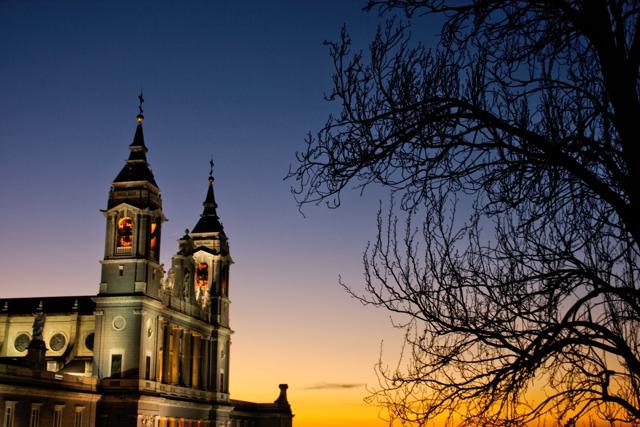
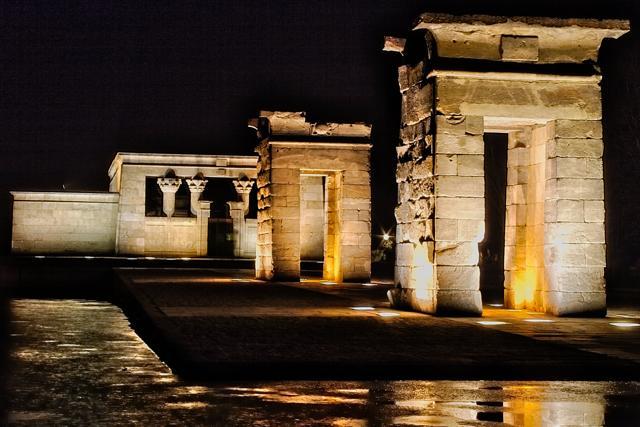
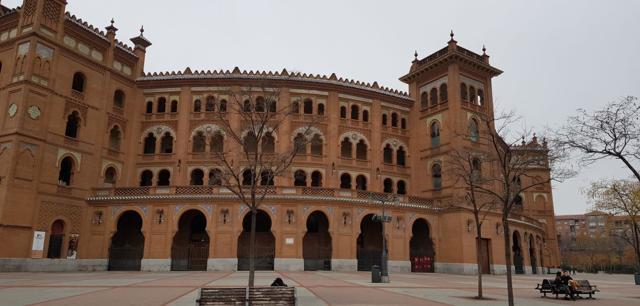
Evening beckoned and Madrid altered its spirit and reflection, like a chameleon at play. As is with the charade of New York, triangular buildings and the few skyscrapers lit up the empty sky with neon ads, luring their earthly customers. At the upscale Mercado de San Miguel, an abode for the rich near Plaza Mayor, people tucked into plates of delectable tapas and sipped sangrias like it was routine for a Monday night.
A bus to Plaza de la Independencia brought me to Puerta de Alcala, the triumphal arch where a former Spanish prime minister was assassinated. On this day, the gateway was propped in front of a road decorated with lights for Christmas; their bluish glow illuminating the Roman structure as cars rushed by nonchalantly.
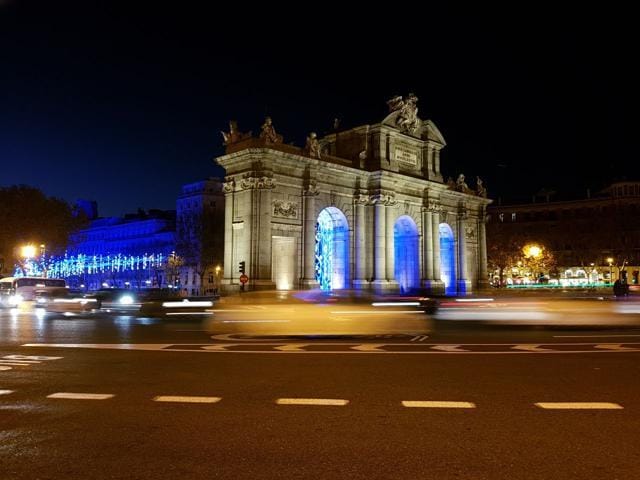
Just opposite to the arch and away from the clamour of the city, I entered Parque del Buen Retiro. Once a park for royals, it was opened to commoners in the 19th century. Its passages were surrounded by trees and shaded with wrought-iron lamps that stood guard next to calm waters of a lake. In the middle, a semicircle colonnade dedicated a statue to King Alfonso XII, whose expression was frozen in time to honour the monarch’s might.
Night descended on Madrid just as shoals of silvery fishes and flocks of ducks waddled into their corners.