E-Paper



Porto travelogue: Where to visit, where to stay, things to do under a budget in Portugal


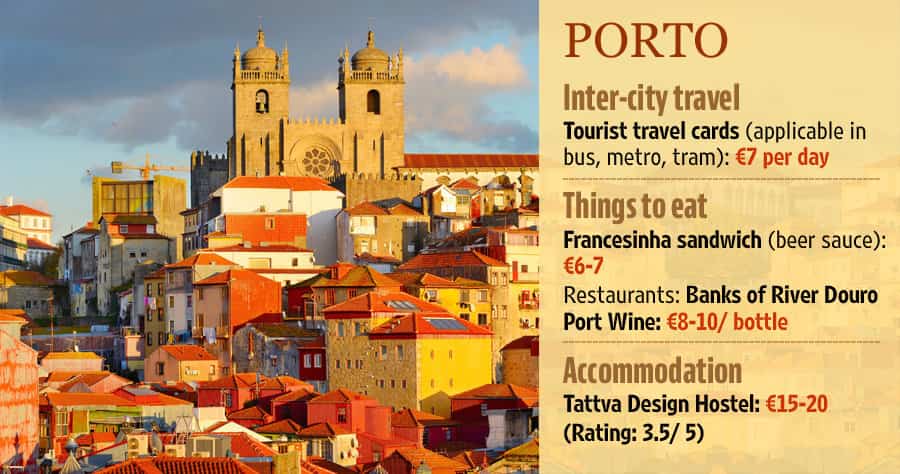
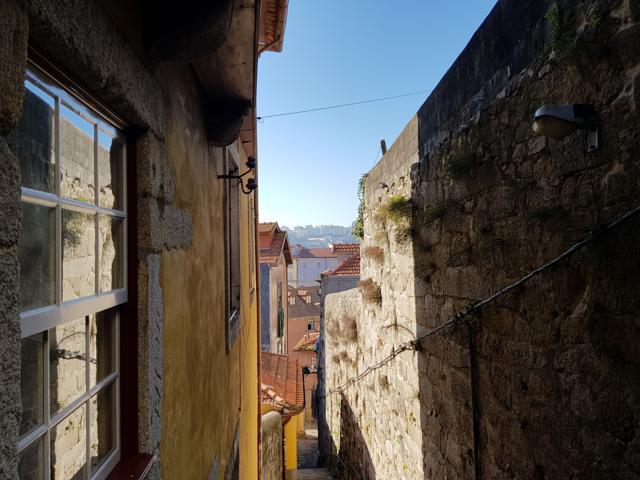
Porto is the European gem you haven’t yet discovered. Its cobblestone alleys, abundant sunshine, terracotta roof cottages and stunning hilltop view deserve to been seen in person.
From the metallic confines of a spotless plane, Porto appeared to be a city living in the past. One of the largest cities of Portugal -- a country that has colonised faraway lands and was ruled by a dictator until 1968 -- was like starring in a vintage film; illuminated with abundance of sunlight in mornings and tinted with sepia at night.
From the airport, I reached the Sao Bento station nearly an hour later in a metro train that can easily be confused for a modern tram. In utter defiance of the night’s silence, I pulled my blue strolley bag noisily on the tiled pavement and walked into Tattva Design Hostel, located 5 minutes from the station. There, I would crash on a squishy bunk bed and live with four strangers for the next three days. It was only the beginning.
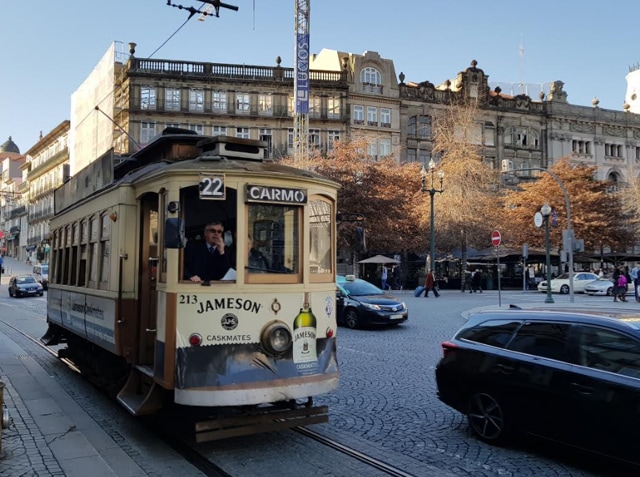
December wind and a gleaming sun coupled together as I ventured out of the hostel to the sloped cobblestoned streets in the heart of the city next day. After a walk fuelled by a hearty breakfast spread from the hostel, I stopped after just half-a-kilometre to marvel at a baroque structure decorated with high arched windows and mounted with a clock. My curiosity kindled as hoards of people rushed inside determinedly, so I followed… only to stop in my tracks. It was the Sao Bento railway station, standing tall in the heart of Porto without boastful recognition. Wall-sized paintings of indigo tiles painted with scenes of war and marriage procession opened into a magnificent shed where trains heaved and rested. I eventually learned that geometric patterns of ‘azulejo’ tiles are a Portuguese eccentricity, which is traceable even in parts of Goa.
Read |Backpacking in Italy? When in Rome, don’t do as the Romans do
Another five-minute trot from the railway station and a short climb stopped at Se Catedral, a brown stone church surrounded by grass that couldn’t have been a brighter shade of green. Inside the cathedral, golden markings shimmered on the nave and lent it the sanctity common to places of worship. Like brothers in arms, the ornate Episcopal Palace, home of the bishop, stood beside the church in silent reverie. But alas! It was the view from the hill that stole the final glance. Lopsided red tiled-roofs shone till the horizon as seagulls, unafraid of human presence, accompanied me in my awe of Porto’s skyline.
By noon, I took the bold step of joining a free walking tour that congregated next to a fountain at the Liberdade Square -- located near prominent avenues of lower Porto, and home to luxury hotels and McDonald’s. A theatre actor named ‘Mafalda’ led our group of 15 through Old Town and towards the riverside. I’d like to think, perks of spending €10-15 on the tour made me a smart tourist. Apart from learning about Portugal’s promiscuous kings and life under Salazar (dictator), I knew by the end of three hours not to thank the Portuguese with ‘Gracias’. (It’s ‘Obrigado/a’ by the way).
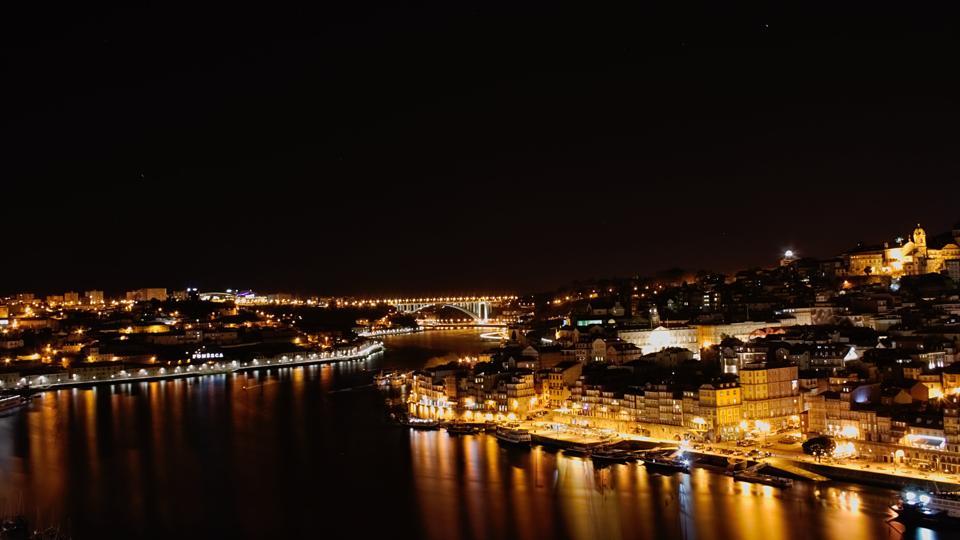
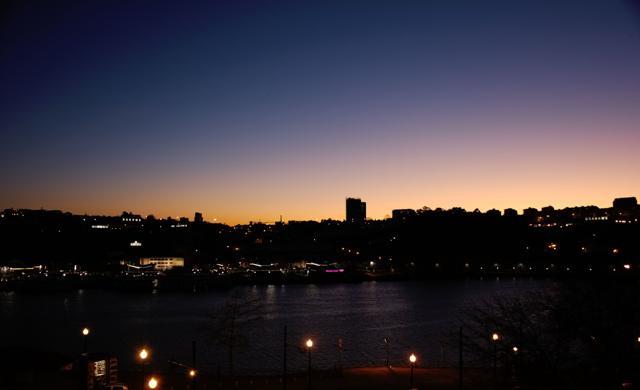
The marvel still wasn’t over. A stroll downwards was easier on the heels and took me to the pier for a stunning sight of Dom Luis 1 bridge. The double-deck steel bridge, which was unsurprisingly designed by a disciple of Gustave Eiffel, arched proudly above river Douro and left me spellbound. Sandwiched between the banks, it connected Porto’s binary identities – the 21st century city that remains witness to Portugal’s tumultuous history. I opted for stairs to shorten the climb up to the bridge just in time for a spectacular sunset. Winds became a notch stronger and Porto faded into orange as blurry street lamps outlined Douro’s mesmerising swirls. Revellers thronged glass restaurants lined up along the river and sipped the city’s patented Port Wine. Others absentmindedly followed water’s trail like love-struck versions of explorer Vasco Da Gama. Somewhere in the distance, a stray musician sounded his guitar’s bugle as reflections shimmered on Douro’s darkening face.
Hours in Guimaraes
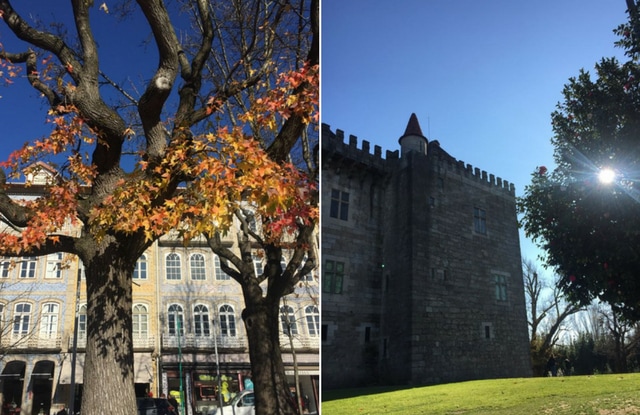
Travelling in Portugal’s trains is journey extraordinario. On my last day in Porto, I caught a €3 urban train from Sao Bento railway station to the historical town of Guimaraes, 55 km from the city. Cottages with terracotta roofs, verdant trees basking in winter sunshine and ivy’s protective twirls on abandoned buildings roused my senses as the train throttled towards Guimaraes.
I walked through the idyllic town, famous for its heritage square, as scores of tourists occupied tiny cafes and souvenir shops. Meanwhile, a cavalcade of clowns, Winnie the Pooh, and Santa and his elves spread the Christmas cheer as I walked into alleys that led up to the medieval Castelo de Guimaraes (entry ticket to castle and exhibitions ranged from €3-8). But Rua de Santa Maria -- a cobblestone street with colourful doors to houses and rounded passageways adorned with flowers -- was the most charming of them all.
Back in Porto at Igreja de Sao Francisco, a gothic church overlooking the river, it dawned on me that Porto, with its twinkling lights and gurgling water, would have been the perfect muse for Van Gogh.