E-Paper



Uttarakhand government suspends Char Dham yatra after HC order
The revised SOP was issued after the government said the yatra would be allowed in two phases from July 1 and July 11. The pilgrimage was first to begin for the residents of three districts, where these shrines are located

 Prefer HTon Google


The Uttarakhand government on Tuesday suspended the Char Dham Yatra by issuing a revised standard operating procedure (SOP) a day after the high court stayed a Cabinet decision allowing the pilgrimage to four revered Hindu temples in the state from July 1.
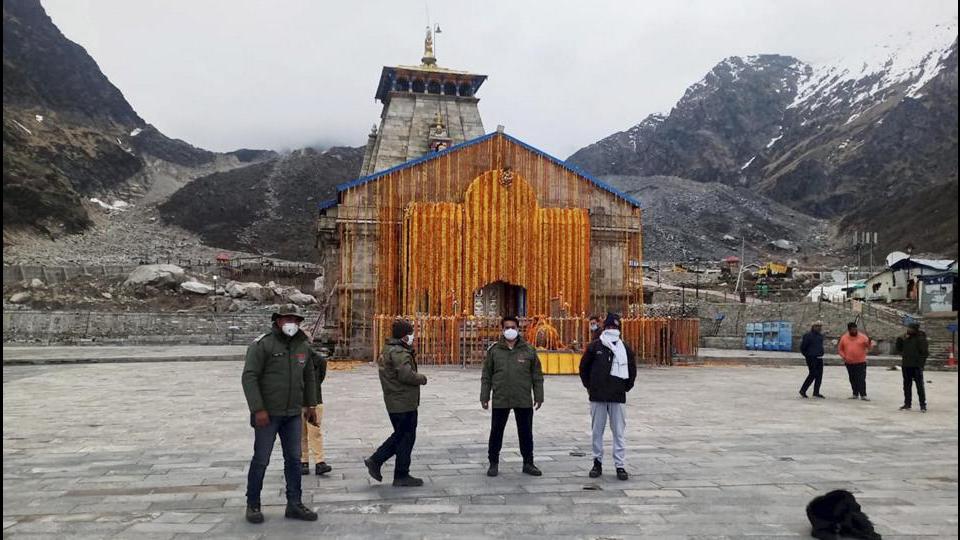
The revised SOP was issued after the government said the yatra would be allowed in two phases from July 1 and July 11. The pilgrimage was first to begin for the residents of three districts, where these shrines are located. It was to be later opened for residents of the rest of the state’s 10 districts. But on Tuesday, the government issued the revised SOP announcing the suspension of the pilgrimage until further orders in light of the court order.
The court on Monday stayed the Cabinet’s decision permitting the yatra with a limited number of pilgrims from July 1 and ordered live streaming of rituals at Char Dham shrines instead. A division bench of chief justice RS Chauhan and justice Alok Verma said the yatra should not be allowed amid fears of a third wave and the spread of the Delta variant of the virus.
Also Read | Rajnath Singh inaugurates 3 bridges near Indo-China border in Uttarakhand
The bench said it was not satisfied with the preparedness of the government, especially regarding the healthcare facilities and status of Covid-19 inoculation in the three districts.
The state Cabinet allowed the Char Dham yatra on Friday. On June 23, the high court pulled up the government for announcing the yatra from July 1 and directed it to review its decision.
The high court in its June 23 order remarked that large gathering invariably leads to a spike in the Covid-19 pandemic. “Already holding of Kumbh Mela and permitting a large congregation of lakhs of people on Ganga Dussehra at Har-ki-Pauri at Haridwar, are clear cut proof of the failure of the civil administration, to administer the precautionary SOPs.”
Mahakumbh in April coincided with the worst surge in Covid-19 cases that overwhelmed hospitals and triggered a shortage of medical oxygen, medicines, and beds.
Uttarakhand has separately also extended the Covid-19 curfew till July 6. The curfew was imposed amid a rise in the Covid-19 cases last month. It has been extended on a weekly basis since. The district magistrates have been given powers to decide whether they want to provide some more relaxation in rural areas. The state’s protected areas, tiger reserves, and zoos will remain open for tourists. The forest department will come up with a separate SOP for the same.
Markets will remain open from 8 am to 7 pm. All the gyms will be allowed to function with 50% occupancy. All vegetable vendors, dairy, sweets, and flower shops will remain open from 8 am to 7 pm. Hotels and resorts will function with 50% capacity. RT-PCR tests will remain mandatory for wedding attendees, whose number has been increased to 50. The number of people attending funerals will not be more than 50.
Uttarakhand has so far reported over 33,90,00 Covid-19 cases and 7,090 deaths. On Sunday, the state reported 120 fresh cases and three deaths. The positivity rate in the state has come down to 6.2% while the recovery rate stands at 95.52 %. There are 2,294 active cases and the fatality rate is 2.09%.