
 E-Paper



Assembly Elections Results 2018: Breaking down the big verdict
What is the reason behind Congress’ turnaround in three key Hindi heartland states of Rajasthan, Madhya Pradesh and Chhattisgarh? HT analyses the assembly elections results in these states which were declared on December 11.

 Prefer HTon Google


Behind the Congress’ remarkable turnaround in three key Hindi heartland states -- Rajasthan, Madhya Pradesh and Chhattisgarh - is a determined voter outreach effort juxtaposed against the BJP consistently ceding ground when faced with the twin crises of agrarian distress and joblessness in areas where key constituents of the population are rural and young.
An analyses of the election results:
BJP’s seat share drops drastically: The Congress’ ascent has come at a huge cost to the BJP. Its seat share has come down significantly in the three Hindi belt states. In Rajasthan and Madhya Pradesh, its median victory margins have gone down significantly compared to 2013. This means that even in seats which the BJP won, its vulnerability has increased. The short point is the wave which helped the BJP capture power in 2014 is all but over. This opens up 2019 in a big way.
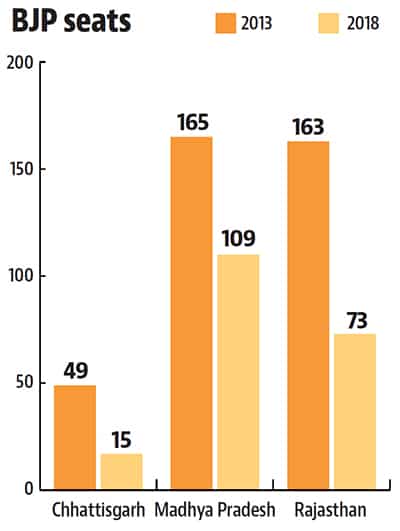
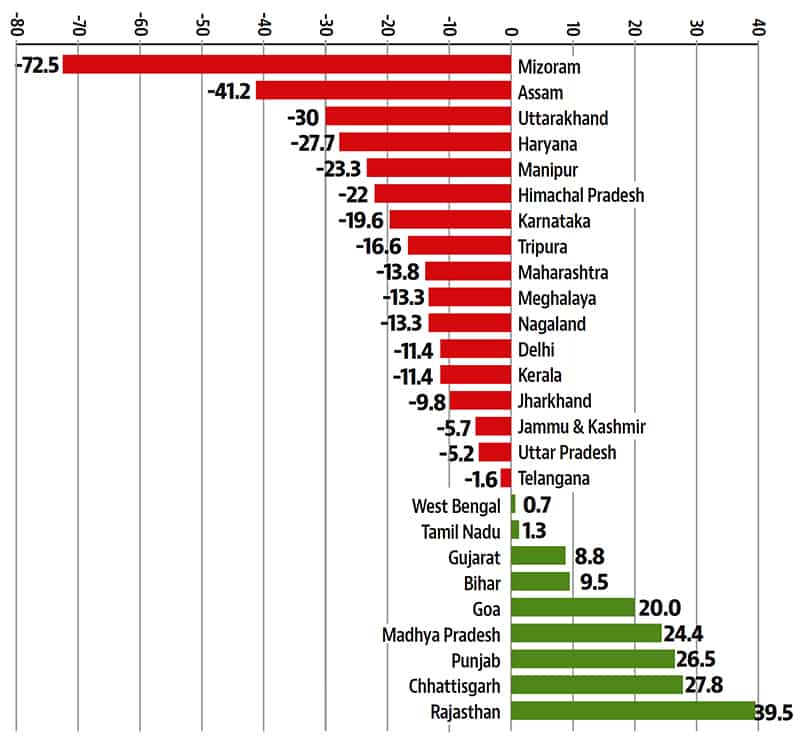
Farmers’ anger ends dream run on saffron juggernaut in Hindi belt: In 2013, the Bharatiya Janata Party swept the assembly elections in the states of Rajasthan, Madhya Pradesh and Chhattisgarh. This marked the beginning of the Modi wave which catapulted the BJP to a clear majority in the 2014 Lok Sabha elections. The Congress won only three seats out the 65 Lok Sabha seats in these three states. Things look drastically different after the 2018 results. The Congress has made a strong comeback, sweeping Chhattisgarh and also winning in Rajasthan and Madhya Pradesh. These three are among the top four performances of the Congress in terms of improvement in seat share between assembly elections held before and after the 2014 polls.
Composition of population: If there is one thing which is central to the changing fortunes of the Congress and BJP in the recent period, it is farm anger. Multiple farmers’ protests, low food inflation, growind demands for farm loan waivers, etc have provided the anecdotal evidence for it. An HT analysis shows the BJP had bigger reverses in constituencies with a bigger share of farmers and agricultural labourers in the population. This is a clear reflection of the agrarian economy turning against the BJP.

Click here for complete coverage of Assembly Elections and Results 2018


