


 Live Score
 Cricket Teams
 Cricket Players
Bilateral cricket still bankable for the BCCI
The Indian cricket board is anticipating a minimum rise of 17% in sponsorship value from bilateral cricket

 Prefer HTon Google


Mumbai: The Board of Control for Cricket in India (BCCI) is going to the market for new sponsors for bilateral cricket at a time franchise league model is widely seen as the present as well the future. By the looks of it, there is still more life in the traditional nation-versus-nation play. Certainly in India.
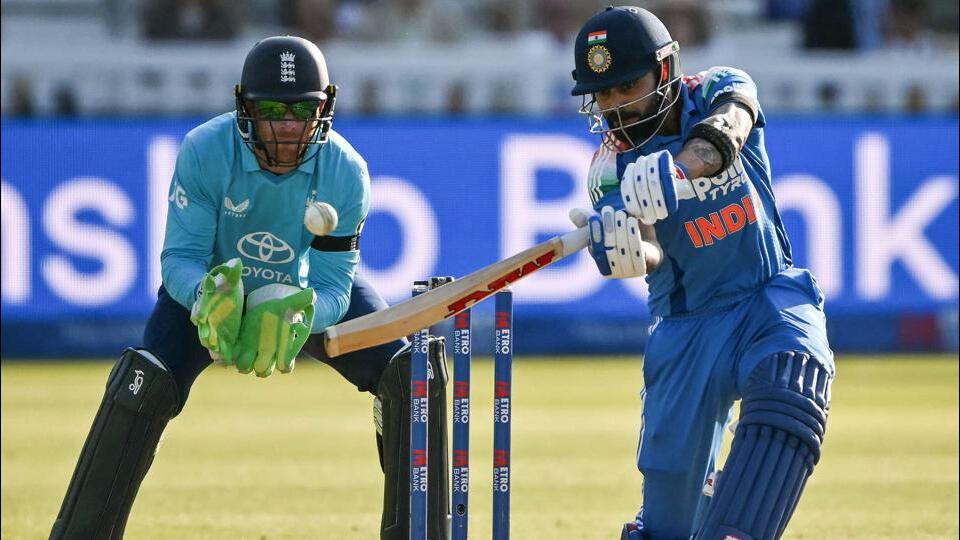
The BCCI anticipates a minimum 17% jump in bilateral sponsorship income over the next year and a half. The inference can be drawn from rights tenders floated this week for Indian team’s home matches (35 across formats) to be played between Sept 2026-March 2028.
HT has learned that the BCCI has set a base price of ₹4.85 crore per match for title sponsorship upon expiry of the current contract held by IDFC First Bank ( ₹4.2 crore per match), In addition, for Associate sponsorship, a base price of ₹95 lakhs each (up from current value of 82 lakhs per match) has been set for three slots to replace SBI Life, Campa and Atomberg. Asian Paints recently came on board as the fourth Associate sponsor in the same price range.
At base value itself, the collective sponsorship earnings from bilaterals (approx. ₹300 crore) would exceed ₹8 crore per match. Going by competitive bidding seen for India’s jersey sponsorship last year, - Apollo Tyres ( ₹ 579 cr) edged out Canva ( ₹544 cr) and JK Cement ( ₹477 cr) - there could even be further escalation in per match value if companies queue up to associate with men in blue in the short-run.
Sponsorship revenue is a secondary revenue source to media rights earnings. The current JioStar bilateral rights deal which ends in March 2028 is worth ₹5963 crore. At ₹67.75 crore per match, that’s a significant contributor, although it now fades in comparison to IPL’s bumper earnings over two months. IPL revenue account for roughly 60% Indian cricket revenue.
Indian cricket’s next commercial cycle will be closely watched, but BCCI is expected to stay invested in bilateral cricket, and better it by cutting the flab from the schedule.
Inbound India tours a big draw
Industry experts are not expecting a football-like shift towards club sport as bilateral cricket holds value for two more leading cricket powers - England and Australia. Dubbed as the Big Three - India, England and Australia play 5-Test bilateral series against each other on a home-and-away reciprocal basis. The 35 matches India is slated to play at home (between September 2026 and March 2028) will include a 5-Test series against Australia in 2027 and against England in early 2028.
Besides, an inbound white-ball series featuring India also remains a huge draw. The English cricket board (ECB) recently said in a financial note that they were expecting “a significant loss portion” in 2027 in the absence of a home series against India.
Even the rest of the cricket world craves for the Indian team to come calling to boost their balance sheet. Experts estimate Cricket Ireland and Cricket Zimbabwe to generate revenue in the range of $ 2 million per match by hosting India this year.
While there is talk of IPL gaining a prominent window in the calendar, bilateral cricket still matters the most outside ICC events for the wider cricket world. T20 leagues other than IPL haven’t taken off.
A major scaling down of bilaterals would be warranted only if Indian cricket’s commercial partners stop seeing any value for Team India matches outside of World Cups. The upcoming BCCI title rights outcome will help gauge the mood.


