


 Live Score
 Teams
Teams Players
Need for change and continuity in BCCI still an unresolved debate
All aspiring cricket administrators will be relieved to know that BCCI’s new tenure amendment will give any official a run of 12 uninterrupted years between state associations (six years) and BCCI (six years)

 Prefer HTon Google


Before getting into the nitty-gritties, everyone knew what BCCI’s successful appeal to the Supreme Court for amendments to its constitution was really about. To formally undo the Lodha governance changes after informally circumventing them for the last four years.
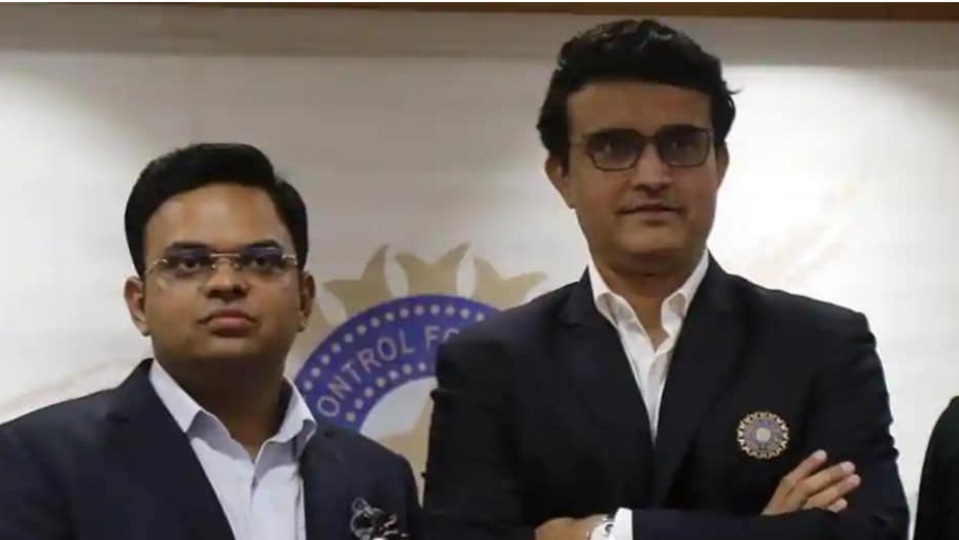
This was to be done primarily through the lengthening of the tenures of its top-most officials, BCCI president Sourav Ganguly and secretary Jay Shah, whose tenures, under the Supreme Court-approved BCCI constitution of 2018, had actually ended two years ago - in July and May 2020. Going by the book, they should technically have been sent into the cricket/ sports administrator’s purgatory – a cooling-off period. Yet, by Wednesday afternoon, it was clear that Ganguly and Shah will - electoral support earned, of course - serve another three years.
Shah came into the Gujarat Cricket Association as its joint secretary in 2013 and Ganguly as the Cricket Association of Bengal secretary in 2014. What is not certain is whether these two extra years, due to Covid disruptions, will be included in the calculations about their tenures or whether they will be complimentary? And if the clock will start ticking only from the next round of elections in about a month?
All aspiring cricket administrators will be relieved to know that BCCI’s new tenure amendment will give any official a run of 12 uninterrupted years between state associations (six years) and BCCI (six years). After that, who knows, the honourable court could once again be approached to extend the 12-year run further since it has already gone from three to six to 12 years.
Following the Supreme Court hearings over the past two days was revealing in itself. On Tuesday, the Twitter threads of legal news websites Live Law and Bar & Bench provided the highlights of the court proceedings, and on Wednesday, the live video transmission of court hearings via Webex filled in context.
The case was heard in Court 2 by a two-judge bench of justice DY Chandrachud and Hima Kolhi. The live video of court proceedings is very useful. The grandeur of a physical Supreme Court room shrinks into Webex boxes on a computer screen. The other two Webex boxes are supposed to highlight both sides of lawyers — except in the BCCI case, for the most part, all the heavyweight lawyers seemed to agree with one another that the new BCCI constitution needed serious amending.
On Tuesday, the Twitter feeds from the two legal websites offered frequent reminders of the distance between the courtroom proceedings and the reality of our cricket governance. According to Bar & Bench, Solicitor General Tushar Mehta first proposed a total limit of nine years in state and BCCI each for any post (a total of 18 years). He then suggested the relaxation of the tenure limitations in the constitution should only apply to the president and the secretary.
The definition of governance and the importance of administrative continuity was given a new reasoning: “If he’s building a stadium or any other project, because his tenure is truncated he won’t be able to finish it.” Cricket administration, however, extended beyond the construction business and examples of multi-sport governance by cricketers was also mentioned.
The eminent cricketer doing well in golf was also cited, which could have been a reference to Kapil Dev being inducted on the board of the Professional Golf Tour of India, which may well be a ceremonial (maximising his ability to pull in big-ticket sponsors) but let’s not quibble.
But the googly was to arrive a short while later with Mehta talking about a cricketer involved in active football administration, “Our former captain Mahendra Singh Dhoni. Doing very well.” Which was news not just to the football administration, but no doubt to Dhoni as well since his only involvement in football, other being a superb schoolboy footballer and now recreational player invited to glam matches with Bollywood stars, is as a celebrity owner of ISL club Chennaiyin FC.
The Court’s order about multi-sport involvement however, was to state, “It has been submitted that holding of posts in other sports federations needs to be modified since several cricketers of eminence have been associated with other sporting activities after retirement and there is no reason to disqualify them.”
On Wednesday afternoon, when the hearing began around after 2:30pm, BCCI secretary Jay Shah was on the video feed as was former BCCI secretary and long-term Saurashtra cricket administrator Niranjan Shah. There was much to-ing and fro-ing, repeated arguments for longer tenures and shorter cooling-offs by Mehta, who was largely supported by amicus curiae (friend of the court) Maninder Singh. There was talk about apex committees and consulting CEOs, and the need for the officials to control the management office. For the most part of the hour-long debate, there was no mention of Shah and Ganguly being in violation of the existing provisions of the BCCI constitution. And how the functioning of an apex council or even an independent management office was rendered meaningless when operational power largely emanated from the secretary’s office.
The fundamental core of the Lodha recommendations had been to separate day-to-day management from its policy directives and move towards professionalism and best practice in governance. The 2018 Supreme Court order, which had implemented the Lodha recommendations, had been written by justice Chandrachud himself, who said, “When something is pointed out to us… we must also not, you know, say it’s my judgment, we have done this, do not ask… We must also have a realisation that we are regulating the affairs of an autonomous body, so long as they are not defeating the purpose of our judgment… Why is Indian cricket prospering? Not because of the intervention of the court. But because of the organisation that has run Indian cricket.”
On Tuesday, Mehta talked about how cricket officialdom, whether in BCCI or state, was to be thought of not as a privilege being enjoyed by or a “largesse” being given to individuals, but as their “service” and “contribution” to the sport, which is why they needed extended tenures.
Maybe this is as good a time as any to put out a few special BCCI stories. That one of its state bodies, the Uttarakhand Cricket Association (UCA), has remained unembarrassed about paying its players daily allowance of ₹100 last season. And that in 2020, a BCCI vice-president, Mahim Verma, resigned from the post to go back to the UCA as its secretary. Or that BCCI asked its domestic players to send invoices for around ₹7000 each for a previous season as part of their “gross revenue sharing agreement”. This when the BCCI’s net worth off its 2020-21 balance sheet was found to be ₹18,011 crore. Oh well.


