
Sign in

Govt set to give permanent status to top post in Indian military

The Narendra Modi government is set to create a post of permanent chairman, chiefs of staff committee (COSC) — a four-star officer who will be the single-point military adviser to the Centre — four years after a recommendation by the Naresh Chandra task force on higher defence reforms.

Updated on: Apr 10, 2016, 01:47:14 IST
Hindustan Times | By , New Delhi
Share
Share via
  • facebook
  • twitter
  • linkedin
  • whatsapp
Copy link
  • copy link

The Narendra Modi government is set to create a post of permanent chairman, chiefs of staff committee (COSC) — a four-star officer who will be the single-point military adviser to the Centre — four years after a recommendation by the Naresh Chandra task force on higher defence reforms.
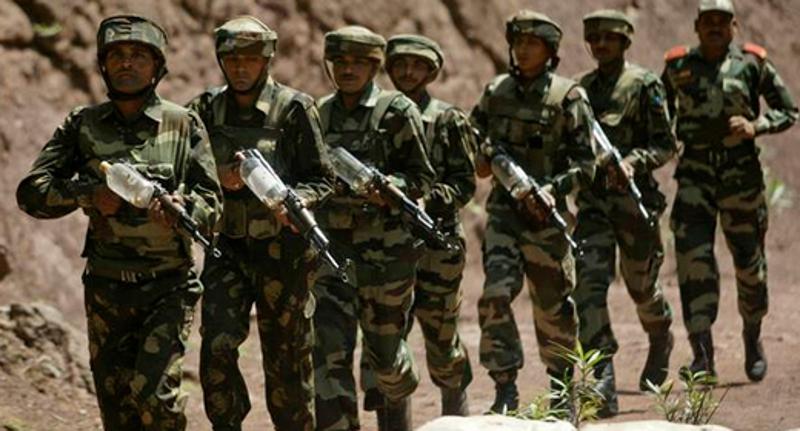
The Narendra Modi government is set to create a post of permanent chairman, chiefs of staff committee (COSC) — a four-star officer who will be the single-point military adviser to the Centre — four years after a recommendation by the Naresh Chandra task force on higher defence reforms.

Top government sources confirmed to Hindustan Times that the process of appointment of chairman, COSC, would begin after Modi’s in-principle approval next week. It is understood that a presentation on higher defence reforms and future air power planning will be made before the PM on April 12. The proposal has already been vetted by the cabinet secretary, national security adviser and defence minister.

“Once the presentation is cleared by the Prime Minister, a formal proposal will be moved for approval in the cabinet committee on security (CCS). The entire exercise should be over in a couple of months,” a senior official said.

The government envisages the permanent chairman to have a two-year tenure and equivalence in rank and protocol with the army, navy and air force chiefs of staff.

Selected on the basis of merit and from any of the three arms, the officer will be responsible for all military hardware acquisition processes, tri-service command in the Andaman and Nicobar Islands, cyber command, special forces, and for inculcating “jointmanship” within the forces for optimum utilisation of resources.

A single- point military adviser’s post in the form of chief of defence staff was proposed by the K Subrahmanyam Committee set up by the Atal Bihari Vajpayee gover nment after the 1999 Kargil war.

In 2011, the UPA regime revisited higher defence reforms under a committee led by former cabinet secretary Naresh Chandra. The committee, which submitted its report in 2012, recommended a watered down version of the CDS and called it the PCOSC (permanent chairman of the COSC).

“The whole idea behind appointing a PCOSC is to break down silos within armed forces and create synergy in the fighting force. The problem with the existing separate military headquarters is that there is a turf war between the three wings with each seeing things with its own perspective and requirement,” a senior official said.

  • Shishir Gupta
    ABOUT THE AUTHOR
    Shishir Gupta

    Shishir Gupta is Executive Editor at Hindustan Times and one of India's top journalists covering national security, strategic affairs, foreign policy and geopolitics. Over the past three decades, he has extensively reported on India's military, diplomatic and security landscape, covering every major conflict and national security challenge, from the 1999 Kargil War and the 2020 East Ladakh standoff to Operation Sindoor in 2025. He has also covered major terror attacks, including the IC-814 hijacking, the 26/11 Mumbai attacks and the 2025 Pahalgam terror strike, along with numerous Pakistan-backed terrorist incidents in the Kashmir Valley and across India. He has reported on national and state elections for more than three decades. A recognised authority on strategic affairs, Gupta has covered India's nuclear programme since the Pokhran-II (Shakti series) tests in May 1998 and has written extensively on global nuclear issues, Indian diplomacy and the country's expanding global outreach. He has also reported widely on international conflicts and terrorism, with a special focus on the Indian subcontinent. Gupta has interviewed Prime Minister Narendra Modi more than four times, including Modi's first interview with the print media after becoming Prime Minister in May 2014. His other interviews include three with the Dalai Lama, as well as conversations with Benjamin Netanyahu, Amit Shah, Yogi Adityanath, S. Jaishankar, Nirmala Sitharaman and Piyush Goyal. He is the author of Indian Mujahideen: The Enemy Within (Hachette, 2011) and Himalayan Face-off: Chinese Assertion and Indian Riposte (Hachette, 2014). He was awarded the Chevening-Wolfson Joint Scholarship at Wolfson College, University of Cambridge, UK, in 1998 and participated in the International Visitor Leadership Program (IVLP) of the US State Department in 2006. He received the Ben Gurion Prize from Israel in 2011 and the K. Subrahmanyam Prize for Strategic Studies in 2015 from the Manohar Parrikar Institute for Defence Studies and Analyses (MP-IDSA). Since 2024, he has hosted Point Blank, Hindustan Times' weekly YouTube show on global geopolitics.Read More