
 E-Paper



HT reviewer Simar Bhasin picks her favourite read of 2024
Interlinked short stories of displacement, memory and the inheritance of loss centred on the experiences of the Arab-American community

 Prefer HTon Google


The most interesting and exciting literary discovery for me this year has to be author Susan Muaddi Darraj and in particular her book The Inheritance of Exile: Stories from South Philly. Darraj’s narrative comprising interlinked short stories is centred on the experiences of the Arab-American community. The stories are told particularly from the viewpoint of the Arab-American women who reside in South Philadelphia. The book is divided into four parts corresponding to the four women protagonists, who are friends and come of age during the course of the different interlinked narratives. The choice of the structure of the book is interesting given that each story stands as an individual literary work and may be read as such but is also an integral part of the cohesive whole. Darraj had attempted a similar structure for her 2016 book A Curious Land: Stories from Home, which consisted of narratives of short fiction connected through characters who hailed from the same West Bank village, Tel al-Hilou in Palestine. Similar themes of displacement, belonging, memory and an inheritance of loss are to be found in both of these books which present these experiences from a female gaze. The prose is simple yet poetic and what connects the four separate parts of The Inheritance of Exile is a constant state of desiring, which is shown to be the state of being for the exiled Arab immigrant.
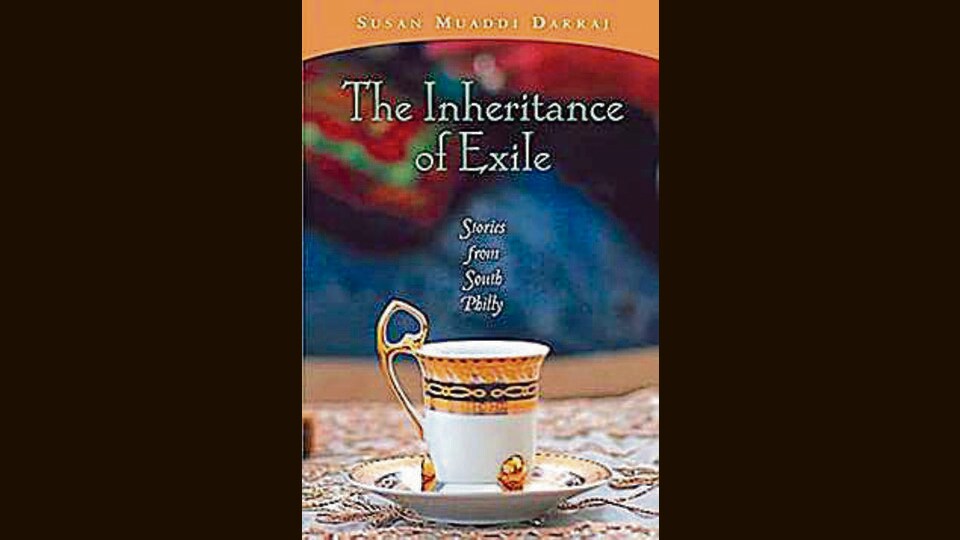

The stories are as much about the young protagonists after whom the four parts are named (Nadia, Aliyah, Hanan and Reema) as they are about their first-generation immigrant mothers (Siham, Imm Nabeel, Layla and Huda). The standout stories are An Afternoon in Jerusalem (from Aliyah’s section) and Chasing Valentino (from Reema’s part). The former intertwines three separate timelines: one is the present where Aliyah has been informed that her former romantic interest, Kareem, is getting married to someone else, the other is the time that Aliyah recalls when she had visited Jerusalem with him and his friend who had then chaperoned them but was now going to become his bride. The third timeline is Aliyah’s solo trip to Jerusalem, which preceded the one with Kareem and about which he has no idea. The story, like others in the collection, brings together a desire for love and companionship with the historical displacement and the constantly deferred desire of a homeland to which to belong. Chasing Valentino opens the fourth part. Here, Reema, a PhD scholar, is seen navigating a relationship with an American, who constantly fetishizes her and her Arab heritage. Told in a tone that is both humorous and jarring, both the stories are narratives of desire and love, as well as of loneliness. All the stories in this beautifully composed collection are snapshots of the Arab-American community, which highlight the struggles of first and second generation immigrants, particularly women, as they navigate their own personal and political inheritances of exile.
Simar Bhasin is an independent journalist.
READ MORE: HT REVIEWERS PICK THEIR FAVOURITE BOOKS OF 2024


