
 E-Paper



Report: Travel Writing Festival
The third edition of the event created a moving oasis, where readers and authors interacted freely within the small space of a bus from Bhubaneshwar to Puri

 Prefer HTon Google


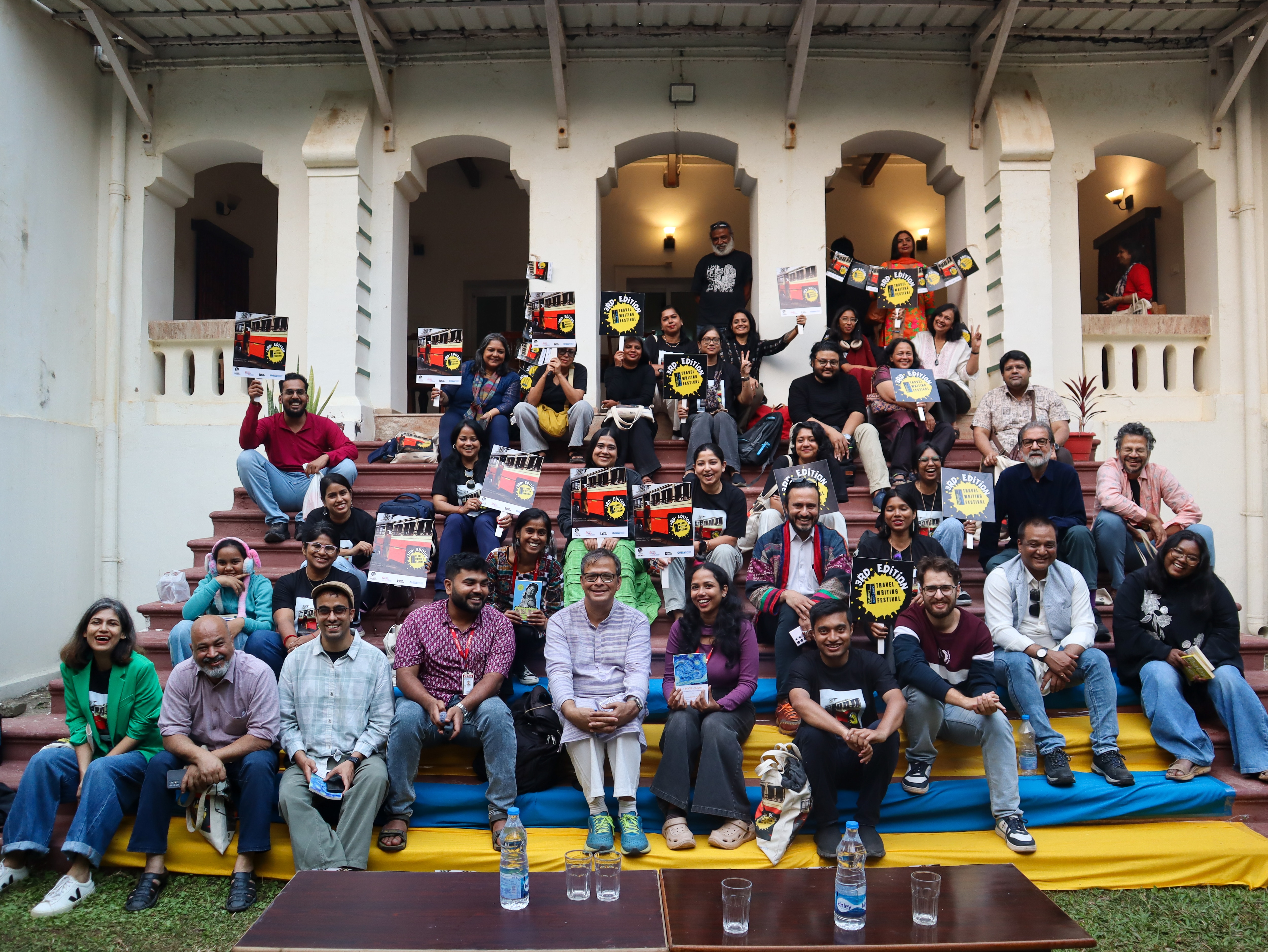
On December 14, about 50 people gathered at Walking Bookfairs, Bhubaneswar, to board a bus to Puri for the third edition of India’s first Travel Writing Festival. Organised by the founders of the bookshop, Akshaya Bahibala and Satabdi Sambedna, it continues to be a festival for the people and by the people. This time, the event hosted literary figures like Jerry Pinto, Chandrahas Choudhury, Ravi Singh, Tathagata Satpathy and Adyasha Satpathy, Ravi Mantha, Sampad Patnaik, Sophia Simon, Belal Jawhara, Swati Murmu, Mani Mahesh Aurora, and documentary filmmaker Sanjay Kak.
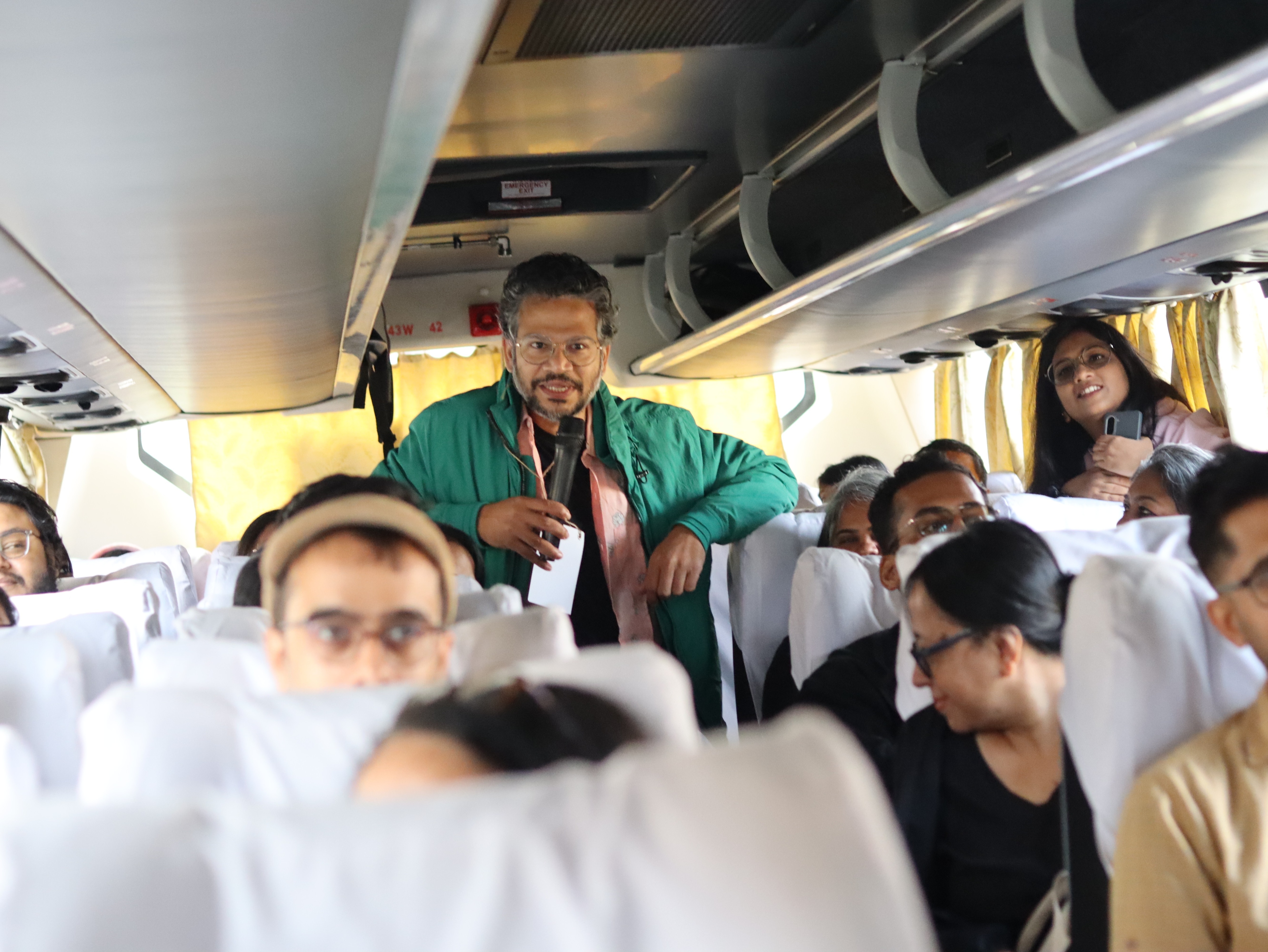
Ravi Singh, who heads the independent publishing house, Speaking Tiger Books, stated that the literary event was different from others in the country as there was no divide between authors and readers, all of whom board the same bus and share food and stories. “Initiatives like this don’t happen, and today I saw the potential to strengthen book culture. The people who are here, really want to be here. This is not a glamour event they can be a part of; there is genuine engagement. This is creating a culture of books which is good for publishers and booksellers. It allows for a greater engagement with books of substance,” he added.
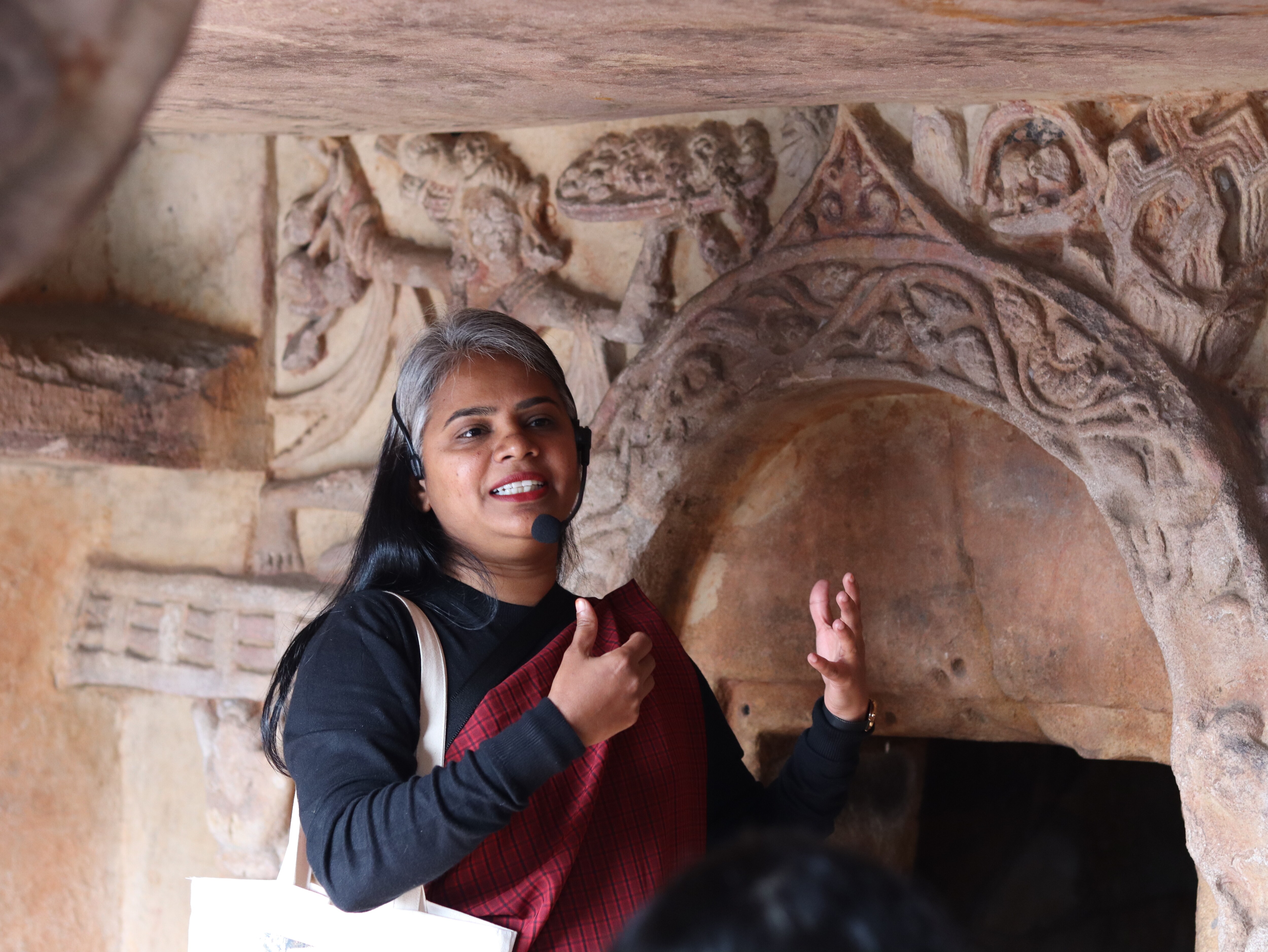
On the bus, the event was inaugurated by Jerry Pinto, who stated that all writing is travel writing as the writer embarks on a journey in the process of writing. The first halt was at the twin hills of Udayagiri and Khandagiri, where Sophia Simon, co-founder of Detour Odisha, walked participants through the Udayagiri caves, connecting them to a past when these historical sites were a space for everyday activities, a past before Bhubaneswar came to be known as the city of temples. She encouraged everyone to experience the space sensorily as they walked through and examined the site’s stone engravings.
On the hill top, Mani Mahesh Aurora launched his debut book Iya and The Map of the Gentle Journeys, published by Bare Bones Publishing. He spoke about his experience of moving to the mountains of Uttarakhand and working towards gentler ways of travelling and living. Dedicating his book to the children of mountain villages, who are keen to tackle the effects of climate change, which is affecting livelihoods in the area, he added that he hopes adults too see the changing realities of our world.
Next, the entourage stopped at Dhauli for a silent walk around the Shanti Stupa, the spot where the Kalinga war ended. Breakfast was a falafel warp served with hummus and shatta and a baklava, which was provided by Zenobia’s Kitchen, the only authentic Syrian eatery in Odisha’s capital. The founders, Belal Jawhara and Swati Murmu, spoke about how the former, who was disappointed by the shawarmas served in the city, decided to bring a slice of his home, Syria, to Bhubaneswar. Murmu stressed the importance of pressing on with a good idea even if met with initial disappointment.
The enclosed space of the bus came alive with travel anecdotes and book recommendations by authors and readers as the vehicle moved at a gentle pace towards Puri. Recommendations included HG Alexander’s The Indian Ferment: A Traveller’s Tale (1929), Dervla Murphy’s Full Tilt: Ireland to India with a Bicycle (1965) and Where the Indus is Young (1977), and Tiziano Terzani’s A Fortune-teller Told Me: Earthbound Travels in the Far East (1997). Interestingly, every seat on the bus had a book for people to read and take home.
The next stop was the Honey Bee, Puri’s famous Italian café and bakery, which serves mouth-watering dishes like kare pan, green salad, pizzas and pastas and of course, delicious cakes and coffee. The cosy space quickly turned into an impromptu open mic as people sang travel-related Odia songs, recited Hindi and Hindustani poetry, and discussed the meaning and connotations of awargi in different languages. Some were inspired to recite their poems in English, written during their travels. This informal session came to an end with Jerry Pinto reciting his translation of one of Muktabai’s beautiful abhangs.
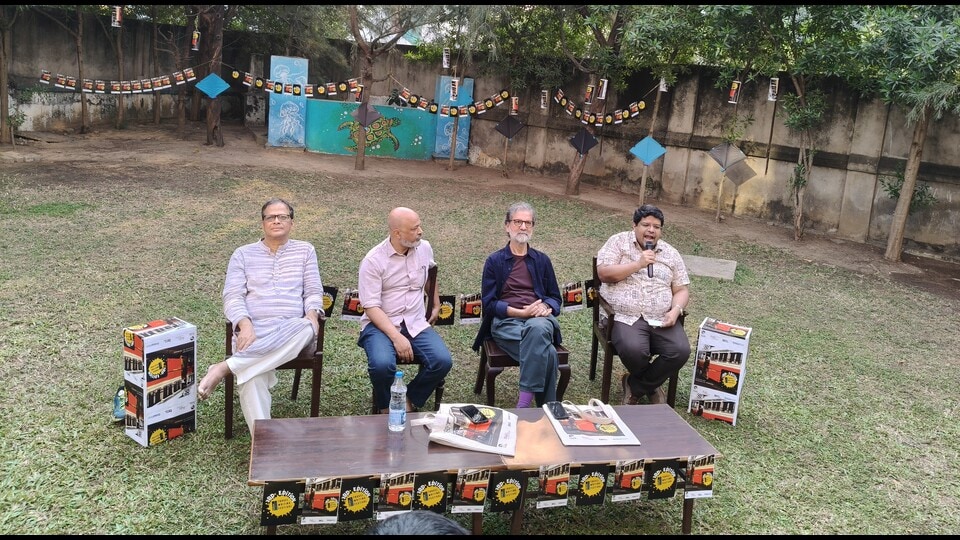
There were two panel discussions at Hotel Z, the hub for hippies and backpackers of an earlier era, that once housed literary figures like Allen Ginsberg and Khushwant Singh. Here, during a session titled ‘Writing and Publishing in A Fractured World’, journalist Sampad Patnaik engaged Sanjay Kak, Ravi Singh and Jerry Pinto in conversation about travel, privilege, self-censorship, authority and identity of a writer, exotica and collaboration in travel writing, and the importance of owning the means of production when one’s writing is resistance.
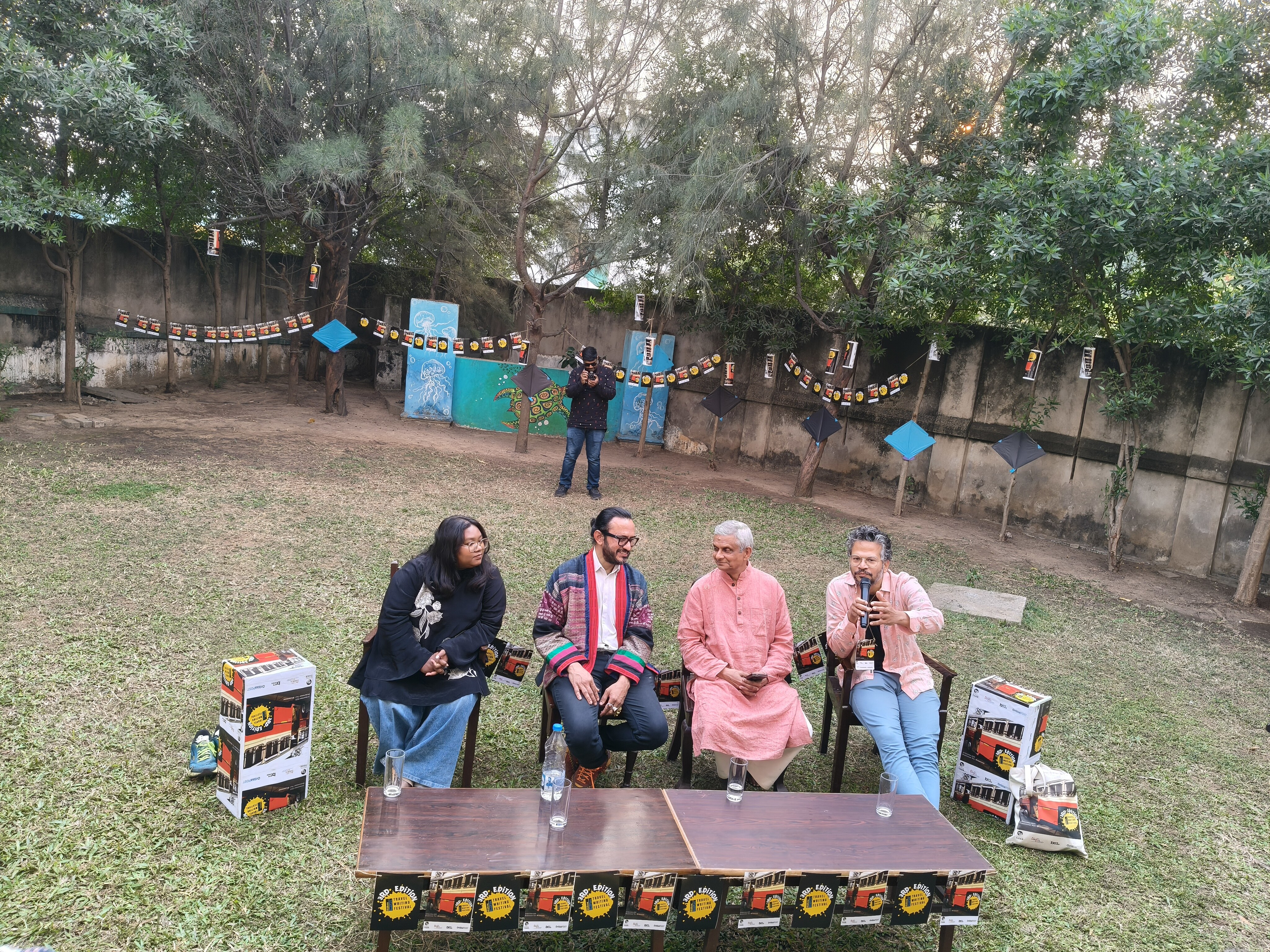
In the second session, ‘The Enduring Importance and Joys of Slow Living and Travel’, author Chandrahas Choudhury moderated a panel that included Swati Murmu, Ravi Mantha, and Tathagata Satpathy. While Murmu spoke about her experience as a Santhali speaker of the Sadhana faith from Odisha working as an English lecturer in a rural area, Mantha, who was once an investment banker, narrated his journey of becoming a healer. When reading was discussed as being the last anchor of slow living in the times of Instagram reels, Satpathy questioned the education system that doesn’t incorporate reading. The audience had interesting responses to this. Poet Mitra Samal requested everyone to be patient with children and to let them find books as they grew older. According to her, many people discover reading in their late twenties once they are out of the education system.
The day came to an end with a book signing session and a short walk to the Puri beach. The troupe then returned to Bhubaneswar for a sumptuous Odia meal at Nimantran. At dinner, the organisers spoke about their plans to be more inclusive in subsequent editions of the event with the participation of more women and people from marginal communities. Clearly, the festival has already taken its first steps towards this goal as queer writer Mani Mahesh Aurora said that inclusivity hadn’t felt like “an add-on” at the Travel Writing festival. “It was seamlessly woven into the culture. No one made a spectacle of it, and this quiet normalcy is what allows human environments to truly thrive,” he said.
Sanjay Kak, whose film, In the Forest Hangs a Bridge, was screened on 13 December at the Cuttack branch of Walking Bookfairs, said, “There’s something extremely brave about trying to create a cultural space in not a very welcoming environment, and I respect the acceptance of doing something very small consistently. Most of all, I respect the commitment to doing so without corporate money because the kind of space you create depends on what kind of money is behind it. This fest is an extremely brave and remarkable effort.”
The third edition of the Travel Writing Festival, which partnered with Speaking Tiger Books, The Book Turf Library, Bare Bones Publishing and Orissa Post, created a moving oasis where readers and authors interacted freely within the small space of a bus. In the end, it was clear that everyone wanted a reading revolution, and that they were all keen to play a role in making it happen.
Akankshya Abismruta is an independent writer.


