E-Paper



Delhi govt ‘rationalises’ water supply to city
Parts of the Capital that receive supply in two shifts (morning and evening) will get water only once a day

 Prefer HTon Google


Amid a further drop in the water levels of the Yamuna, water minister Atishi on Tuesday announced that the Delhi Jal Board (DJB) will begin rationalising the water supply to the city, effective immediately, and parts of the Capital that receive supply in two shifts (morning and evening) will get water only once a day.
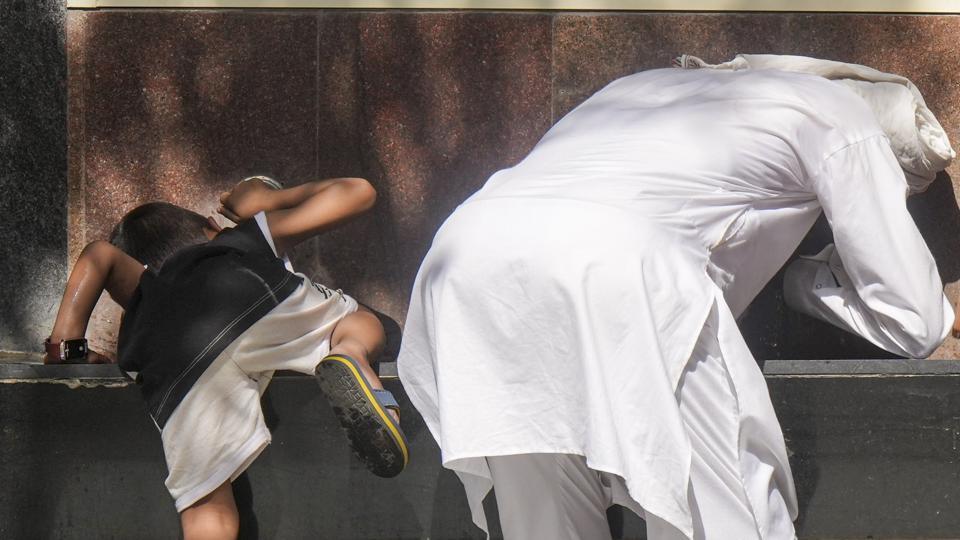
The minister did not elaborate on whether the affected areas will get water in the morning or evening. However, she said that water from the second shift will be diverted to parts of the city which are receiving minimal or zero water supply.
The BJP said it supports all efforts to check wastage of water, but said that the government should look into water theft and supply line losses before levying supply cuts.
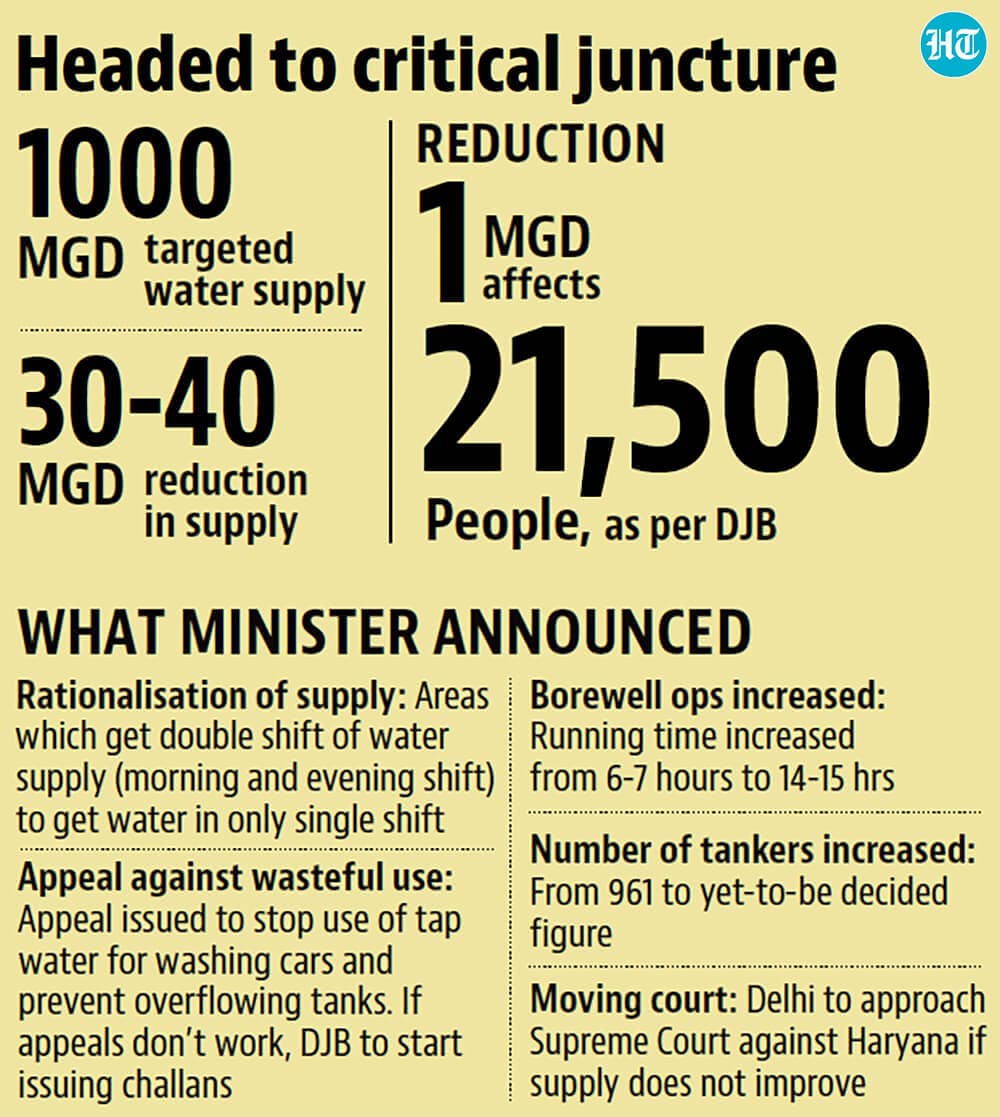
DJB, as part of its summer action plan, had targeted supplying 1,000 million gallons per day (mgd) of water to Delhi. The water the utility provides is routed through nine water treatment plants (WTPs) and is supplied via a 15,473-km pipeline network.
Read Here: Delhi water supply at season’s nadir, compounds summer woes
A DJB official said a shortfall of 1 mgd affects an estimated 21,500 people in the city.
At a press conference, Atishi said the raw water being released by Haryana to the Yamuna has gone down significantly, leading to the water levels at the Wazirabad barrage dropping from 674.5 ft — the normal level — on May 1 to 669.8 ft on Tuesday, which has resulted in a shortfall of 30-40 mgd in the supply of water over the past few days.
“Haryana does not release enough water in the Yamuna, which is leading to shortage of raw water,” she said. “We have been in touch with the Haryana government but adequate water has not been released and if no improvement is witnessed in coming days, we would move to the Supreme Court.”
The minister also appealed to Delhi residents to stop the wasteful use of water, warning that the water utility may begin fining people over the excess use of water in the coming days.
Read Here: Uptick in Delhi Jal Board output, politics persists
She said that as a countermeasure, the operation time of borewells has been increased from 6-7 hours per day to 14-15 hours, and the number of tankers supplying water to Delhi has been increased.
“But the water level is going down continuously and from today onwards the areas which get two-time water supply-- would start getting supply once a day. The water from the second shift will be sent to the deficient areas which are getting zero to minimal water,” Atishi said.
The minister said the Delhi government has been trying to increase the availability of raw water in the city. “We have signed an MoU with Himachal Pradesh to procure an additional 50 mgd of water, but the proposal is pending with the Upper Yamuna River Board, where Haryana has raised objections,” she said.
The Haryana government, meanwhile, said that it has been supplying sufficient water that is due to Delhi as per agreements. “The Delhi government is trying to hide its own failures by giving a political colour to this issue,” an official said, on condition of anonymity.