E-Paper



A silent witness to revolutionaries’ valour
The Kakori Train Action on August 9, 1925 was planned in Room no. 227 of Chhedi Lal Dharmshala in Lucknow and the money looted from the train was kept and counted in its verandah

 Prefer HTon Google


LUCKNOW: If buildings could talk, the century-old Chhedi Lal Dharmshala opposite Jhande Wala Park in Aminabad would narrate a page straight out of history, describing the courage and valour of the Hindustan Socialist Republican Association (HSRA) revolutionaries in executing the Kakori Train Action on August 9, 1925.
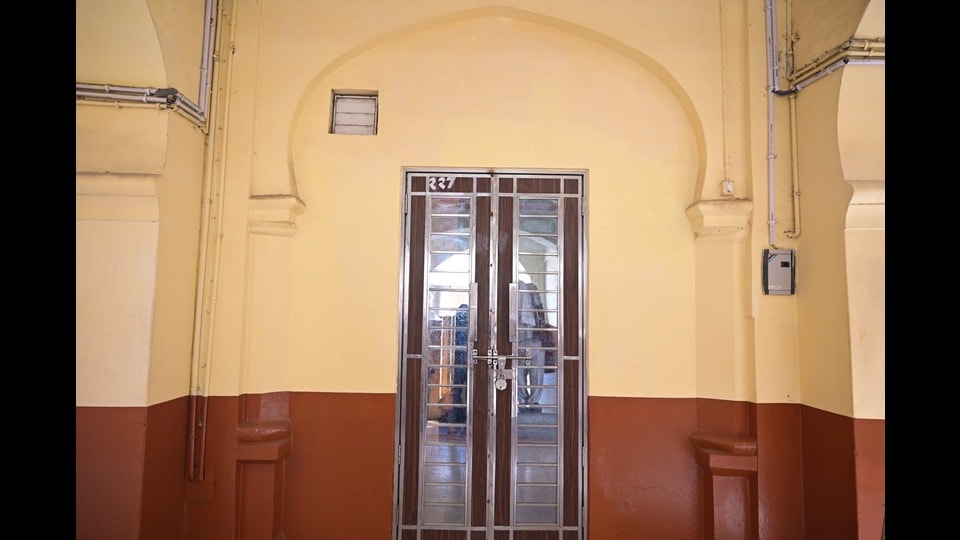
Uday Khatri, son of Ram Krishna Khatri who was involved in the incident, has mentioned the Chhedi Lal Guest House in his book ‘Lucknow Key Kranti Tirth’, describing how the plan was hatched in one of its rooms before it was executed by Ram Prasad Bismil and Ashfaqullah Khan.
Almost a 100 years after the incident, room no 227 on the second floor of the dharmshala, which had minimal facilities back in 1925, has now been refurbished with an AC, glass door, new beds and other amenities . “We have heard the stories of room no 227 from our previous caretakers. Keeping this in mind, the entire room has now been given a make-over . Many visitors who know about it prefer to stay here,” said Ram Nath Gupta, the head clerk of the dharmshala, who has been working here for over three decades. “However, back then there was no tradition of keeping records, so we don’t have any,” he added. According to Gupta, the room is still available at a nominal rate of ₹300 per night.
Cash looted from ‘iron chest’ was kept in verandah
Not only Room no 227 but also a big verandah of Chhedi Lal Dharmshala was used by the members of the Hindustan Socialist Republican Association (HRA) post robbery.
“After the train robbery, the cash looted by them was carried to the dharmshala’s verandah where they also counted it ,” said SK Sharma, a retired official from the Indian Railways, while informing that during the colonial period, money was carried through ‘cash chest’ to transport it from small stations to mother station. The men had robbed the money from the chest in the guard’s room.
He added that the heavy iron chest used to be theft-proof and was so heavy that it required four to five people to lift it.
Since the HRA needed money for the purchase of weapons to fight the British , Bismil and his party made a plan to rob a train on the Saharanpur railway line. Later Bismil, Khan, Rajendra Lahiri, Chandra Shekhar Azad, Shachindra Bakshi, Keshab Chakravarty, Manmathnath Gupta, Mukundi Lal, Murari Lal Gupta and Banwari Lal executed the plan between Kakori and Almannagar stations in a village called Bazpur.