
 E-Paper



KGMU’s BEST: Simulation-based training begins with batch of 40 students
This first two-day training programme is being conducted in collaboration with Laerdal India, a digital healthcare company, which is providing training dummies for the programme


King George’s Medical University’s BEST (Building Essential Skills through Training) programme began on Thursday with a batch of 40 MBBS final year students participating in the first session of simulation-based skill training.
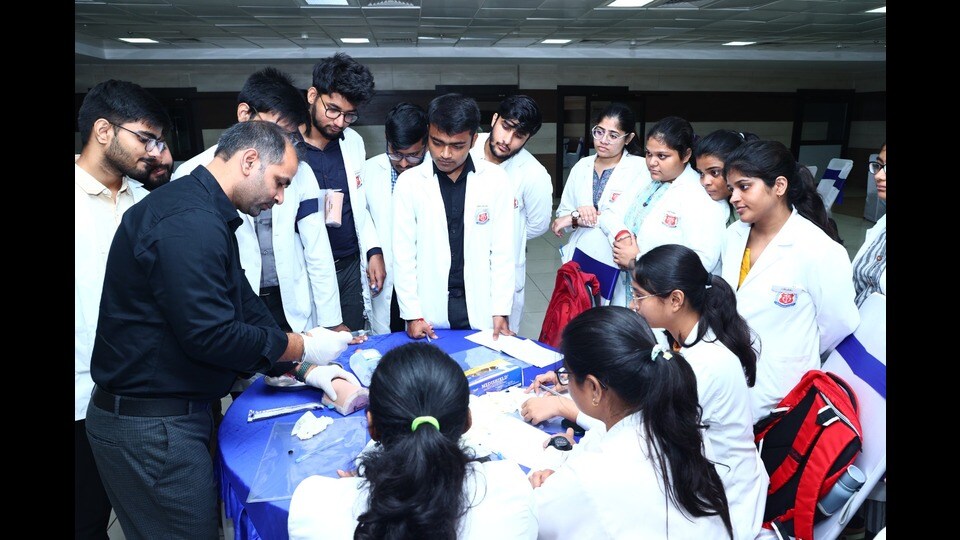
This first two-day training programme is being conducted in collaboration with Laerdal India, a digital healthcare company, which is providing training dummies for the programme. With 40 Laerdal models at their disposal, the first batch consists of two groups of 20 students.
The students are studying and practising basic medical procedures with dummies provided by the company, under instruction from their own professors at the university. Chairperson of the programme and head of the obstetrics and gynaecology department at KGMU, Dr Anjoo Agarwal said, “It becomes very difficult to train all students when each department has only one model of each kind - the dummies brought in by the collaborating company are much better, and allows us to train more students at one go.”
With 250 students per batch, and nearly 1000 students in all, the university cannot provide for individual training dummies for all students. “We are hoping to acquire some models from Laerdal in the future,” she said.
The students “are learning about routes for injections, intramuscular and intravenous injections, how to set up an IV line, how to put in a catheter in male and female, how to put in a nasogastric tube among others,” she said. “We hope to add more skills to the gamut further down the line.”
Organisers of the BEST programme shared that once this skill-building programme is properly implemented at KGMU, they will invite students from other medical colleges to take part as well.
Vice chancellor, KGMU, Dr Soniya Nityanand stated that the importance of skill and simulation-based training for development of a competent and confident medical graduate is imperative.
Dr Rhythm, organising secretary of the programme, said that such programmes add value to any MBBS curriculum and thanked the Laerdal team for their contribution as well. The training for the very first BEST batch will culminate on Friday.


