E-Paper



Kukrail forest: Green lungs of city losing capacity to expand
Percentage of modern pollen taxa of several plant varieties, which plays a crucial role in their reproductive processes, found to be very low, says research

 Prefer HTon Google


LUCKNOW The Kukrail dry deciduous forest region, known as the city’s green lungs, is ‘gasping for growth’ following a deterioration in its capacity for self-expansion. Reason: The percentage of modern pollen taxa of several plant varieties, which plays a crucial role in their reproductive processes, is found to be degraded, reflecting the low density of certain trees in the forest area, reveals a research by Birbal Sahni Institute of Palaeosciences (BSIP) and the department of geology at Lucknow University.
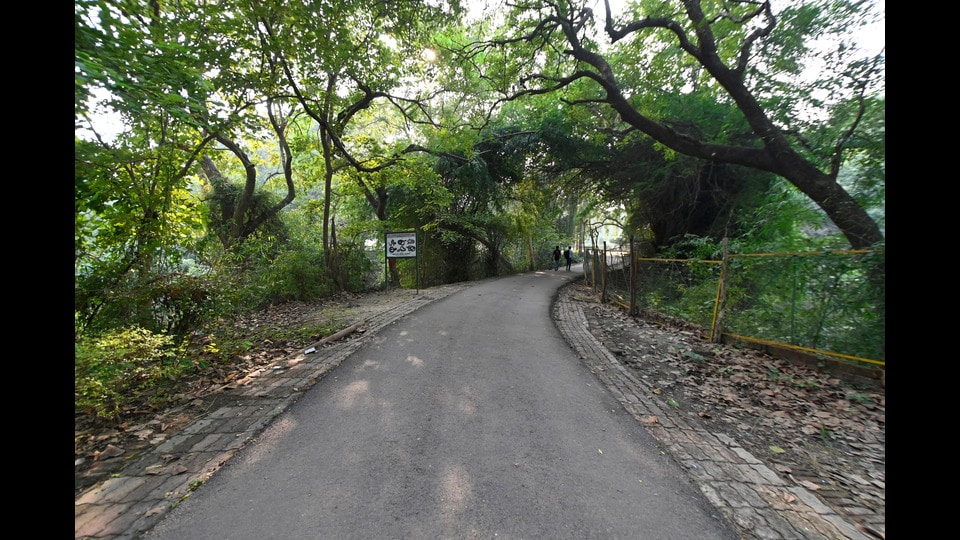
During the study, degraded pollen and spores in surface soil were observed frequently and the study can assist in restoration strategy and remediation action in and around the reserve forest to conserve a healthy environment for both flora and fauna, observed scientist at BSIP, Swati Tripathi, and Prof Ajay Kumar Arya at LU.
The forest is facing problems related to preservation of modern pollen taxa. It becomes a point of concern because Kukrail is among only a few tropical dry deciduous forests (regions where trees shed their leaves during dry season to conserve water) in the central Ganga plain near an urbanised area. A healthy dry deciduous forest is an effect of timely arrival of rainfall, proper and nutrient-rich soil conditions, proper drainage system and variable temperature, said experts.
“Each plant species has unique pollen morphology and the modern pollen taxa helps in getting proxy data of the climatic condition of the past, which along with present data, can be an indicator for the future climatic condition,” said Tripathi.
Climate change is leading to periodic shifts in vegetation within given regions and reserve forests serve as highly protected areas dedicated to the conservation of biodiversity. The occurrence of extreme and unpredictable weather, along with an increase in the frequency and severity of natural disasters, contributes to biodiversity loss in these forest areas, she said.
“The pollen of plants and trees, including Indian Plum, Indian Coral Tree, False White Teak, Amla, Mahua and Indian Beech Tree, were found significantly low in numbers. The lower numbers of these pollen can lead to treeless zones in future. At the same time, pollens of some plants like – mustard, cereals – rice and wheat and coriander were found higher in numbers which shows agricultural practices have increased around the forest in the recent past,” said Tripathi.
It is due to extreme climatic changes and shrinking of the river Kukrail due to urbanisation that the forest region is facing these challenges.
The research raises concerns over preservation of the forest area and underscores the changes in vegetation patterns around the reserve forest. Prof Arya said a study conducted by him in 2012 about the shrinking rivers in the city inspired him to contribute to this research.
“The narrowing of Kukrail river and rapid urbanization have led to lesser water being discharged to the forest area. Kukrail Dry Deciduous Forest is like a lung to the city. It becomes even more important to preserve the forest and surrounding areas as the city is being converted into a gas chamber due to urbanization,” he said.
He said authorities are taking steps to preserve Kukrail river, which is commendable. “It is also important that whenever they begin building the Kukrail Night Safari and Zoo, they must work with only natural products, instead of concrete, which would only damage the natural ecosystem,” Arya added.