E-Paper



Amrit sarovars to help store over 200 cr lt of rainwater in Prayagraj
Under Yogi Adityanath's government, Prayagraj has built 584 'Amrit Sarovars,' storing over 200 crore litres of rainwater, enhancing water conservation and storage.

 Prefer HTon Google


With the efforts of the Yogi Adityanath government, which is taking systematic measures to build ‘Amrit Sarovars’ (water bodies like lakes and ponds) and also conserving them, Prayagraj region is moving towards achieving a leading position in the state in water conservation and water storage.
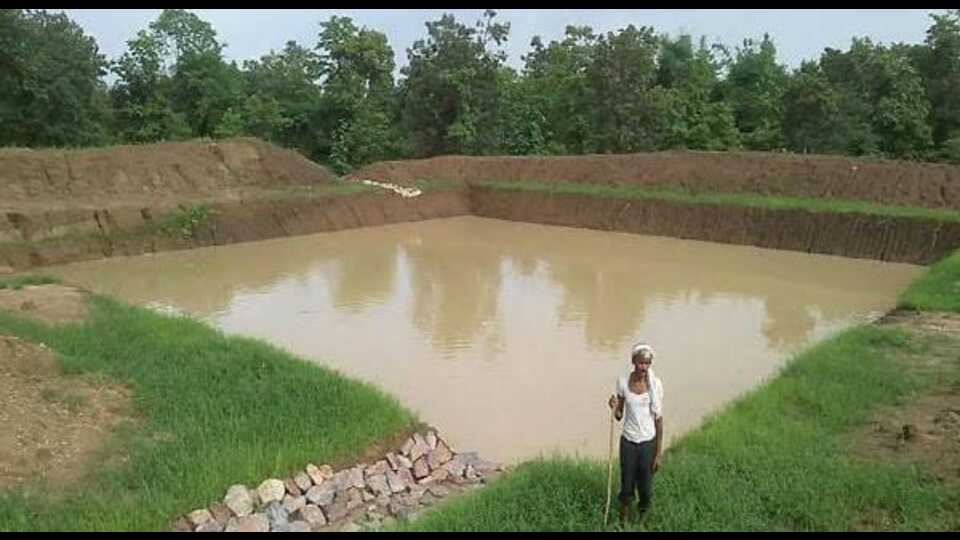
Deputy commissioner, Mahatma Gandhi National Rural Employment Guarantee Scheme (MNREGS-Labour Employment) Gulab Chand, said as many as 584 ‘Amrit Sarovars’ are ready in rural and urban areas of the district. These sarovars have been constructed in an area of about 7,000 hectares. Now, more than 200 crore litres of rainwater can be stored in these ‘sarovars’, he shared.
On the instructions of the state government, administrative promptness has come to fore in the construction of Amrit Sarovars in the district.
Chand said that more than ₹119 crore has been spent on the construction of ‘Amrit Sarovars’ in the district. He said that the maximum number of Amrit Sarovars have been constructed in Manda, Meja, Kaundhiara, Karachhana, Urwa and Jasra areas of the trans-Yamuna region of the district.
A large number of these ‘sarovars’ have also been built in Koraon, Shankargarh and Bara areas known to suffer from water shortage throughout the year, especially during the summers.
Big ‘Amrit Sarovars’ have been constructed in Bahadurpur, Soraon, Phulpur, Dhanupur, Bhagwatpur, Saidabad, Handia, Mauaima, Shringaverpur, Holagarh, Bahria areas of trans-Ganga region as well.
The target was to build 640 ‘Amrit Sarovars’ in the district, out of which 584 have been constructed so far, officials shared.
Due to weak monsoon for the last several years, the average annual rainfall in the district is continuously decreasing. With the construction of 584 Amrit Sarovars in the district by the government, about 200 crore litres of rainwater will be stored in them. There is also a proposal to build 56 lakes in the district, after which about 250 crore litres of rainwater will be stored. This will improve the groundwater level in rural areas, officials added.