
 E-Paper



Citizens raise concerns over dwindling ridership of Pune Metro
The number of passengers has been decreasing due to various reasons such as delay in operation of major stations and insufficient last-mile connectivity

 Prefer HTon Google


Citizens have raised concerns over the decreasing ridership of the Pune Metro, which is being executed by the Maharashtra Metro Rail Corporation Limited (Maha Metro). After the Pune Metro was expanded on August 1, 2023, introducing two new routes namely; Vanaz to Ruby Hall Clinic and Pimpri-Chinchwad Municipal Corporation (PCMC) to District Court, daily ridership rose to around 65,000. Since then, the number of passengers has been decreasing due to various reasons such as delay in operation of major stations and insufficient last-mile connectivity.
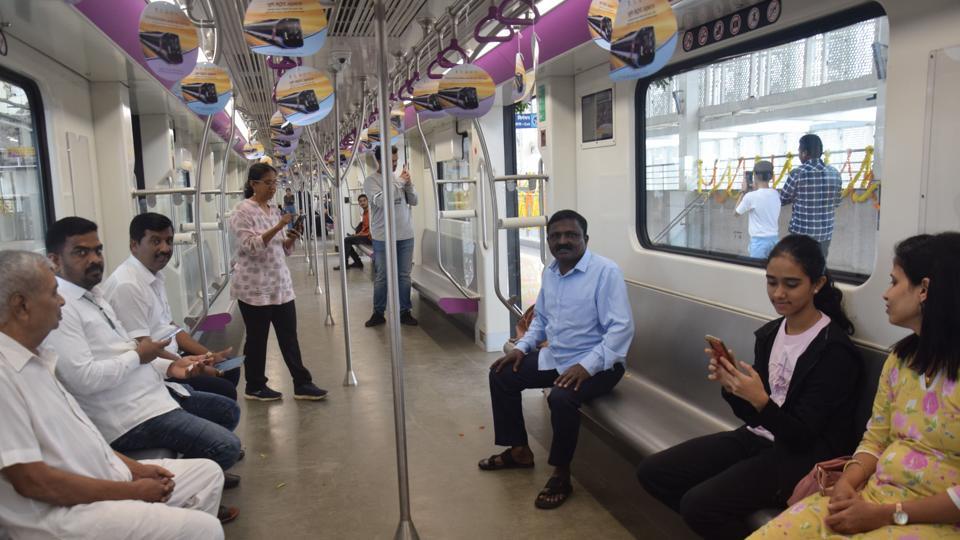
In August, 20.47 lakh passengers travelled by the Pune Metro, generating an income of Rs3.07 crores. In September, the ridership fell to 20.23 lakh passengers even as income fell to Rs2.98 crores. In October, ridership fell further to 16.72 lakh passengers as income dropped to Rs2.48 crores. In November, the number of passengers plunged to 14 lakhs as income crashed to Rs2.20 crores. The decline in ridership and revenue poses a significant challenge for the Pune Metro as it strives to boost passenger numbers.
Sudhir Mehta, a Pune-based industrialist who has created a forum for citizens to address various issues, said, “It’s a matter of concern that we often forget about the crucial last-mile connectivity for our metro rail projects, especially using electric buses and other electric vehicles. For a massive project like the Pune Metro, the completed sections generated a meagre monthly revenue of less than Rs1 crore in November, and the capacity utilisation was less than 1%.”
“The lack of affordable last-mile connectivity, which constitutes just 10% of the metro’s construction cost, not only results in significant financial losses but also discourages people from choosing public transportation. To make mass public transport in Pune more practical and less of a spectacle, it’s crucial to complete all routes and ensure seamless last-mile connectivity,” Mehta said.
Before the launch of the Pune Metro on March 6, 2022, there were only two lines in operation namely; Vanaz to Garware College and Pimpri to Phugewadi. In the year following the launch, a total 1,978,160 passengers travelled on both routes, implying that on an average, around 5,000 passengers used the metro that year. Later when extended routes were introduced, the daily ridership first increased to around 65,000 only to gradually decrease over the next few months.
Hemant Sonawane, executive director (administration and public relations), said, “In November, there was a decrease in the number of people using the Pune Metro. It turns out that during Diwali, fewer passengers were using the metro due to the holidays observed by employees and students. This festive period led to a daily decline in metro ridership, resulting in a drop in overall passengers and ticket revenue. After Diwali, there has been a rise in ridership and revenue also.”
“We have improved last-mile connectivity at most of the stations. We have started ‘share-an-auto’ services at five metro stations. We will see an increase in passengers and revenue as new stations start operating. It will take some time. Ramwadi, Kalyani Nagar, Yerawada, Swargate and Mandai are the main stations which are yet to be connected. Once they are connected, we will see the change. We are going to increase connectivity soon. Ridership and response of passengers will increase slowly and definitely,” Sonawane said.
Meanwhile, daily commuters using the Pune Metro are choosing cards for their travel needs and 28,930 metro cards have been handed out till date. Among these cardholders, 4,136 are students enjoying a 30% discount on their metro tickets, Sonawane said.


