
 E-Paper



Fisheries dept busts illegal African catfish farming in Ujani wetland; 2.4 tonnes seized
Raid was carried out at Kalthan No. 2 on November 27, where officials found large-scale cultivation of African mangur (Clarias gariepinus), a species banned in India since 1997 for its invasive nature and ecological risks

 Prefer HTon Google


In one of the biggest crackdowns on banned aquaculture in recent years, the Maharashtra fisheries department has seized 2.4 tonnes of African catfish illegally farmed in the Ujani reservoir backwaters in Indapur.
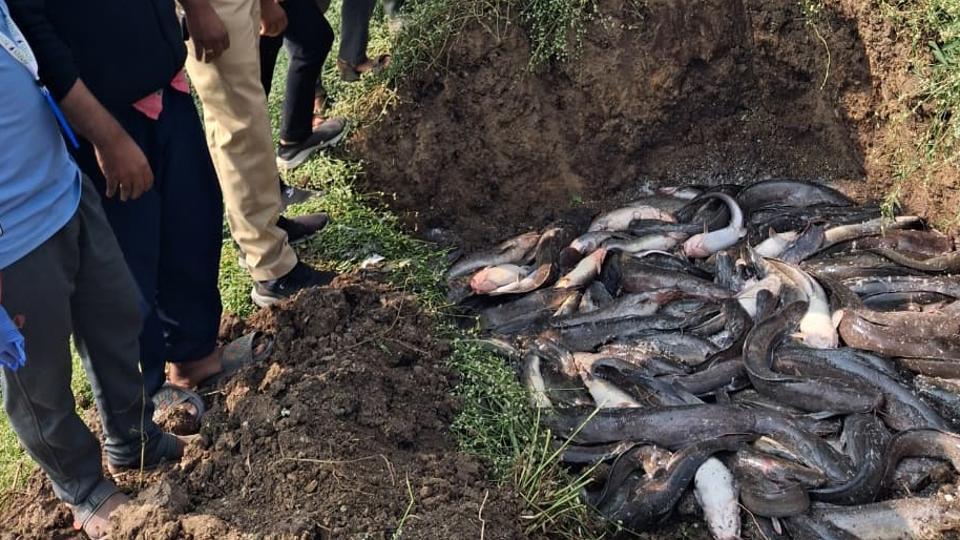
The raid was carried out at Kalthan No. 2 on November 27, where officials found large-scale cultivation of African mangur (Clarias gariepinus), a species banned in India since 1997 for its invasive nature and ecological risks. The seized stock was destroyed after the action.
Assistant commissioner of fisheries Archana Shinde led the operation along with the fishery development officer and field staff.
To confirm the species, the department sought help from experts at the Bombay Natural History Society (BNHS). A team headed by Unmesh G Katwate, who leads BNHS’s Wetland Eco-Restoration and Fisheries Development Programme, verified the catch as African mangur. The team also collected water samples from the site for evidence and ecological analysis.
Katwate said the seized fish will be examined for microplastics and heavy metals—contaminants often linked to unregulated aquaculture. BNHS will also assess the impact of illegal farming on the reservoir, designated an important bird area (IBA) since 2014 and home to a rich population of migratory and resident birds.
Officials said some farm owners continued to cultivate the banned species despite earlier notices, posing a serious threat to native fish population and the wetland ecosystem. “Invasive predators like African mangur can severely disrupt the local food web,” a BNHS researcher said.
Shinde urged farmers to shift to legal and sustainable aquaculture. “We are ready to support farmers with scientific alternatives. They must stop illegal African catfish farming immediately,” she said.
The fisheries department said it will intensify surveillance across the state and continue strict action against illegal aquaculture operations.


