E-Paper



China yet to confirm President Xi Jinping’s participation in G20 Summit
Last week, India and China offered different characterisations of a conversation between Prime Minister Narendra Modi and Xi on the margins of the Brics Summit in Johannesburg

 Prefer HTon Google


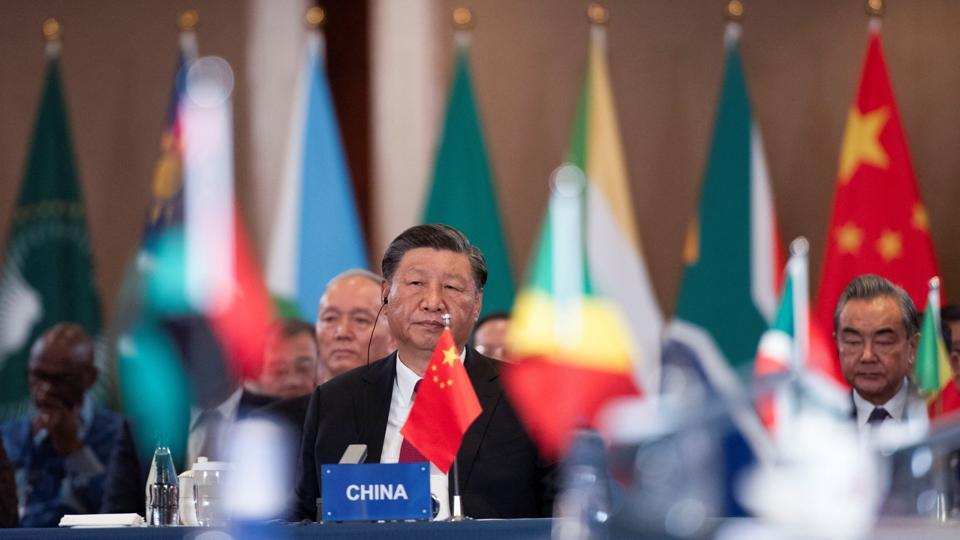
Beijing is yet to confirm President Xi Jinping’s participation in the G20 Summit to be hosted by India next month, people familiar with the matter said on Thursday amid speculation on whether the Chinese leader will skip the meeting.
The development comes against the backdrop of one of the worst phases in the India-China relationship in six decades, with the two countries locked in a military standoff on the Line of Actual Control (LAC) that has dragged on for more than three years. Both sides have arrayed more than 50,000 troops each in Ladakh sector of the LAC.
The people cited above, who spoke on conditions of anonymity, said that official word was still awaited from the Chinese side about Xi’s participation in the G20 Summit to be held in New Delhi during September 9-10.
“As of yesterday [Wednesday], there was no confirmation about the Chinese president’s participation in the G20 Summit,” one of the people said.
Another person said there had been indications from the Chinese side that Xi may not attend and China could be represented by another leader.
Reuters cited an Indian official in New Delhi and two foreign diplomats and an official working for the government of another G20 country in China – all unnamed – to report that Xi is likely to skip the G20 Summit. Premier Li Qiang is expected to represent China at the meet, the report said.
There was no official word from the Indian and Chinese sides on the matter.
Last week, India and China offered different characterisations of a conversation between Prime Minister Narendra Modi and Xi on the margins of the Brics Summit in Johannesburg, even as Beijing sought to downplay the LAC standoff as a “historical issue” that doesn’t represent the entirety of bilateral ties.
The Indian side had clarified the Modi-Xi encounter was the outcome of a pending Chinese request for a bilateral meeting, while China’s foreign ministry issued a readout that said the conversation was held at the Indian leadership’s request.
Modi told Xi during the conversation that maintaining peace and tranquillity in the border areas and respecting the LAC are “essential” for normalising bilateral ties. The Indian side further said the two leaders agreed to “direct their relevant officials to intensify efforts at expeditious disengagement and de-escalation”.
However, the Chinese readout made no mention of efforts to resolve the standoff through disengagement of troops and de-escalation, and only quoted Xi as saying that the “two sides should bear in mind the overall interests of their bilateral relations and handle properly the border issue”.
The two sides have struggled to address remaining friction points on the LAC, especially Depsang and Demchok, after more than two dozen rounds of diplomatic and military talks.
The G20 Summit was also being seen as a venue for possible bilateral meetings between Xi and other leaders such as Modi and US President Joe Biden, who has confirmed his attendance.
Russia has already announced that President Vladimir Putin will not be travelling to New Delhi and the delegation will be led by foreign minister Sergey Lavrov.
Xi has made few foreign visits since China dropped strict Covid-19-related restrictions this year.