E-Paper



COP29: India sees key moment for Global South
The African Group of Negotiators (AGN) strongly supported India’s position, reflecting a united front among developing nations.

 Prefer HTon Google


The COP29 climate talks present a historic opportunity for the Global South, where populations are most vulnerable to climate change, to commit to ambitious mitigation action, India stressed during a key round of talks, where its lead negotiator also reiterated calls for the rich world to commit to mobilising at least $1.3 trillion.
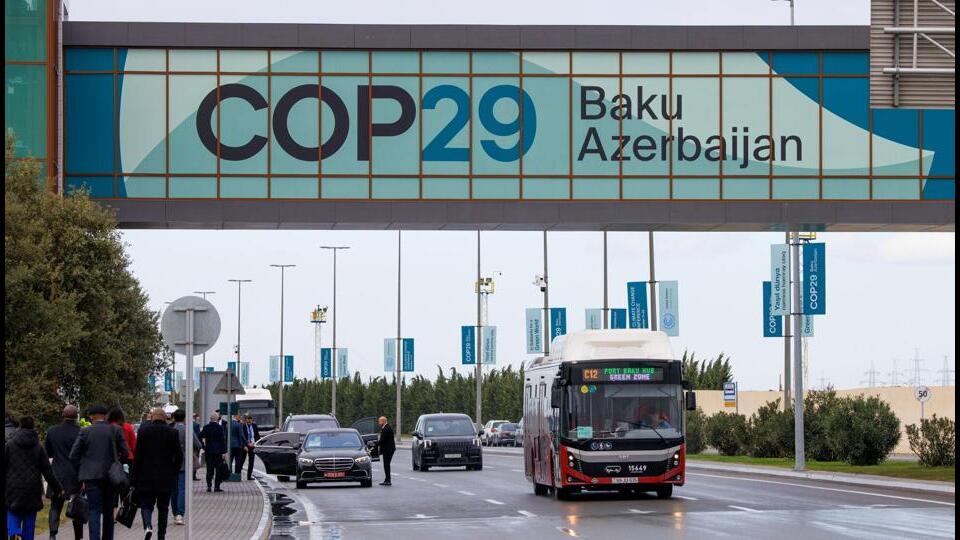
During Thursday’s High-Level Ministerial on Climate Finance, India’s lead negotiator Naresh Pal Gangwar also warned against attempts to dilute developed nations’ financial obligations under the Paris Agreement amid unprecedented presence of fossil fuel interests at the negotiations.
Gangwar pushed for developed countries to commit at least $1.3 trillion annually until 2030, specifically through “grants, concessional finance and non-debt-inducing support” for developing nations. The demand comes as developing countries face mounting challenges from climate impacts while struggling to finance both mitigation and adaptation measures.
“We are at a crucial juncture in our fight against Climate Change. What we decide here will enable all of us, particularly those in the Global South, to not only take ambitious mitigation action but also adapt to Climate Change,” Gangwar said, pointing to increasingly frequent and intense extreme weather events affecting developing nations.
India took a firm stance against attempts to redefine the New Collective Quantified Goal (NCQG) on climate finance, which is set to replace the Paris Agreement’s $100 billion annual target - a commitment made in 2009 that remains unfulfilled fifteen years later. “NCQG cannot be changed into an investment goal when it is a unidirectional provision and mobilisation goal from the developed to the developing countries,” Gangwar emphasised, adding that “bringing in elements of any new goal, which are outside the mandate of the convention and its Paris Agreement, is unacceptable.”
The intervention highlighted two main concerns: about attempts to shift climate finance obligations away from public sources in developed countries toward market mechanisms and private investment, and for the need to recognise historical responsibility that the Paris Agreement clearly pins on developed countries.
The African Group of Negotiators (AGN) strongly supported India’s position, reflecting a united front among developing nations. “We are standing firm against attempts to re-define Paris Agreement’s obligations. The funding commitments by developed nations remain binding. For Africa and other developing nations, the $1.3 trillion is essential for achieving climate adaptation, resilience, and emissions reductions,” said AGN chair Ali D Mohamed.
India’s statement emphasised that progress at COP29 is vital for momentum heading into COP30 in Brazil, where countries are expected to submit updated Nationally Determined Contributions (NDCs).
Gangwar expressed disappointment with developed countries’ performance on existing commitments, particularly the unfulfilled $100 billion pledge from 2009. “We have a common time frame for expressing ambitions every five years. There is a similar need in terms of Climate Finance. We are very hopeful that developed countries will realise their responsibility to enable enhanced ambitions and make this COP29 a success,” he said.
The outcome of these finance discussions could significantly impact the global community’s ability to achieve the Paris Agreement’s goals, especially with latest estimates and projections showing the world has already reached 1.3°C of long-term warming, dangerously close to the 1.5°C target set during the Paris deal.
PRIVATE SECTOR FUNDING NOT ENOUGH
A new analysis by Oil Change International has cast serious doubt on developed nations’ emphasis on private sector finance mobilisation. The report revealed that low- and lower-middle income countries, representing 42% of the global population, received just 7% of clean energy investment in 2022. The study challenged the fundamental assumption driving developed countries’ approach to climate finance - that each dollar of public finance could attract $5-7 in private investment. In practice, researchers found that every dollar leverages only 85 cents in private finance, dropping to a mere 69 cents in low-income countries.
FOSSIL FUEL LOBBYISTS UNDER FIRE
Concerns about fossil fuel industry influence at the talks have intensified with the revelation that at least 1,773 fossil fuel lobbyists are attending COP29, according to detailed analysis by the Kick Big Polluters Out (KBPO) coalition.
The number of industry representatives exceeds the delegation size of almost every participating country, with only host Azerbaijan (2,229), COP30 host Brazil (1,914), and Türkiye (1,862) sending larger contingents.
“The fossil fuel lobby’s grip on climate negotiations is like a venomous snake coiling around the very future of our planet,” said Nnimmo Bassey from KBPO, calling for removal of industry influence from the talks. The KBPO analysis was based on the UNFCCC’s provisional participant list published on November 11, cross-referenced against previous COPs’ fossil fuel lobby records and external lobbying registers.