
 E-Paper



‘Criminal intent’ behind graft in procurements during Covid: Minister
The partial report outlined several discrepancies across multiple state agencies, including state health and family welfare department, NHM, and Karnataka State Medical Supplies Corporation Ltd


Amid the Mysore Urban Development Authority (MUDA) land allotment case against chief minister Siddaraamiah, the Congress government has hit back against opposition claims of corruption by shedding light on irregularities in Covid-19 procurement contracts during the Bharatiya Janata Party (BJP) rule in the state.
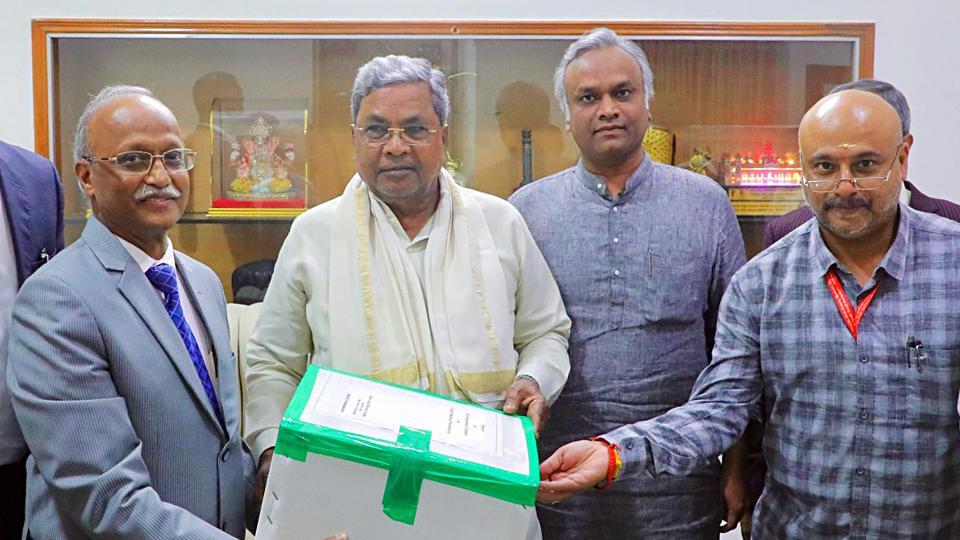
The government in October had released a partial report detailing plans to recover ₹500 crore from various companies implicated in the scandal. The inquiry, conducted under the John Michael D’Cunha commission, has stirred political controversy with allegations of mismanagement under the previous BJP-led administration.
The partial report outlined several discrepancies across multiple state agencies, including the state health and family welfare department, the National Health Mission (NHM), and the Karnataka State Medical Supplies Corporation Ltd. (KSMSCL). However, activists have raised concerns about gaps in the investigation, saying some critical issues were left unaddressed.
State law minister HK Patil said: “The government will take steps to recover the money. While special investigation team (SIT) will take measures such as filing FIRs against those involved in the scam, the government will wait for the final report by the commission and SIT’s probe before deciding further course of action.” He added that “criminal intent” was involved, which led to the decision to form an SIT and the sub-committee for “review and monitoring.”
In response, senior BJP leaders have accused the Congress-led government of using the inquiry as a political weapon. “The report is part of a vendetta,” BY Vijayendra, BJP state president, said while echoing claims made by former health minister K Sudhakar. Both leaders argued that the investigation aims to divert attention from irregularities in the Mysore Urban Development Authority (MUDA).
An activist, on condition of anonymity, said: “The report doesn’t mention the pharmaceutical company which face complaints about inflated pricing for RNA kits. But the report lists Triyar Solutions Inc., Genetics Biotech Asian Private Limited, and Bangalore Medical Systems. This raises questions about selective allegations being reported.”
The companies named in the report did not respond to HT emails.
Among the missteps identified by the John Michael D’Cunha commission was the delay in procuring antigen test kits, which resulted in losses of over ₹10 crore. Despite these failures, the report did not explore the corporation’s procurement practices in detail. Activists also flagged significant discrepancies in ventilator purchases. “The Cunha committee overlooked the inflated costs of ventilators procured during the pandemic,” said the activist. “While Tamil Nadu secured ventilators at ₹4.78 lakh per unit, Karnataka paid ₹18 lakh per ventilator, and this discrepancy was not addressed.” According to the activist, the final report that is expected in the coming months should address these issues.
Meanwhile, the commission has recommended the recovery of ₹500 crore in excess payments and has urged further investigation into missing records. In response, the state government has established a high-level committee led by chief secretary Shalini Rajaneesh to probe deeper into the findings and identify why certain crucial files were unavailable to the commission. This committee has been given one month to submit its report.
One of the findings in the report was of the irregularities at the Kidwai Memorial Institute of Oncology (KMIO). The report reported alleged mismanagement in RTPCR testing, manpower recruitment, and equipment procurement, with discrepancies totalling ₹264.37 crore. Misuse of public funds was also allegedly found in a partnership between KMIO and Bangalore Medical Systems (BMS), where a private lab was falsely presented as an in-house facility, bypassing the tendering process.
“While the records with the commission state that 15,67,476 tests and ₹129.24 crore as the amount for payment, the note sheet states 27,68,027 tests were conducted. The total payment done as per the payment details states that ₹125.46 crore was paid to BMS lab (with a pending balance of ₹3.77 crore). However, the then institute director had requested BBMP to release ₹13.62 crore for the balance bill and also stated that 25,46,630 samples were tested for BBMP. These inconsistencies state that there is an overclaim for the testing done at BMS labs,” the report stated.
The report further stated that KMIO continued conducting Covid-19 tests until January 2022, despite being instructed to stop in October 2021 due to discrepancies in its RTPCR reports. “Although Kidwai Institute was directed to stop receiving Covid-19 samples on October 8, 2021, due to complaints and discrepancies in the RTPCR reports, tests were conducted till January 2022. Then BBMP Commissioner was asked to appoint an expert committee to inquire into allegations of discrepancies in RTPCR reports and stop sending samples to KMIO. Yet, the BBMP sent 2,50,696 samples to Kidwai,” according to the report.
The commission has identified further irregularities in drug and equipment supplies, where payments were made for partial deliveries, leading to additional financial losses. These lapses were found across several agencies involved in pandemic-related procurement, with suspect transactions reportedly amounting to thousands of crores.
Justice John Michael D’Cunha was not available for a comment on the allegations raised by the activists.


