
 E-Paper



Eminent jurist, constitutional expert AG Noorani dies at 93
Noted constitutional expert and author Abdul Ghafoor Noorani passed away on Thursday afternoon. He was 93.

 Prefer HTon Google


Noted constitutional expert and author Abdul Ghafoor Noorani passed away on Thursday afternoon after being confined to the bed for well over a year due to a fall that left him with a shoulder injury. He was 93.
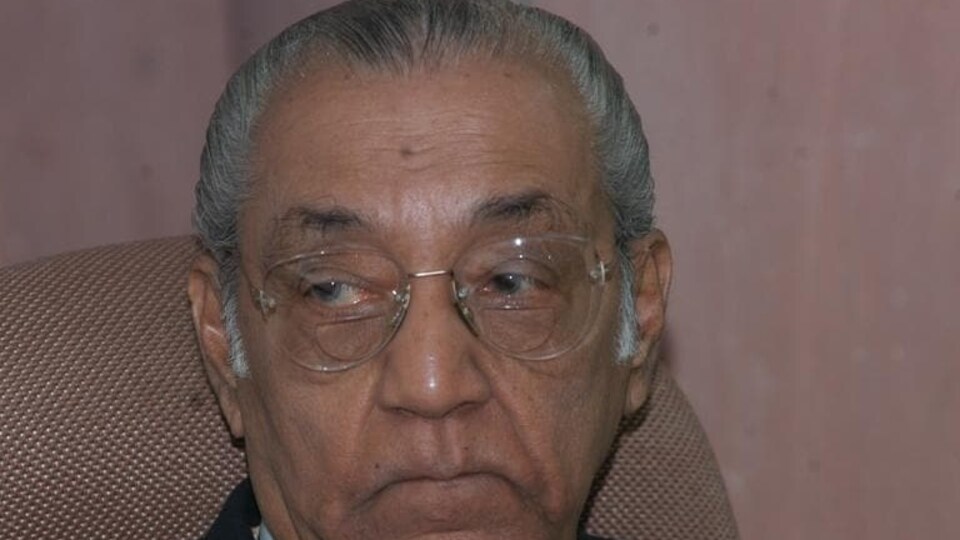
A prolific writer and legal expert, Noorani leaves behind a tremendous legacy of scholarly and journalistic work that ranged from fundamental rights and secularism to parliamentary procedure and constitutional questions.
Noorani was born on September 15, 1930 in Mumbai (then Bombay), at a time of great tumult. It was in these decades that India underwent a momentous change from being an exploited colony of the British Empire to a newly-forged nation. As a teenager and young adult, Noorani was witness to the horrors of Partition and the birthing pangs of a country that fought hard for cohesion within its borders, from Kashmir to Junagadh and Hyderabad.
A bright student by all accounts, Noorani, nevertheless, was asked to repeat a year — the principal of St Mary’s school in Byculla reportedly decried the teenager’s participation in the freedom protests that left him without the necessary attendance. Noorani eventually cleared the exam and went on to study law at the Government Law College.
Noorani is best known for his scholarship on the Kashmir Question as well as the Emergency, and the dispute surrounding the Ram Janmabhoomi-Babri Masjid site, as he wove deep legal knowledge and difficult-to-unearth research into his polemic.
He also had his own Emergency story to tell but this dated back to 1965, when the emergency first declared during the Sino-India war in 1962 was still in place. Noorani was arrested under the preventive detention law applicable at the time and sent to Yerwada prison, his niece Fawzia Madni said.
“We visited him thrice while he was in jail. And finally, after four months, he was released and bundled into a state transport bus and sent back to Bombay.”
Ashok Desai and Anil Divan, then junior lawyers (both went on to become legal luminaries; Desai was attorney general of India and Devan a senior advocate of the Supreme Court), filed the habeas corpus plea on his behalf.
Former attorney general KK Venugopal remembered meeting Noorani often in Delhi in the 1980s, and the two would scour the streets of Old Delhi and Jama Masjid for kebabs and biryani. “We also shared a love for antiquarian books, and we would often exchange notes on where to get them from and what to acquire. He was truly one of the best legal brains in India, and the government often took his help in matters of research on international boundaries.”
Noorani often travelled to Delhi for work and meetings, and stayed at the India International Centre. A long-time employee of the Delhi institution recalled that Noorani preferred to stay in Room Number 38, which overlooks the garden, each time he visited.
Noorani’s expertise lay in his deep understanding not just of the nuts and bolts of governance — elections, commissions of enquiry, Parliament’s scope of power, and the responsibilities of the judiciary — but also of the most pressing political debates of independent India.
His books, Constitutional Questions in India (2000) and Citizens’ Rights, Judges and State Accountability (2002), for instance, offer a masterful account of the tumultuous political years between 1989 and 1999 that saw seven prime ministers take oath for varying durations (only two completed a full term), and also address procedural questions pertaining to federalism and the rule of law.
Noorani’s writings on Jawaharlal Nehru’s fraught equation with Sheikh Abdullah plumbed official documents and obscure letters, eventually resulting in the seminal 2013 book, The Kashmir Dispute. However, in an article published in 1999 in the Economic and Political Weekly, he wrote about the Nehru-Abdullah rift, which marked a turning point in the history of Kashmir and yet, whose background was little known and even less understood. His article offered a robust defence of Abdullah’s position on Kashmir.
“Sorry to hear about the demise of A G Noorani Sb earlier today. Noorani Sb was a man of letters, an accomplished lawyer, a scholar & a political commentator. He wrote extensively on matters of law and on subjects like Kashmir, RSS and the constitution. May Allah grant him the highest place in Jannat,” Abdullah’s grandson, Omar Abdullah, vice-president of the Jammu Kashmir National Conference, wrote on X.
In an article published soon after the Janata Party came to power in 1977, Noorani wrote about the role of the judiciary during the Emergency years (1975 to 1977), and drew a distinction between the manner in which the high courts and the Supreme Court exercised power, and the manner in which lawyers who dissented against the government were put behind bars. The piece is replete with anecdotes that leave the reader, even today, with a clear understanding of what it was like to live through those times.
“In the morning of August 29, 1975, three boys, about 15 years old, were found by the police to be in possession of 48 leaflets containing the news bulletin issued by the Lok Sangharsha Samiti (People’s Struggle Society). It contained a report of the speech by Mr. Mohan Dharia, M. P., in the Lok Sabha condemning the emergency and some news items. They were promptly arrested by the police. Their case was not different from that of thousands of others imprisoned in similar circumstances. But it had a strange sequel. They applied for bail pending investigation and the trial progressed to the magistrate, to the sessions judge, and, eventually, to the Nagpur bench of the Bombay high court. Mr. Justice U. R. Lalit ordered their release on bail on October 6, 1975. (...) The judge had perforce to consider whether the leaflet contained a “prejudicial report” whose circulation was an offence. The expression had the same import (...) as the offence of sedition. The judge held that the leaflets were not seditious and released the boys on bail. This judgement was cited as a precedent in magistrates’ courts and helped to secure the release of many a dissenter,” Noorani wrote in ‘The Judiciary and the Bar in India during the Emergency’, published in the journal Law and Politics in Africa, Asia and Latin America in 1978.
“Mr. Noorani was one of the most fearless and courageous lawyers, who thought it was their duty to speak out without fear. His articles and books straddled law, politics and history and were valuable contributions to legal and historical academia. Civil society owes him a debt of gratitude,” said Navroze Seervai, a senior advocate at the Bombay high court (HC). Seervai’s father, constitutional expert HM Seervai, represented 16 judges who were arbitrarily transferred during Emergency, and was a close associate of Noorani.
Although trained in the law, Noorani was at heart a journalist, said N Ram, former Editor-in Chief of The Hindu Group of publications. Noorani wrote regularly for the Frontline starting in the early 1990s. He was also a contributing writer at the Economic and Political Weekly, and later, The Statesman. He wrote for this publication on a number of occasions, and his pieces also appeared regularly in the Pakistan-based newspaper, Dawn.
“Abdul was a journalist’s journalist. He didn’t write about light subjects, and he wrote long-form pieces in which he would demonstrate his sources, including the extensive documentation he relied on for research. He was erudite, serious, versatile and brave. He was fiercely independent and stood his ground. But most importantly for an editor, he was immensely productive and delivered on a deadline,” said N. Ram.
His writings for Frontline never once invited legal trouble, Ram said.
“He was an experienced lawyer and therefore, he knew the definition of defamation and the boundaries to which he could push his freedom of expression. His writings never once invited any legal trouble,” he said.
“AG Noorani, a giant among scholars, has passed away. I learnt a great deal from him, from the constitution, to Kashmir, to China & even the art of appreciating good food. May Allah grant him maghfirah,” wrote Asaddudin Owaisi, member of parliament and president, AIMIM.
In recent times, Noorani’s views, particularly on right wing political outfits, ran into controversy and invited backlash, and this included his provocatively titled 2019 book on the Rashtriya Swayamsevak Sangh, the ideological fount of the ruling Bharatiya Janata Party. His book on Sardar Vallabhbhai Patel, the country’s first home minister who is credited for bringing most princely states to sign the Instrument of Accession to India before Independence, also invited controversy after it was released in 2013.
“Mr Noorani was a charming, old-world Bombay notable with whom I came in contact during the campaign against Rajiv Gandhi [former Prime Minister, 1984-89]. He was rigorous and exacting in his research. We went our separate ways after the fall of the Janata government and he became an active member of the anti-BJP brigade and even flirted with the Left. It is sad that in his latter years he was often unable to distinguish between sectarian and national interests. He became a social and political anachronism. All the same, I will remember him as a charming oddity who graced the political world once upon a time,” said Swapan Dasgupta, member of the BJP national executive and former Rajya Sabha member of parliament.
The second oldest of six siblings, Noorani is survived by brother, Mushtaq and sister, Zahida, as well as nieces and nephews. He never married. His funeral was held on Thursday at the Cutchi Memon Kabristan in Mangalwadi, Girgaon, in the midst of family and close friends.


