
 E-Paper



Grand Tamasha: How political life is akin to economic decision-making
A new book by political scientist Soledad Artiz Prillaman, The Patriarchal Political Order: The Making and Unraveling of the Gendered Participation Gap in India, explains why.

 Prefer HTon Google


One of the most remarkable developments in Indian politics in recent years is the surge in female voter turnout. For the first several decades after Independence, women’s participation on election day lagged men’s by between 8 to 12 percentage points. In recent years, however, that gender gap has completely disappeared.
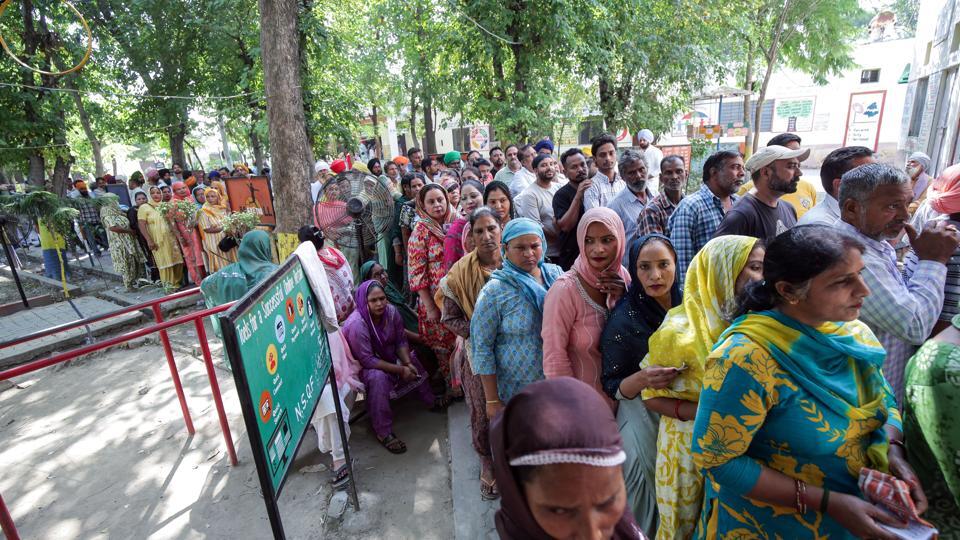
But this good news story obscures a puzzling fact: while Indian women vote at high rates, they are markedly less involved than men in politics between elections. A new book by political scientist Soledad Artiz Prillaman, The Patriarchal Political Order: The Making and Unraveling of the Gendered Participation Gap in India, explains why. Prillaman was the featured guest on last week’s episode of Grand Tamasha, a weekly podcast co-produced by HT and the Carnegie Endowment for International Peace.
Prillaman, an assistant professor of political science at Stanford University, joined host Milan Vaishnav to talk about what can be done to ensure women have a seat at the table even when the electoral spotlight is off. Her new book documents India’s patriarchal political order and then unravels it by demonstrating the power of public policy and women’s action to test that dominant political order.
One of Prillaman’s main contributions is to advance a theory of coercive political power in which households are front and center in explaining women’s political behavior. She argues that many women participate in politics only when it serves the interests of men.
“When we think about financial decisions, that’s something we think of as a household decision. I sit with the people in my household to decide how we’re going to spend our income,” said Prillaman. And for many Indians, she explained, their political life is much more akin to this kind of economic decision-making, where the household is the unit at which political decisions happen.
“I think the reason for that is, in part, because of the social norms that create such a strong attachment to the household…When you reassign the unit of observation to the household, it means that it is no longer my beliefs or preferences that might shape my behavior, but the beliefs and preferences of everyone else in my household. And that starts to introduce power…So, whose preferences are going to matter most for my political behavior is going to be a function not just of what I want but of who has power,” she argued.
In the long run, Prillaman argued, “Women’s empowerment cannot be done by Band-Aid.” On the one hand, she acknowledged that there has been important progress in women’s political participation, as evidenced by the fact that women are turning out to vote in great numbers and are making their voices heard.
“But, at the same point in time, it’s not like women’s labor force participation rates have dramatically changed, despite the fact that so many of the policies that women were promised were around exactly that issue,” she cautioned.
“We should all just remember that patriarchy resists its challenges, and it reasserts itself. It just does so in new ways, which means that policies that we implement to empower women can never be seen as just ‘one and done.’ It’s always going to be a game of ‘whack-a-mole’ until the fundamental, underlying power structures have changed.”


