
 E-Paper



Niti Aayog’s withdrawn paper called for lower agri tariffs
Ongoing negotiations between the two nations present “clear opportunities for reform and mutual benefit”, the authors said

 Prefer HTon Google


A paper on US-India farm trade by Niti Aayog, now withdrawn, suggested a selective lowering of tariffs to the country’s advantage, including on genetically modified (GM) soyabean and corn, apart from creating liberal domestic farm markets, a key provision of the farm laws repealed by the Modi government following a backlash from farmer unions.
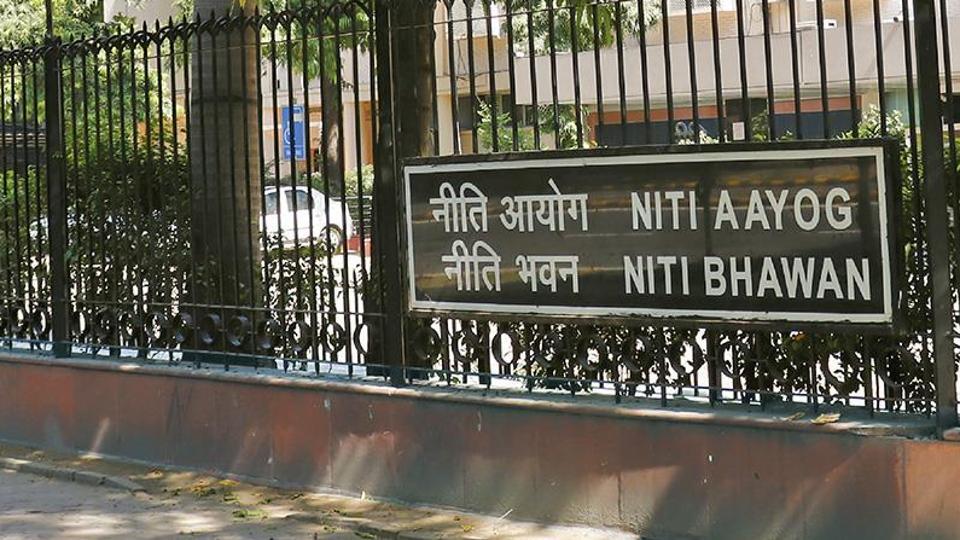
The paper authored by economists Ramesh Chand and Raka Saxena, acknowledged challenges posed by Trump’s reciprocal tariffs announced in April, but identified areas where India could gain while recommending reforms to enhance acceptance of Indian produce in the US. It was first uploaded on the think-tank’s website on May 30, and withdrawn in the following week.
Ongoing negotiations between the two nations present “clear opportunities for reform and mutual benefit”, the authors said. Chand is member and Saxena a senior adviser at the Niti Aayog, the state-run think tank.
Washington’s demand that India open its markets for GM soyabean and corn, which the US produces in excess, has been a key sticking point in talks for a bilateral trade agreement, according to a person familiar with the matter, who asked not to be named. India doesn’t allow GM foods and has steered clear of home-grown GM technologies in crops, such as mustard.
The paper however said India could look at lower tariffs on GM produce from the US. “India is the largest importer of edible oil in the world and the US has huge export surplus of soybean which is GM. India can offer some concessions to US in import of soybean oil to meet US demands to reduce trade imbalance, without harming domestic production,” the authors wrote.
The US wants greater market access for its farm produce in India, which enjoys a large agricultural trade surplus, with total farm exports valued at nearly $5.7 billion in the three years ending 2024, according to the paper.
If a trade agreement isn’t concluded before July 9, a date set by Trump, then higher US tariffs of 26% on India’s exports will kick in. Tariffs, which are taxes levied on imports, influence how much of a good or service a country is able to export or buy from abroad.
India could also consider lower tariffs on items that do not compete with domestic production, such as apples, the paper states. The US’s apples sell at a “premium price” in Indian retail markets due to difference in quality, longer shelf life and off-season availability. So, tariffs on apples could be moderately lowered, the authors said.
The Niti Aayog’s CEO BVR Subrahmanyam, vice-chairman Suman Berry as well Chand, did not respond to queries seeking a comment on the paper and why it was withdrawn. A spokesperson for the think tank said she did not have knowledge of the matter.
The paper said the sprawling farm sector needed safeguards to protect incomes but called for medium-term “structural reforms” to improve global competitiveness. The farm economy accounts for roughly 18% of India’s gross domestic product.
The authors called for reforms in farm markets, including easier laws governing the sale and purchase of agricultural items, which are carried out in state-regulated wholesale yards known as agricultural produce market committees (APMC).
The Modi government had enacted three farm reform laws to push these very measures but scrapped them in 2021 after furious protests by cultivators. Farm unions at the time said removal of regulations could leave them vulnerable to exploitation by large food corporations.
Measures such as “liberalizing APMC laws, enabling direct procurement and promoting agro-processing clusters” can boost exports, the authors said. The paper largely glossed over the sensitive dairy sector but said India could gain larger market access, pointing to milk producer Amul’s presence in the US.
One of the challenges highlighted by the authors is the diminishing relative share of food in overall trade between India and US, and coupled with that, a projected increase in India’s food output. “This will require higher fraction of domestic production to be sold in overseas markets either in raw form or in processed form,” the authors said.


