
 E-Paper



OPEC+ move will impact global prices, says India
Speaking to reporters in Washington DC, Union minister of petroleum and natural gas Hardeep Singh Puri expressed confidence that India will be able to navigate the situation.

 Prefer HTon Google


While acknowledging that the decision of Organisation of Petroleum Exporting Countries (OPEC)+ countries, that includes Russia, to cut production by two million barrels a day, is a matter of sovereign right, India has indicated that the decision has caught many by surprise and it will have an impact on global prices, inflationary cycle and recessionary climate building up in other parts of the world.
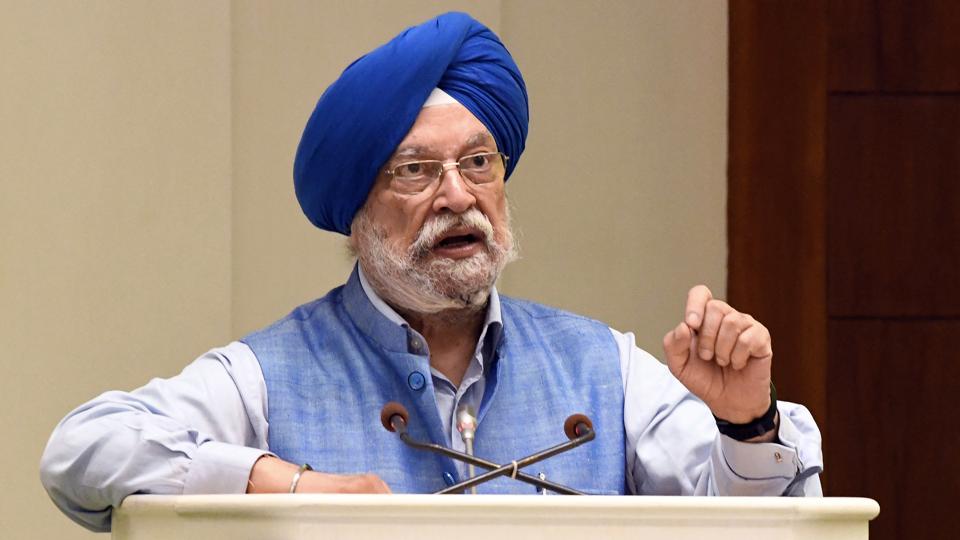
Speaking to reporters in Washington DC, Union minister of petroleum and natural gas Hardeep Singh Puri, while expressing the confidence that India will be able to navigate the situation, said, “At the end of the day, the amount of energy that is released by producers and suppliers matches the demand that there is in the market and there is an equilibrium, you will have market forces playing out. How much energy you release will have an impact on price levels.”
On Friday, Puri also participated in the second US-India Strategic Clean Energy Partnership ministerial, with his counterpart, US Secretary of Energy, Jennifer Granholm. The two sides discussing deepening their partnership across five pillars — responsible oil and gas, power and energy efficiency, renewable energy, sustainable growth and emerging fuel and technologies. During the discussion, Puri proposed the creation of an India-US green corridor to create an institutional mechanism to deepen ties on green, to which the US side responded positively.
On OPEC+’s decision, which has shaken global energy markets, Puri said that it had been widely commented upon, and how much of the proposed cuts absorbs lesser production from earlier and will involve fresh cuts “will be carefully studied”.
US President Joe Biden has already said that he is disappointed with the decision. Washington is unhappy with both the implications of OPEC’s decision in its larger plan to isolate Russia and squeeze Vladimir Putin of oil revenues; domestically, the Democratic Party see the OPEC+ move as being driven to hurt the party’s prospects in the upcoming midterm elections where inflation is a major issue.
Puri said that the market was preparing for a one-million-barrel cut. “The announcement of a two-million-barrel cut has taken large parts of the world by surprise and questions are being asked. It stands to reason that if there is a large shortfall in the amount of energy that is released in the markets, then prices will escalate and prices escalating will in turn exacerbate movement towards recession which in turn will lead to loss of demand. So, it becomes a vicious cycle.”
The minister said that decision had been taken, but all decisions with global ramifications have both “intended and unintended consequences”.
“On India’s part, we are very confident of being able to navigate through the situation. Obviously when prices go up, energy affordability and security is a major concern.”
When asked specifically if India was unhappy with the decision given its consequences, Puri said that India had traditionally taken the view that it was the sovereign right of countries to decide how much to produce and put in the market. “If oil prices shoot up and go back to where they were, it will affect the global economy…. What has happened is likely to be scrutinised very carefully. I am told that there were assurances given that they were not planning to do this.”


