
 E-Paper



SC: Right to development equals right to clean environment
The top court made the observations while setting aside an April 2022 order of the National Green Tribunal

 Prefer HTon Google


The Supreme Court on Monday ruled that while the right to clean environment is a guaranteed fundamental right under the Indian Constitution, the right to development through industrialisation holds equal priority. The court underscored the need for sustainable development that harmonises these two rights, striking a “golden balance” between environmental protection and economic progress.
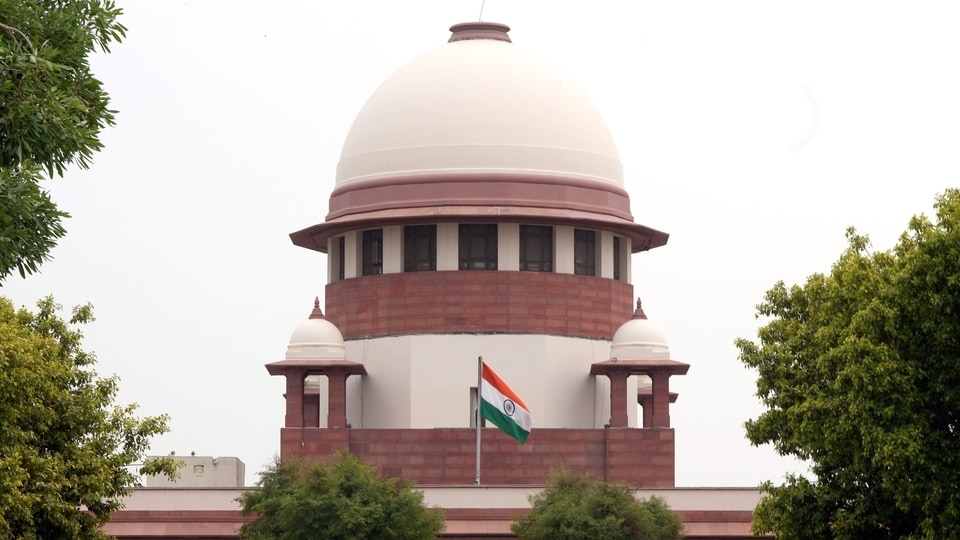
“While the right to clean environment is a guaranteed fundamental right under Articles 14 (equality) and 21 (right to life) of the Constitution of India, the right to development through industrialisation equally claims priority under fundamental rights, particularly under Articles 14, 19 (right to engage in any profession, occupation, trade or business) and 21 of the Constitution of India,” held a bench of justices Bela M Trivedi and PB Varale.
The top court made these observations while setting aside an April 2022 order of the National Green Tribunal (NGT) that had barred the Auroville Foundation from carrying out developmental activities in its township in Puducherry.
The bench highlighted that economic growth and environmental conservation are not mutually exclusive, drawing from past jurisprudence. “Sustainable development has been accepted as a viable concept to eradicate poverty and improve the quality of human life while living within the carrying capacity of supporting ecosystems,” noted the bench.
Holding that the principle is now a recognised part of customary international law, it further cited the Brundtland Report, defining sustainable development as “development that meets the needs of the present without compromising the ability of future generations to meet their own needs.”
The case arose after residents of Auroville approached the NGT, alleging that the Auroville Foundation’s road construction—particularly the Crown Road and Outer Ring Road—was destroying a forested area known as the Darkali Forest. The NGT had directed the foundation to prepare a revised township plan, obtain environmental clearance, and halt construction until then.
However, the Supreme Court held that NGT had overstepped its jurisdiction. The judgment noted that the Master Plan for Auroville, which included the contested roads, had been approved by the competent authorities as early as 2001 and notified in 2010.
“The Tribunal has completely misdirected itself by entering into the restricted domain of judicial review under the guise of applying the ‘Precautionary Principle’ in extraordinary circumstances and interfering with the implementation of the Master Plan,” said the bench.
The court also pointed out that there was no substantive evidence to establish that the Darkali Forest qualified as a deemed forest under the law. It cited the NGT’s own finding that the area was a man-made plantation and was never recorded as a forest in government documents.
While NGT had justified its directions under the “precautionary principle,” the bench found this approach inappropriate, especially in the absence of a proven violation of environmental laws.
The judgment criticised the NGT for imposing additional requirements, such as obtaining environmental clearance for further activities and mandating a Joint Committee inspection to consider modifications in road width to minimise tree-cutting. The bench held that these directions fell outside the Tribunal’s jurisdiction, especially when the Ministry of environment, forest and climate change (MoEF&CC) had already clarified that the Auroville Township project predated the Environmental Impact Assessment (EIA) Notification, 1994, and thus did not require fresh clearance.
Through a separate judgment, the same bench also struck down a Madras high court order in March 2024 that quashed a standing order issued by the Auroville governing board replacing the Auroville Town Development Council (ATDC) with an advisory group for implementing the master plan. The court noted that the Auroville Foundation Act and the rules vested the governing board with all the power to issue standing orders for the implementation of the Master Plan that stood approved in 2001 and for the development of Auroville as planned. The bench also imposed a cost of ₹50,000 on the petitioner who had assailed the 2022 standing order in the high court, lamenting that it was a motivated petition to “hamper the development of Auroville and to cause obstructions in the smooth functioning of the governing board”.



