E-Paper



Tigress from Maharashtra released into enclosure in Odisha’s Similipal core area
STR field director Prakash Chand Gogineni said tigress ‘Jamuna’ from Tadoba tiger reserve of Maharashtra was safely released into a soft enclosure

 Prefer HTon Google


BHUBANESWAR: The Odisha government on Monday attempted translocation of tigers releasing a tigress from Maharashtra into an enclosure in the core area of Similipal Tiger Reserve of Mayurbhanj district, the state’s biggest tiger reserve
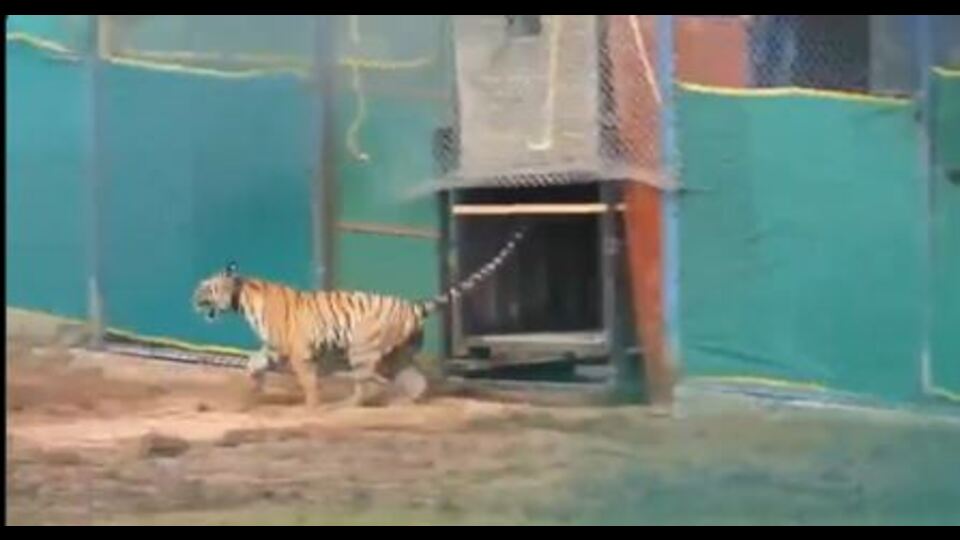
Similipal Tiger Reserve (STR) field director Prakash Chand Gogineni said the two-and-a-half-year-old tigress from Tadoba tiger reserve of Maharashtra was safely released into a soft enclosure of around two hectares in the core area of Similipal on Monday. “The tigress is active and healthy,” he said.
After the tigress was flown 900 km in a special transport vehicle from Maharashtra on Saturday to reach Similipal.
The tigress will be radio-collared to monitor its movement. A six-member team comprising forest frontline staff of Similipal and a GIS expert have undergone training at Nawegaon-Nagzira Tiger Reserve (NNTR) in Maharashtra to learn how to track the tigress and assist STR authorities in monitoring activities.
The translocation is part of an effort to improve the genetic diversity of Similipal tigers.
A study by researchers including scientists from the National Centre for Biological Sciences (NCBS), Bengaluru concluded that the odd coat colouration and patterning in Similipal’s black tigers may have arisen from a very small founding population of tigers and are inbred.
“Bringing female tigers from other forests and an increase in the tiger population will help increase the genetic diversity among tigers in Similipal,” said chief wildlife warden Susanta Nanda.
The translocation of the tigress comes six years due to the the outcome of the first inter-state tiger relocation programme in Satkosia tiger reserve of Odisha. Tigress ‘Sundari’ was brought from the Bandhavgarh Tiger Reserve in Madhya Pradesh to Satkosia tiger reserve of Odisha in June 2018 as part of the inter-state tiger translocation project and released into Satkosia Tiger Reserve in August the same year. However, it had to be shifted to an enclosure in the tiger reserve after it killed a 45-year-old woman and a 65-year-old man living in the reserve in September 2018 triggering violence by locals who burnt the forest department’s boats and beat house.
Mahabir, a male tiger relocated from Madhya Pradesh to Satkosia reserve in June 2018, died due to metal snares placed by poachers.
In December 2019, the National Tiger Conservation Authority blamed the Odisha forest and wildllife department for making a mess out of the monitoring and management of the relocated tigress and told Odisha to return the tigress to MP.