E-Paper



WHO tightens air quality norms over health hazard
India released its National Clean Air Programme (NCAP) in January 2019. NCAP does not have a legal mandate but aims to achieve a 20% to 30% reduction in PM 2.5 concentrations over 2017 annual levels in over a hundred cities by 2024.

 Prefer HTon Google


Harms from air pollution begin at much lower levels than previously thought, the World Health Organization (WHO) said on Wednesday as it lowered acceptable thresholds for several pollutants, including ultrafine PM2.5 particles that India has typically struggled to contain.
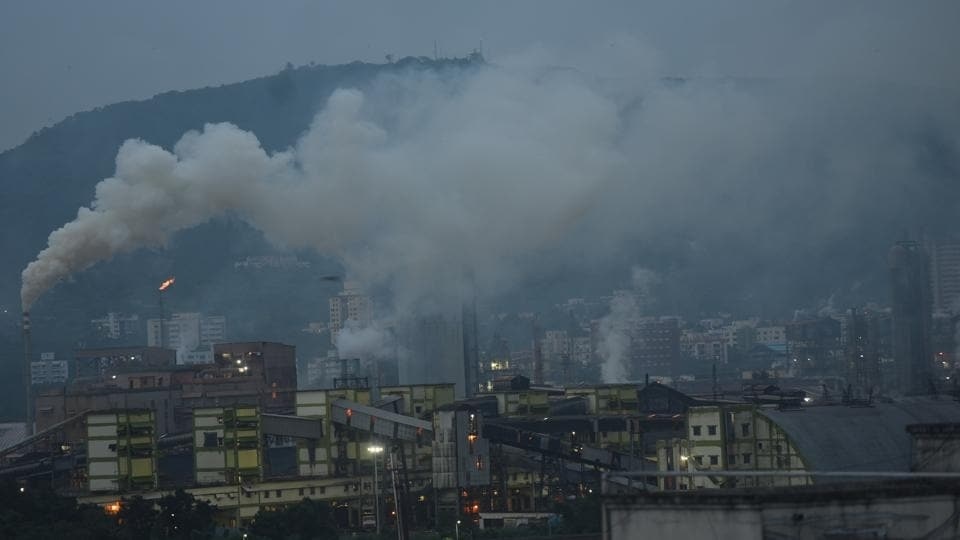
According to the new thresholds, the average 24-hour exposure to PM2.5 must remain below 15µg/m³, down from 25µg/m³. In case of PM10 particles – typical dust particles – the safe threshold has been lowered from 50 to 45µg/m³. In terms of exposure over a year-long period, the threshold for PM2.5 has been brought down from 10 to 5µg/m³ and for PM10, from 20 to 15µg/m³.
In comparison, India’s thresholds are many folds higher.

According to the 2009 National Ambient Air Quality Standards still in force, the acceptable PM2.5 exposure limit over 24 hours is 60µg/m³ (four times the new WHO limit) and for exposure over a year-long period, 40µg/m³ (eight times the revised WHO threshold)
Since 2005 when WHO last set air pollutant thresholds, “a substantial new body of evidence has accumulated, further demonstrating the degree to which air pollution affects all parts of the body from the brain to a growing baby in a mother’s womb at even lower concentrations than previously observed,” WHO Director-General Tedros Adhanom Ghebreyesus told a news conference.
“Air pollution is a threat to health in all countries, but it hits people in low- and middle-income countries the hardest,” he added, urging governments and experts to make use of the new yardsticks in their fight against air pollution.
In India, officials said they will study the WHO’s new guidance for further steps. “There is no plan to revise our national air quality standards immediately. We have, however, started a study to look at what changes need to be made to the air quality standards based on health impacts,” a senior health ministry official said, asking not to be named.
“We are aware of the recent studies on health impacts of air pollution. The study will take at least a year to be completed and then a proposal will be made to tighten the standards in India. We will respond to the revised WHO air quality guidelines after going through the report,” this person added.
There are 132 cities in India that do not meet the national air quality standard for particulate matter according to data with the environment ministry.
A team of scientists from across the world conducted a meta-analysis of over 500 epidemiological studies available on health impact of air pollution to revise the WHO guidelines. For the first time, studies from India and South Asia were also included, according to Kalpana Balakrishnan, the director of the Indian Council of Medical Research (ICMR)’s Centre for Advanced Research on Air Quality, Climate and Health, and a member of the WHO technical team which developed the new guidelines.
“The guidelines had to be revised because it has been 16 years since the previous ones came. Over 500 epidemiological studies were considered by us, which includes both long-term and short-term effects. For the first time, 19-20 studies from South Asia, including 3-4 from India, were considered. The WHO guidelines are basically values, backed by unequivocal epidemiological evidence, at which highest health benefits can be achieved,” said Balakirishnan.
‘HIGH DISEASE BURDEN’
The new WHO guidance estimates that exposure to even lower concentrations of ambient and household air pollution can cause diseases including lung cancer, heart disease, and stroke, resulting in 7 million premature deaths each year. “This puts the burden of disease attributable to air pollution on a par with other major global health risks such as unhealthy diet and tobacco smoking,” the agency said.
The guidelines also give interim targets for countries to pursue to meet the WHO guideline. For PM 2.5 the first annual interim target is 35µg/m³ followed by 25, 15 and 10 µg/m³.
“We have to understand that the health burden of air pollution in India is massive. Over 1 million premature deaths are linked to air pollution here. The interim targets that there is benefit even in achieving 35µg/m³ annually. Our annual standard is 40µg/m³. So instead of taking up a large task of revising standards, let’s first try to meet the standards. We of course have to be mindful of the main WHO guideline. Cities or regions that first meet the national standard can look at meeting the interim targets and WHO guideline,” explained Balakrishnan.
Central Pollution Control Board’s National Air Quality Monitoring Programme (NAMP) data indicates that the annual average PM2.5 levels in Delhi last year ranged from 114-145µg/m³ in three stations considered by CPCB. Thus, Delhi’s PM2.5 pollution was at least 22 times higher than the new WHO guideline in 2020.
NAMP data also indicates large parts of the Indo-Gangetic Plains region, including several cities in Uttar Pradesh, West Bengal, Punjab, Haryana, had very high concentrations of PM2.5 and PM10.
The State of Global Air (SOGA 2020) estimated that over 116,000 infants in India died within a month after their birth due to exposure to severe air pollution in 2019. The report by US-based Health Effects Institute and Global Burden of Disease said that India had the highest burden of infant deaths due to air pollution followed by Nigeria (67,900), Pakistan (56,500), Ethiopia (22,900), and the Democratic Republic of Congo (1,200).
Despite some improvements in air quality, the global toll in deaths and lost years of healthy life has barely declined since the 1990s. While air quality has markedly improved in high-income countries over this period, it has generally deteriorated in most low- and middle-income countries, in step with large-scale urbanization and economic development, the executive summary of WHO Air Quality Guidelines 2021 said.
These guidelines are not legally binding on countries, but are meant to provide guidance to help reduce levels of air pollution in order to decrease the health burden, the summary said. “Only evidence assessed as having high or moderate certainty of an association between a pollutant and a specific health outcome was used to define the recommended AQG levels,” the report added.
These guidelines do not include recommendations about pollutant mixtures or the combined effects of pollutant exposures. In everyday life, people are exposed to a mixture of air pollutants that varies in space and time.
“The WHO Air Quality Guidelines were last updated in 2005, and since then, the body of evidence on the health effects of air pollution has grown substantially. In 2019, air pollution was responsible for more than 1 in 9 deaths globally. Development of these new guidelines was led by an international expert group, and the team considered all available global evidence on this topic,” said Pallavi Pant, senior scientist at the US based Health Effects Institute.
“Air pollution has been linked with lung and heart diseases as well as cancer, diabetes and serious health risks for newborns. As India continues the implementation of the national clean air programme (NCAP) and revises its National Ambient Air Quality Standards (NAAQS), it will be important to align with the WHO Air Quality Guidelines, including the interim targets for various air pollutants, and identify and implement policies that will help bring clean air to all,” Pant added.
“India has aligned with the WHO when it comes to CO and 8 hour standard for Ozone (O3). What WHO is trying to tell us is that there can be a steep rise in health impacts even at very low concentrations of certain pollutants. India may not be able to get to 5 micrograms per cubic metres in PM 2.5 concentrations but it should set out stringent and achievable targets. There is a wide variation in pollution levels across the country so strategies should be different. The southern and western states can strive and look at the WHO guideline,” said Anumita Roychowdhury, executive director, Centre for Science and Environment.
India released its National Clean Air Programme (NCAP) in January 2019. NCAP does not have a legal mandate but aims to achieve a 20% to 30% reduction in PM 2.5 concentrations over 2017 annual levels in over a hundred cities by 2024.
So far, ₹375.44 crore have been released to 114 cities during FY 2019-20 and 2020-21 for initiating actions under city action plans to control air pollution. Further, ₹4,400 crore has been released to 42 cities with million plus population as per recommendations of the 15th Finance Commission report for FY 2020-21.