
 E-Paper



Cumin Co. founder Niharika Joshi on why ‘Healthy’ cookware needs more scrutiny
Cumin Co. founder Niharika Joshi on healthy cookware, independent testing, sustainable kitchen habits and what consumers should know before buying cookware.


Our Picks
FAQs
Our Picks
| Product | Rating | Price |
|---|---|---|
CUMIN CO. Silicone Spatula Set of 3 | Non Toxic Heat Resistant Spatula for Cooking and Baking | BPA Free, SGS Certified | Upto 230°CView Details  | ₹799 | |
 | ||
CUMIN CO. Chopping Board | 24x34.5 cm | Bacteria Resistant Cutting Board for Kitchen | Odour-Free | FDA Compliant | Knife-Friendly | Compressed CelluloseView Details | ₹1,894 | |
| ||
CUMIN CO. STASH Glass Food Storage Container, Premium Borosilicate Glass, Leak Resistant, BPA-Free, Microwave, Freezer & Dishwasher Safe, Stackable Meal Prep & Lunch Storage (640ml, Green)View Details | ₹1,419 | |
| ||
CUMIN CO. Enamel Cast Iron Non Stick Dosa Tawa 28 cm | 10 Year Warranty | Chemical Free Coating | Non Toxic Tawa for Dosa, Chilla & Roti | Induction & Gas Compatible | No Seasoning Needed | RustView Details | ₹3,249 | |
| ||
CUMIN CO. Enamel Cast Iron Fry Pan LITE | 24 cm, 1.4L | 5 Years Warranty | Non Toxic Non Stick Pan for Sauté & Frying | Induction & Gas Compatible | No Seasoning Needed | MustardView Details | ₹3,149 | |
| ||

Research-Backed Choices
Every product we recommend is chosen through a combination of Primary Research and Secondary Research.


Need extra funds for your next purchase?
Loan up to ₹5 Lakhs
Starting at 11% p.a.*
For years, cookware shopping in India has largely revolved around price, size, material and brand name. But as consumers become more conscious of what goes into their food, another question is beginning to enter the conversation: what exactly are we cooking our food in?
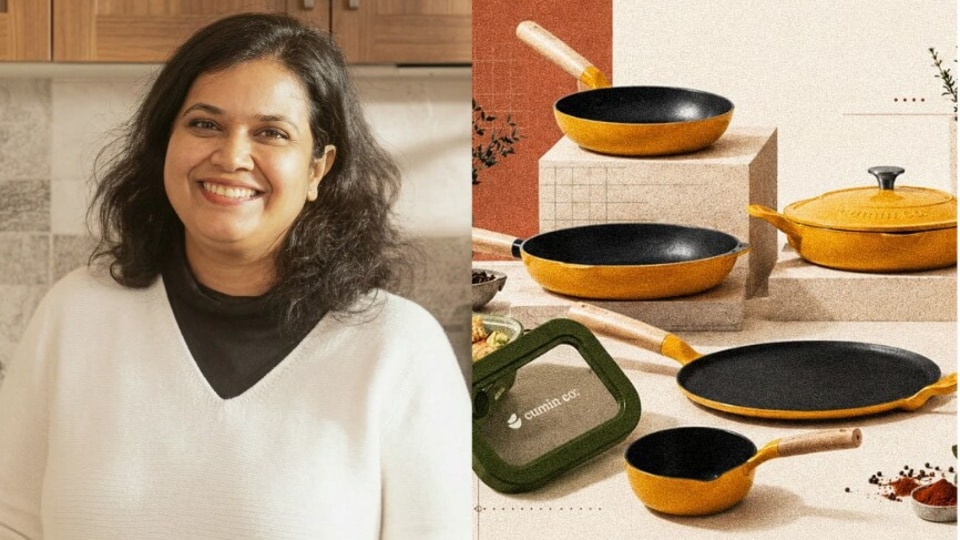
For Niharika Joshi, founder of Cumin Co., this question sits at the heart of the brand. What began as an attempt to rethink cookware for the modern Indian kitchen has evolved into a larger conversation around health, durability, transparency and even the way we use our kitchens.
Cumin Co. describes itself as a health-first kitchen ecosystem for the modern Indian household, with its range extending beyond cookware into kitchen tools, storage and other categories. Joshi says the brand's approach came from noticing how loosely terms such as “healthy” and “toxin-free” were being used across the cookware industry.
HT Shop Now spoke to Joshi about what consumers should actually look for when buying cookware, why the brand commissioned an independent State of the Kitchen Report, the sustainability problem hiding inside disposable cookware and the kitchen essentials she thinks every Indian home needs.
‘Healthy cookware’ is not simply about using less oil
One of the biggest problems Joshi sees in the category is the lack of consumer education.
According to her, cookware brands can use the word “healthy” in ways that don't necessarily tell consumers anything meaningful about the materials they are actually cooking with. She argues that using less oil, for instance, should not automatically make a piece of cookware healthy if its materials or coating raise other concerns.
For Joshi, consumers need to start asking more specific questions. Does the cookware contain toxic or heavy metals beyond allowable levels? If it has a coating, what exactly is that coating made from? And how durable is it?
Cumin Co. even ran a campaign encouraging consumers to “question your cookware”, essentially asking them to examine cookware labels with the same attention they would give food labels.
The issue becomes even more relevant in Indian kitchens, where cooking often involves high heat and acidic ingredients such as tomatoes, tamarind, lemon and curd. Joshi says these factors make durability and material composition particularly important considerations.
Why Cumin Co. chose independent testing
Rather than relying solely on its own product claims, Cumin Co. commissioned a third-party report to examine the category more closely.
For Joshi, the motivation wasn't simply about proving that the brand was right. She describes the State of the Kitchen Report as part of a larger effort to introduce transparency and accountability into a category where consumers often don't have enough information to make informed decisions.
She believes cookware is currently at an early stage of consumer education, similar to other categories that eventually became more transparent as people learnt what questions to ask.
Her larger point is simple: consumers shouldn't have to take a cookware brand's word for it.
Durability could be one of the simplest forms of sustainability
Interestingly, Joshi doesn't believe sustainability is currently the biggest purchase driver for Indian consumers. Instead, she sees the country as being highly value-driven.
That distinction shapes Cumin Co.'s approach to sustainability.
Rather than treating sustainability purely as a packaging or marketing exercise, Joshi says the brand wanted to build durability into the product itself. This was one reason Cumin Co. chose cast iron, which she describes as inherently durable.
Her argument is that a product that lasts for years doesn't need to be repeatedly replaced. If a cheaper pan needs to be replaced every year or two, while a more durable product lasts much longer, the consumer eventually starts seeing the value in the latter too.
For her, the bigger opportunity is also to own fewer products that can perform multiple functions.
“Multifunctional cookware, durable metal,” is essentially the approach she recommends for consumers trying to make more sustainable choices.
So, what does a new kitchen actually need?
If you're setting up a kitchen from scratch, Joshi's advice is refreshingly uncomplicated.
For an Indian kitchen, she believes a tawa and kadai are absolute essentials, while a pan is useful for smaller quantities and newer cuisines. Beyond cookware, she recommends a good chopping board, knives and storage bowls.
She sees the kitchen as three interconnected ecosystems: cookware, prepware and storage. Cumin Co.'s expansion into these categories is designed around this broader view rather than treating each product as an isolated purchase.
And when it comes to buying cookware online, Joshi thinks consumers should move beyond simply searching for specifications.
Cumin Co. is increasingly trying to make its own website more “use-case led”, with bundles designed around how people actually cook: such as everyday cooking, breakfast, Asian food or kitchen prep, rather than expecting consumers to understand every technical specification before purchasing.
The material matters, but so does your lifestyle
Another interesting point from our conversation was Joshi's view on traditional cookware.
She believes many traditional materials are excellent, but they were often designed around a very different kind of household, one where cooking could take hours and someone had the time to maintain the cookware properly.
Today, that isn't necessarily the reality.
Her advice, therefore, isn't to blindly choose the most traditional material available. Instead, consumers should choose cookware that matches the way they actually cook and the amount of maintenance they are realistically willing to do.
That also extends to materials that are frequently marketed using broad health claims. Joshi points out that what is labelled as “granite” cookware isn't necessarily solid granite; some products use a granite-like coating or finish instead. Similarly, she explains that Cumin Co.'s use of iron isn't based on the idea that cookware should be a source of dietary iron. The brand chose iron for its strength, heat performance and ability to hold its enamel coating, while enamel itself is relatively non-reactive.
The kitchen is becoming more than just a utility space
Perhaps one of the most interesting trends Joshi sees is the growing importance of aesthetics.
As more people cook at home for pleasure, not just necessity; cookware itself is becoming part of the experience. She points to the rise of weekend cooking, home breakfasts and people experimenting with different cuisines as reasons consumers increasingly want their kitchens and cookware to spark joy.
Cumin Co.'s own product development reflects this shift.
Joshi recalls feedback around the brand's karahi, where consumers wanted something that could handle traditional gravies but also work for sautéing vegetables and cooking more contemporary dishes. The result was a flat-base karahi designed to accommodate both styles of cooking.
It's a small example of a much larger change: the Indian kitchen is evolving, and cookware is being expected to evolve with it.
The kitchen tool Joshi is surprisingly passionate about
When I asked her about the kitchen tools she personally considers essential, her answer wasn't particularly complicated, but her enthusiasm certainly was.
A good knife and a sturdy chopping board make her list. In fact, she admits to being particularly particular about chopping boards, preferring thick wooden ones over thin plastic versions. She also recently bought two knives during a trip to Japan and says she wished she'd had enough time to get more.
For a third essential, she recommends a good mixer-grinder or blender, particularly because it can significantly reduce preparation time when used effectively.
And her simplest cooking advice? Don't be afraid of salt, but use it in moderation and correct the dish as you go.
What I took away from my conversation with Niharika Joshi
What stood out to me most was that the conversation wasn't really about convincing people to buy one particular type of cookware.
It was about encouraging people to question what they're buying in the first place.
Whether it's understanding a coating, checking what a material actually means, thinking about durability or simply buying fewer products that can do more, the way we shop for cookware is slowly becoming more considered.
And perhaps that's where the modern Indian kitchen is headed: less clutter, better-made products, more transparency and cookware that is designed around how we actually live, not how kitchens used to function.
Picks by Cumin Co.:
Similar stories for you:
I tried these 3 Nestasia home products and these are the ones I’d buy again
From Khurja pottery to Rogan art, four master artisans share how they are reaching today's buyers
Stop slipping on court: 8 Indoor sports shoes to play your favourite sport in style
Disclaimer: At Hindustan Times, we help you stay up-to-date with the latest trends and products. Hindustan Times has an affiliate partnership, so we may get a part of the revenue when you make a purchase. We shall not be liable for any claim under applicable laws, including but not limited to the Consumer Protection Act, 2019, concerning the products. The products listed in this article are in no particular order of priority.


