
 E-Paper



Amid a pool of severe setbacks, swimmer Niranjan Mukundan stands with a spine of steel
Speaking to Hindustan Times, Niranjan Mukundan opened up on his journey as a para swimmer and the setback that cut his Paris Paralympics hope

 Prefer HTon Google


Niranjan Mukundan, the first Indian para swimmer to win 100 medals at the international level, was expected to be part of the Indian contingent in Paris for the 2024 Paralympics. Having had his heart broken in Tokyo three summers back, after failing to make the final in men's 50 metre butterfly S7, Mukundan was raring make the cut for Paris earlier last month, and later aim for his maiden Paralympic medal. However, foot ulcer cut short his dreams during the qualification process, forcing him to return home for rehabilitation. But for Mukundan, it has only been a minor blip, in what has been an inspiring career.
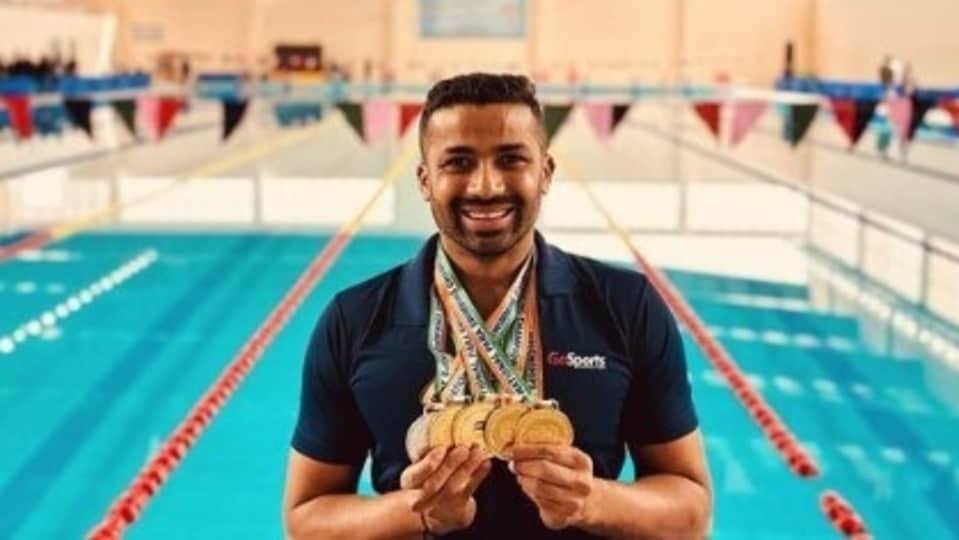
Born with Spina bfida, a birth disorder that involves the incomplete development of the spine, Mukundan underwent 19 surgeries, and hence missed school, and remained in recovery for months. By the age of seven, he was suggested by his doctor to either pick up swimming or horse riding as part of physical therapy, and he opted for the first option, and the rest, as he said, is "history".
By 18, he clinched his first international medal, and two years later became a Junior World Champion for a record-breaking performance, which was later identified by the government of India with a National Award for Best Sports-person of the Year in 2015.
Speaking to Hindustan Times in an exclusive interview, Mukundan opened up on his journey as a para swimmer and the setback that cut his Paris Paralympics hope. He also talked about his association with Evocus, and how it has made a difference in his journey.
Q) It's more like a Michael Phelps-like pose in your social media post on 100 medals. Could you talk about the pose? And that moment on clinching your 100th medal?
(Laughs) I just tried the GOAT pose of Michael Phelps, it was indeed an amazing milestone to reach in becoming the first Indian para swimmer to win 100 international medals, it gives me more confidence and motivation to do more and more for the country.
Q) How did swimming happen to you?
Being born with a medical condition named spina bifida, one of the doctors suggested me to take up swimming or horse riding as part of physical therapy and as a small kid I chose to get into the pool and rest, as people say is history.
Q) When did you decide to take up this sport as a profession? How did your family support your decision?
Initially when I got into the pool I felt like a fish. I felt a sense of freedom that I could move from one place to another without anyone’s help in the water. My parents are my biggest supporters who have been a pillar of strength in shaping me as a sportsman as well as a person. They provided me with all the support that one could ask for in a professional sport and I owe them all the success I have had.
Q) Which has been your favourite discipline in this sport?
I swim in a mix of events like the 50m butterfly, 200m Individual Medley and the 400m Freestyle.
Q) How did you deal with the injury setback that forced you to withdraw from the Paris Paralympics?
During the qualification process I missed out on the qualifying time by fractions and that’s when I found out that my body wasn’t responding properly (I used to fall ill frequently with chills and fever). During the initial inspection we found out that I was developing a 1st degree foot ulcer that was forming due to lack of sensation and blood supply. I immediately contacted my team of doctors in India and I was asked to take a call between health and the qualification. I flew back home and started my rehabilitation process. I have recovered fairly quickly now and will be in action in the coming months.
Q) What's next from here?
Right now I am in the final phase of my rehabilitation and I have started swimming slowly. It usually takes 8 to 10 weeks for my ulcers to heal. The Para Nationals will be my next competition which is set to happen in October and from there I will be looking to compete at other events early next year.
Q) Which mental exercises are part of your daily routine?
I usually listen to music that calms down my mind during pressure situations and I also try to meditate when I can to again let out the external pressure.
Q) In swimming, like 100/200m sprints, I feel it's all about a powerful start. How do you tend to keep yourself calm during those moments?
As I mentioned earlier music is something that keeps me calm. I also shut out all the external distractions around me during the finals, I usually don’t talk to anyone except my coach before the race. I have a very straight face at times during the finals.
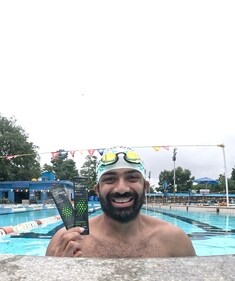
Q) As an elite athlete, how important is hydration to your daily training regimen, and how has Evocus Hydration I.V. specifically supported you in maintaining optimal hydration levels?
As an athlete and a swimmer hydration is very important and essential and Evocus hydration IV has been helping me during my workouts in the pool as well as at the gym.
Q) Can you describe a specific instance during training where Evocus Hydration I.V. made a noticeable difference in your performance or recovery?
As my swimming sessions are very tiring and exhausting the hydration IV keeps my hydration levels up for the entire session giving me all the minerals and energy needed.


