
 E-Paper


Follow the latest breaking news, major developments and agenda-setting stories from India and around the world with the newsdesk at Hindustan Times. Operating round the clock, the desk brings together experienced editors, reporters and correspondents to deliver fast, accurate and contextual reporting across subjects that influence public policy, governance, business, society and international affairs. The HT News Desk covers politics, elections, government policies, the economy, business and markets, science and technology, the environment, law and order, infrastructure, education, climate issues and geopolitics, while closely tracking developments across states, institutions and global capitals. The team also leads coverage of major breaking news events, policy announcements, court proceedings, natural disasters, public emergencies and significant international developments. Reports published by the newsdesk are based on information gathered from reporters on the ground, official statements, government agencies, court records, regulatory filings, recognised institutions and other authoritative sources. Stories undergo editorial scrutiny and verification processes to ensure accuracy, fairness and relevance, and are updated as events evolve and additional information becomes available. Whether covering a key political decision in New Delhi, an economic policy shift affecting millions, a landmark court ruling or a major global event, the HT News Desk aims to provide readers with reliable, fact-based journalism that delivers not only the latest developments but also the context and analysis needed to understand their wider implications.
Talks on cross-border terror, India-China rift to be in focus at BRICS Summit
A summit of the world’s top five emerging economies begins in Goa on Saturday, but a fresh rift between the bloc’s leaders, China and India, could hamper New Delhi’s plans to highlight cross-border terrorism and isolate Pakistan.


A summit of the world’s top five emerging economies begins in Goa on Saturday, but a fresh rift between the bloc’s leaders, China and India, could hamper New Delhi’s plans to highlight cross-border terrorism and isolate Pakistan.
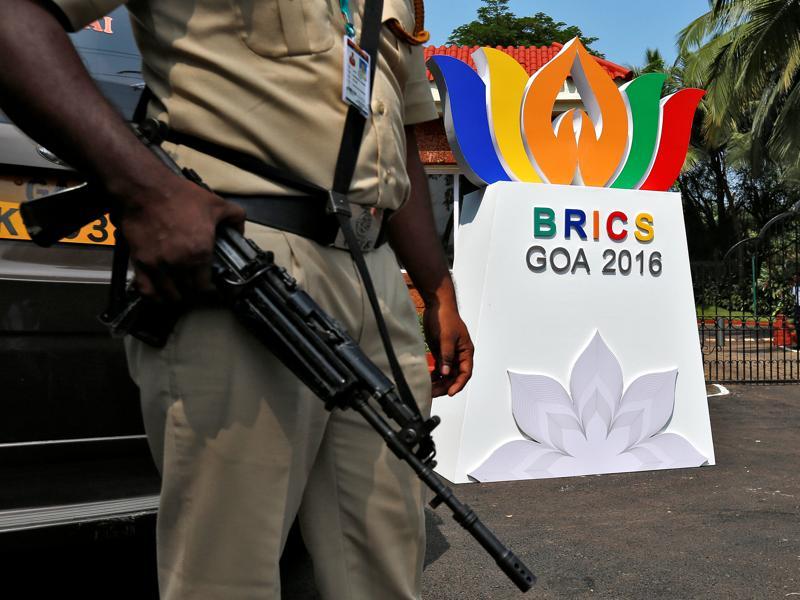
For Prime Minister Narendra Modi, the gathering of leaders from Brazil, Russia, India, China and South Africa -- or BRICS -- offers an opportunity to underline the threat he sees to Indian security from militant violence directed from Pakistan. A bilateral meeting with Chinese President Xi Jinping was also expected to iron out recent irritants in ties.
But across the summit table at a luxurious hotel overlooking the Arabian Sea, Xi is unlikely to have much interest in casting Beijing’s “all-weather” alliance with Pakistan into doubt.
That became clear on Friday when China said it will continue to block India’s efforts to ban Pakistan-based militant Masood Azhar and New Delhi’s application to join the influential Nuclear Suppliers Group until a consensus emerged.
“All parties are divided in listing of the relevant people. And this is why China has put on hold (the banning of Azhar),” Geng Shuang, China’s foreign ministry spokesman said. “This will give enough time to make the listing decision and also shows the responsible and professional attitude of the Chinese side.”
China had extended a “technical hold” at UN, a virtual veto, against declaring Jaish-e-Mohammad chief Masood Azhar a “terrorist” earlier this month – the second time after April, triggering tensions with India.
To worsen matters, a recent call by Indian businesses to boycott Chinese goods is also souring ties, with the Chinese media warning against any protectionism.
Besides, Xi on Friday sanctioned a $24-billion line of credit to Bangladesh, in what is being seen as an attempt by Beijing to have a greater say in a country that New Delhi considers within its sphere of influence. This is 12 times the money Modi promised Dhaka last year.
Still, India is expected to keep the discussions focussed on security at the eighth annual summit of the BRICS grouping, pushing for a comprehensive counter-terrorism plan. This time around, Modi is likely to stress the need for countries to deny sanctuaries to terrorists and take a relook at the way the United Nations designates terrorists, sources said.
Discussions are also expected to focus on Pakistan at an outreach meeting between the five nations and BIMSTEC, a grouping of Bangladesh, India, Myanmar, Sri Lanka, Nepal, Bhutan Thailand.
On Saturday, Modi meets Russian President Vladimir Putin for the 17th annual India-Russia summit and hosts Xi and South Africa’s Jacob Zuma for separate bilateral meetings.
The India-Russia summit will see a pact on the delivery of advanced air defence system, a framework agreement for two new nuclear reactors at Kudankulam and measures to step up investment flows with a greater accent on Make in India flagship.
Read | Look forward to talks with China, honoured to welcome Putin: Modi
Modi is also expected to focus on increasing Chinese investment, which have stayed somewhat flat under $2billion and offered little cushion against India’s burgeoning trade deficit with China that now stands at $50 billion annually, government sources said. Given the latest spat, that might be a tough ask, however.
The BRICS summit will begin with a customary dinner attended by the leaders on Saturday. The formal meeting on Sunday will see the leaders also address core themes such as boosting intra-BRICS trade -- which accounts for just 5% of their total trade -- greater cooperation in the fields of agriculture, sports and people-to-people ties.
Also read | Ahead of this year’s BRICS summit, here’s all you need to know about the group
For full coverage of BRICS Summit, click here


