
 E-Paper



Layla Tazhibayeva: “Kazakhs think the kobyz can drive away bad spirits”
The musician from Almaty on playing the sacred instrument associated with shamans, her India connect, and teaching at the Kazakh National Conservatory

 Prefer HTon Google


What aspects of Kazakh culture would you like people from other countries to know and appreciate?
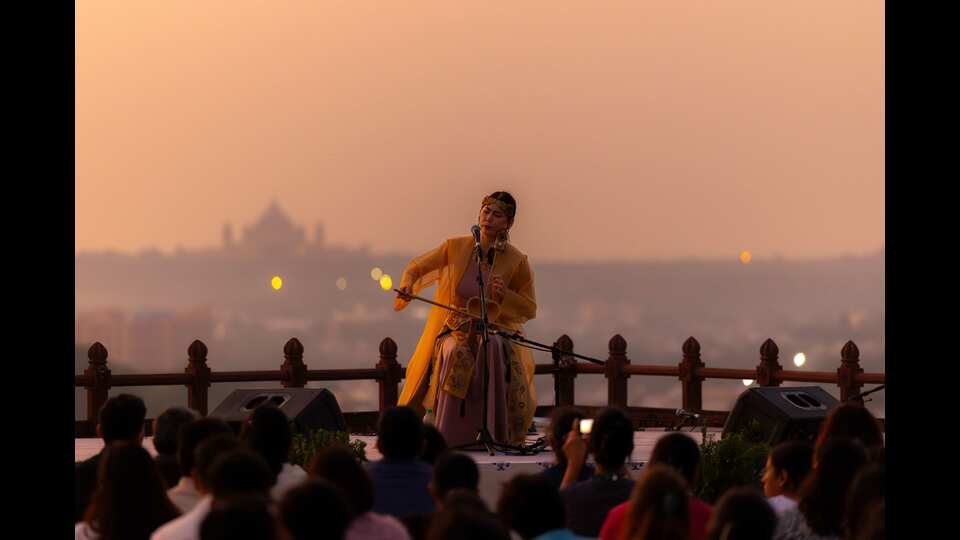
Music can be a beautiful entry point for a person who is curious about another culture. I like to introduce Kazakh culture with the kobyz because it is a rare, slightly elite, stringed instrument, with a touch of mystery around it unlike the dombra, which is an instrument that everybody seems to know because of its mass appeal.
The power of the kobyz lies in its remarkable ability to put the listener in a deep, meditative state. It is so versatile. It can mimic sounds from nature like the clapping of birds’ wings and the howling of wolves. Kazakhs think of the kobyz as a sacred instrument that can drive away bad spirits and heal people who are sick. It is often associated with shamans.
Instead of just playing the instrument, I tell stories from my culture especially when there are foreign listeners in the audience. Through the stories, they are able to connect better with the music. That helps me hold their attention for a longer time.
What is the kobyz made of?
The traditional kobyz, which I play, is made of wood and animal skin. In the past, the masters used camel skin. But, as you know, camels are very few in number so it is difficult to get a lot of camel skin for making musical instruments. That is why we use goat skin. It is of better quality than sheep skin. The wood that is used to make it usually comes from a walnut tree.
How would you describe your relationship with this instrument?
When I started preparing for my concert at Jodhpur RIFF, it struck me that I have been playing the kobyz since I was seven years old and now I am 43. My relationship with it has developed over many years. I did not even know the name of the instrument when I heard it for the first time at the age of six. I just told my mother that I wanted to play the Kazakh violin. Later in life, I got my musical education at the Kazakh National Conservatory, and now I teach there. Apart from the traditional instrument, I also play the electro kobyz, which has a more contemporary sound and feel to it. Music is my profession but it is not just that. I love what I do. I am really passionate about it because there is a sense of purpose. I think that the universe wants to say something to people, and that happens through me when I play the kobyz.
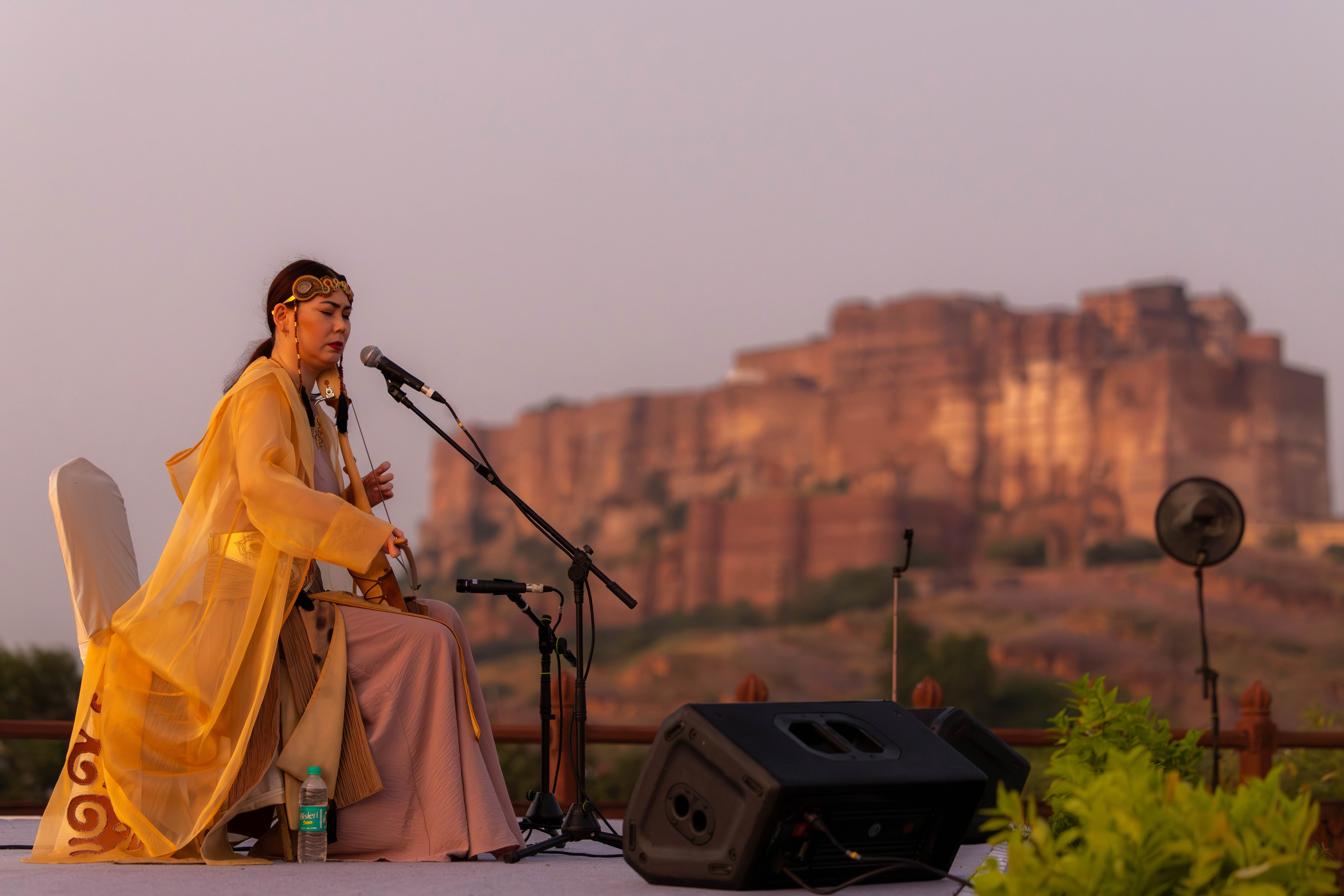
When you are performing, it seems like you are tickling the instrument rather than playing it. Why is it important to be gentle?
(laughs) You are right in your observation. I played more gently than usual in India because I was a bit scared of having an emergency on stage. One of the strings of my kobyz broke just a day before the performance, and I got into a panic. We have a dry climate in Kazakhstan. It is damp and hot here, so that affected the strings, which are made of horsehair. I was lucky that the people at Jodhpur RIFF helped me find a person who could repair it quickly.
What practices or rituals help you feel calm and confident before going on stage?
I don’t really pray but I say to the universe, “Please be kind to me. Help me perform well.” I want the good spirits and angels to be there behind me so that I can heal people with my music. I don’t even drink anymore because alcohol makes you lose your focus. The musical talent that I have is a beautiful gift, so I need to take care of it, respect it and protect it.
What were the musical influences in your childhood? How did they shape you?
My mother is a dancer, and she also sings. My dad too is a dancer and singer. My maternal grandfather was an opera singer, and my maternal grandmother was a ballerina. I grew up in a musically rich environment, and that has been really helpful in my journey as a musician.
This is your first visit to India. How has the experience been for you?
India has been wonderful to me. I have met kind people and enjoyed some delicious food. Though this is my first visit to the country, I know a lot about India from the stories of my great-grandparents. In fact, my great-grandfather, Tolegen Tazhibayev, was posted in India as a diplomat. From 1957 to 1961, he was an advisor to the USSR Embassy in India. I have seen a lot of photographs of him with Pandit Jawaharlal Nehru and Indira Gandhi. He lived with my great-grandmother in Delhi. She bought a lot of sarees and jewellery when she was here.
What other images of India did you see while growing up in Kazakhstan?
I grew up with the impression that Indian culture is very ancient. I am agnostic but I have read a bit of the Bhagavad Gita in Russian, and I know some stories from the life of the Buddha. Of course, we all grew up watching Indian movies in Kazakhstan, so that added to the excitement of travelling to India. Mithun Chakraborty and Hema Malini were my favourites as a child. The Indian movie that I like most is Seeta Aur Geeta, where Hema Malini appears in a double role. Among younger actors, I like Aishwarya Rai, who was crowned the most beautiful woman in the world. I also enjoy watching the films of her husband Abhishek Bachchan.
What are you excited about at this stage in your career? What do you aspire to?
I am very ambitious. My dream is to get a Grammy Award.
Chintan Girish Modi is a Mumbai-based journalist who writes about books, music, art and films. He can be reached @chintanwriting on Instagram and X.


