
 E-Paper



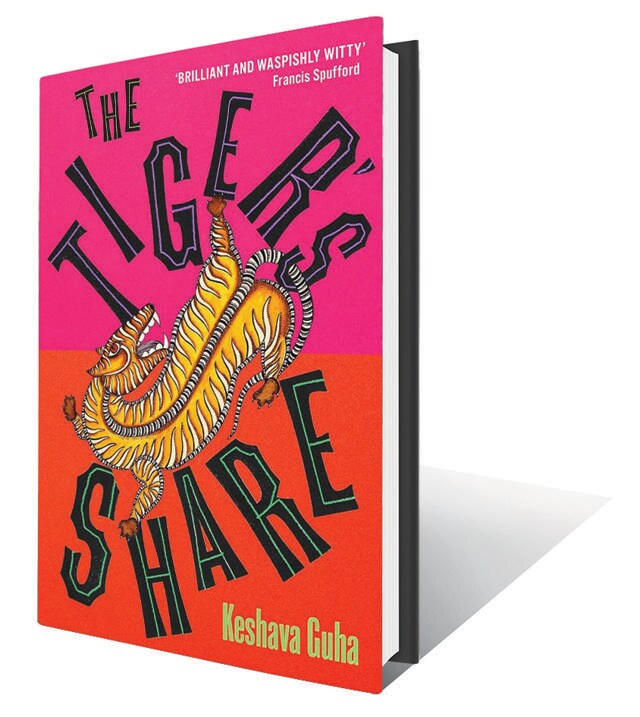
Review: The Tiger’s Share byKeshava Guha
A novel about inheritance that compels readers to engage with the moral dilemmas and questions surrounding the many crises facing the world today

 Prefer HTon Google


When characters in a novel are excessively reticent, checking for signs of boredom in their lives can provide valuable insights. This exercise presents the root causes of their inaction, which are usually feelings of insufficiency and a traumatic past. Keshava Guha’s The Tiger’s Share does exactly this as it helps readers determine the motives behind the inaction, delayed action, and ultimate action of Brahm Saxena, a patriarch of one of the two rich Delhi families, the Chawlas and the Saxenas, featured in this novel.
The book begins with Brahm calling a “summit”. It’s a strange choice of word but what’s even stranger is his wife, Malini exclaiming, “Brahm, what’s this bakwas?” on hearing his declaration about inheritance. It confuses their children too — Tara, a lawyer, who is the novel’s narrator, and Rohit, a dud who goes to the US hoping to secure an H-1B visa but returns to claim “his right”, which he believes he deserves solely because of his unremarkable gender.
Sibling rivalries, which this novel centralises, are nothing new, but Guha makes them interesting. He cleverly makes Lila — the Chawlas’ biological daughter — reconnect with Tara at her own father’s chautha ceremony. She does this not only owing to the latter’s profession but also because of the “symmetry” of their families. After the senior Chawla’s death, the adopted son, Kunal, who was “chosen” from a group of 177 male children at a Chandigarh orphanage because he was the “heaviest” and “fairest,” is positioning himself as the head of the family, displeasing Lila.
“Unhappy families we all know”, writes Guha, “[b]ut most families are neither happy nor unhappy; they find their equilibrium, and as long as they hold it life is essentially endurable.” Presenting the falling apart over inheritance of two south Delhi families soaked in privilege accrued as a result of caste, class, and capital — a typical Delhi story — isn’t exceptional or novel. What is interesting, though, is Guha’s prose as he pokes fun at his characters and their milieu.
Tara’s rants and monologues reflect the characteristic behaviour of the city’s moneyed snobs. The multiple mentions of The Bookshop, Jor Bagh, clearly establish that even if someone like Tara may be aware of the existence of a Leftist bookstore like May Day, she can never be seen there. Then, in seeking validation from Lila, she represents a classic forgetfulness shared by most people in a heteronormative society: that homosocial bonds often take precedence when it comes to understanding one another and that the more rich and powerful your counterpart, the more their opinions seem to matter.
However, Tara’s verbose ruminations don’t allow readers to understand why she takes such liberties while theorising about Delhi: “Delhi had a logic, an underlying principle. If other cities in India were, in a sense, non-cities, just patternless agglomerations of millions of people, then Delhi was the anti-city. Delhi took the logic of the modern city and inverted it.” It is a legitimate observation but one that doesn’t make sense when it comes from Tara. Here she is on her ex-boyfriend, the Polish Wojciech: “He was proud of his body in the way that people in the past might have been proud of their knowledge of Sanskrit or needlework.” This makes the cut only if it is a window into the ways in which the brain of a product of polite society tends to make connections. Similarly, Lila’s use of “Brahmastra” is irksome.
The foundations of an ambitious novel are shaken when minor inconsistencies arise in its characters, casting doubts on the believability of their thoughts and actions. Sample this: “Defence Colony market has Manhattan rents and Ghaziabad architecture.” Now, Tara most certainly possesses knowledge about Manhattan, but not Ghaziabad. Her thoughts can’t possibly go beyond a couple of neighbourhoods or the power corridors she frequents. Metaphors and comparisons arise out of lived or convincingly imaginable experiences.
One of the novel’s major themes is climate change, which holds both a liminal and concrete position in the way the story progresses. While the former is alluded to when Brahm digresses during the ‘summit’, readers are convinced of the latter too late when Guha manoeuvres the story to make space for engagement in various forms -- such as Kunal having smoothies made of his father’s ashes, Tara’s intern Jahnavi spying on Kunal’s right-wing-appeasing office, and Lila making Tara meet Ashwin, a publishing circuit douchebag — “the first fish in a world of plankton” – who is a lackey of the filthy rich Vikramaditya Rai (Vicky). All of which is interesting. However, no matter how wonderfully the entry of select characters is chalked out, their departures or long absences tend to bother the engaged reader. Rohit, who has a pivotal role, appears to be a character devised to be forgotten after his job is done and Malini’s presence is shadow-like and quite ignorable. Despite having a crucial monologue towards the end, she remains ill-conceived.
Still, the multifarious ways in which inheritance is presented makes The Tiger’s Share a refreshing read. Take Brahm reflecting on the kind of world future generations will inherit. Who will ensure that they inhabit a planet where the air is breathable? Can an act of courage bring about monumental change? What does it take to challenge an individual’s conscience and make them act? If the novel succeeds it’s because it compels readers to engage with these moral dilemmas and questions surrounding the many crises facing the world today.
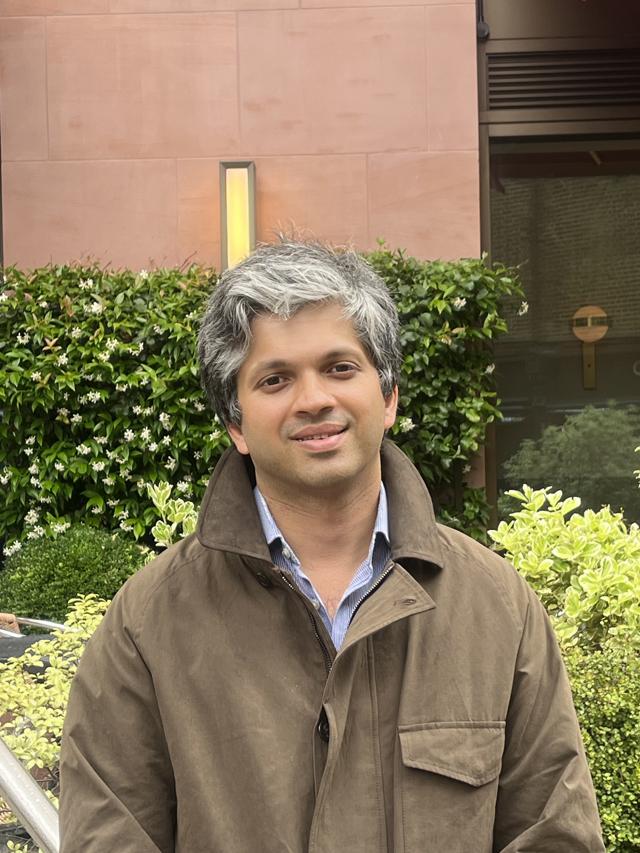
Saurabh Sharma is a Delhi-based writer and freelance journalist. They can be found on Instagram/X: @writerly_life.


