
 E-Paper



Review: Who Owns the Past? by Shaan Kashyap
A work that traces the evolution of modern historical writing in India even as it looks at the unstable relationship between historians, political power, and the wider public

 Prefer HTon Google


Few countries inhabit their past as turbulently as India. A medieval mosque, a school textbook, a television serial, a translated paragraph, a campus lecture, even a dead emperor can become the occasion for a national argument. Professional historians claim interpretive authority over the past. Politicians seek legitimacy from it. Popular writers dramatize it. Religious movements sanctify it. Television simplifies it. Social media weaponizes it. Somewhere amid all this, the public is left asking a deceptively simple question: who owns the past?
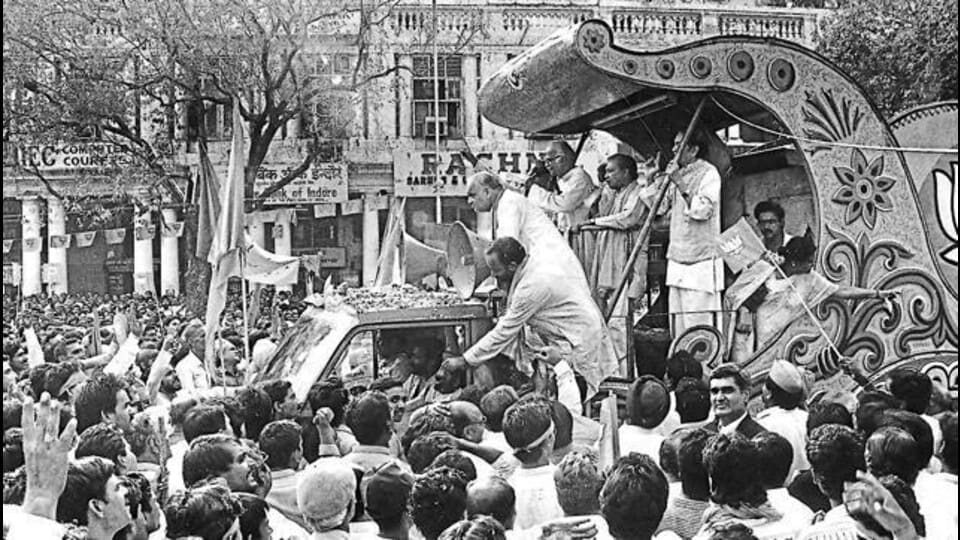
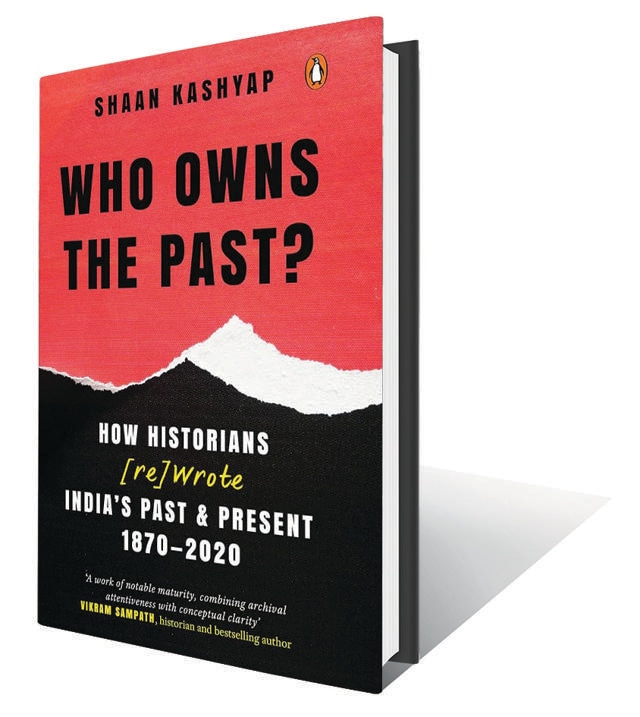
Shaan Kashyap’s Who Owns the Past? How Historians (Re)Wrote India’s Past and Present, 1870–2020 enters precisely this crowded battlefield. It begins modestly enough with school textbooks and colonial-era disputes over historical representation. Gradually, however, it expands into something considerably larger: a political and intellectual history of contemporary India told through the public lives of its historians. Before delving further into the book, I need to provide some context.
Scholarship has its own cruel sociology. If everyone within your own discipline likes you, you are probably not a scholar but a lobbyist, a network-builder, or, at best, a careerist with intellectual gifts. A serious scholar eventually irritates his own fraternity because genuine thought disrupts consensus, patronage and inherited certainties. My own mentor at JNU, Imtiaz Ahmad, was disliked by nearly the entire academic fraternity of his contemporaries. Only later did I come to appreciate the intellectual value of such hostility. Shaan Kashyap possesses precisely that enviable quality. He is capable of making nearly everyone within his discipline uncomfortable. Others are equally irritated by both his scholarly temperament and his scholarly output. To my mind, this remains among his most endearing qualities. In an academic culture increasingly organised around affiliations, networks and intellectual comfort zones, such independence is not merely uncommon; it is a scholarly virtue in its own right.
He belongs to that older academic journey through north India which once produced unusually self-fashioned intellectual temperaments. He arrived at JNU from Bihar through Banaras Hindu University. By training, he is a historian and spent time at the Zakir Husain Centre for Educational Studies, which, at least in its earlier conception, embodied the genuinely multidisciplinary ethos of the first generation of Jawaharlal Nehru University. It was among the first centres in India where historians, economists and educationists worked within a common intellectual framework. That experiment, like much else at JNU, has not survived intact.
I was at JNU between 1986 and 1995 and witnessed this transition at close quarters. Many teachers, inhabiting houses that resembled ministerial residences and moving through the rituals of academic sociability, appeared more invested in politics and networking than in students or teaching. Yet, it remained, perhaps, the finest institution for public education in the country. Even after the upheavals of 1983, much of its intellectual architecture survived, though the campus increasingly acquired the character of a punitive and securitised space. I still remember the formidable Mohammad Shafi Agwani, Rector in 1986 and later Vice-Chancellor, who seemed institutionally committed to disciplining students in every conceivable manner until retirement. Water coolers disappeared, telephone access was curtailed, and even shortages acquired an administrative logic of their own.
Yet, the finest aspect of JNU in those years remained its social composition. Students arrived from small towns, villages, modest schools, and the old bori-takhti tradition. For those willing to learn and equally willing to endure dissent, the university opened remarkable intellectual avenues. Caste and class both existed there from the beginning. One would be naive to deny it. Yet neither initially functioned as an absolute barrier. A student from the humblest background could still arrive through merit, seriousness, and intellectual hunger. By the mid-1990s, however, even that older compact had begun to fray.
Kashyap belongs to an unusual category within Indian academia. During his years at JNU he was not aligned with the organised Left, which, for a student of history, was perhaps the most intellectually convenient position available. After JNU, and perhaps even earlier during his BHU years, he appears to have passed through various Right-leaning ideological and academic circles before eventually arriving at an independent position of his own. This is partly what makes him interesting. Indian academia increasingly rewards affiliation. Independence of mind rarely goes unpunished.
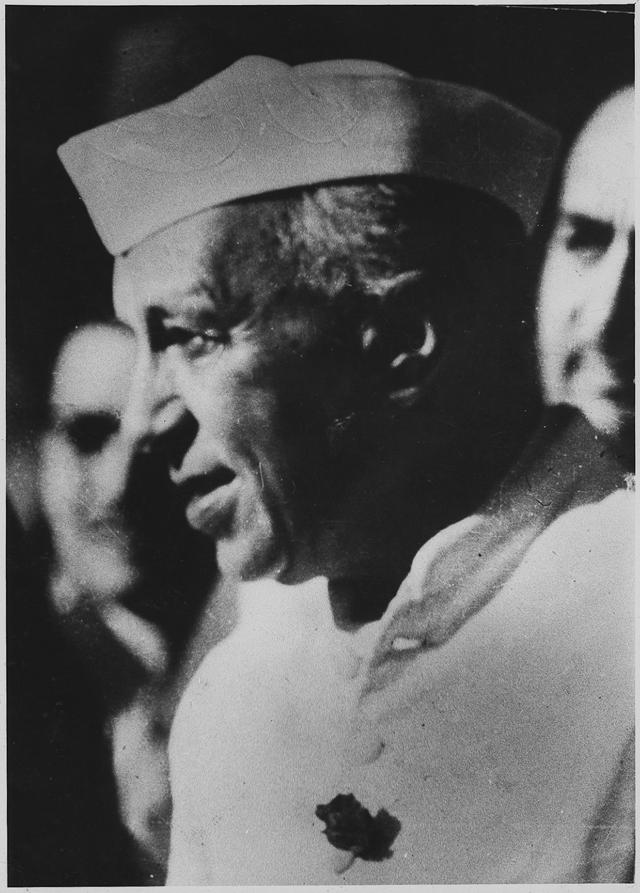
Returning to a closer engagement with the book, at one level, it traces the evolution of historical writing in India across nearly a century-and-a-half. The narrative begins with late nineteenth-century textbook controversies involving figures such as Sir Syed Ahmad Khan and Raja Shiv Prasad. It moves through nationalist appropriations of the past, the Nehruvian attempt to construct a secular historical consensus, the rise of Marxist historiography, the Janata interlude, the communal anxieties of the 1980s, the Ram Janmabhoomi movement, and finally the ideological and media-driven conflicts of the Modi era.
Yet, the book’s deeper interest lies elsewhere. Kashyap is ultimately less concerned with history as an academic discipline than with history as a public vocation and political arena. His real subject is the unstable relationship between historians, political power, and the wider public in India.
Thus, what begins as a study of textbooks gradually becomes a chronicle of public intellectuals, academic institutions, newspaper interventions, television debates, ideological struggles, conferences, censorship, and cultural anxieties. The Indian republic unfolds through the biographies and public interventions of historians themselves: Irfan Habib, Romila Thapar, Bipan Chandra, RS Sharma, and others who were not merely writing history but attempting, often unsuccessfully, to shape the moral and political imagination of the republic. This is what gives the book its originality.
Kashyap understands that in India history never remains confined to archives. It spills constantly into the street, the classroom, Parliament, cinema, television, and religious mobilisation. The professional historian therefore occupies an unusually exposed position in Indian public life: part scholar, part ideological actor, part reluctant public figure.
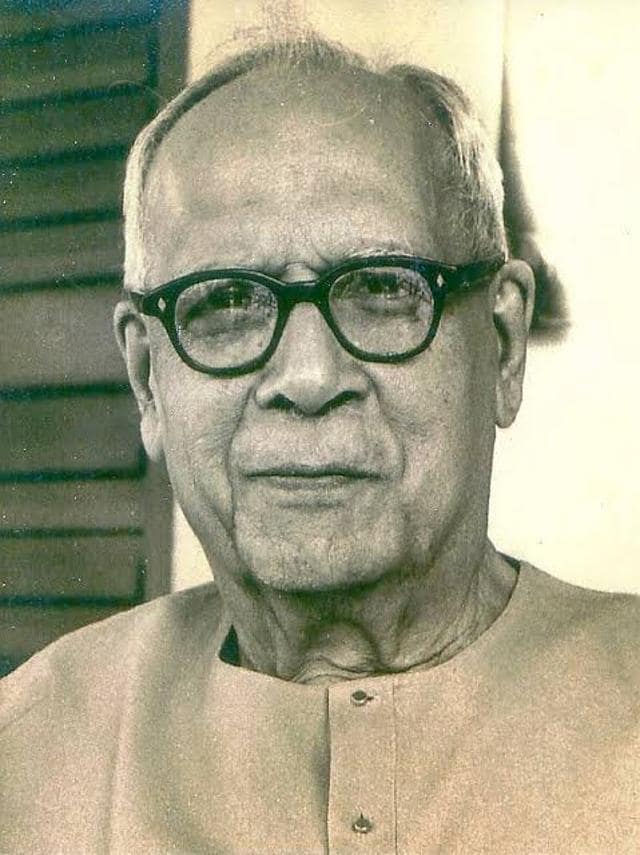
A particularly fascinating strand running through the book concerns the making of official history after Independence. Kashyap carefully revisits the celebrated disagreement between RC Majumdar and Tara Chand over the official history of the freedom struggle. It is among the most revealing sections of the book because it captures the birth of postcolonial state-sponsored history writing itself. Majumdar insisted upon scholarly autonomy and refused to subordinate historical interpretation to nationalist sentiment. Tara Chand appeared considerably more sympathetic to the Nehruvian desire for a consensual national narrative.
Kashyap reads this disagreement not merely as an ideological dispute but as an early struggle over who would inherit intellectual authority in independent India: the autonomous scholar or the pedagogic nation-state. In these pages, Nehruvian secularism emerges not simply as an ideal but as a carefully administered historical project.
The chapters dealing with Nehruvian India are particularly valuable because the author resists nostalgia. He neither dismisses the secular historians nor sanctifies them. Instead, he demonstrates how historians became increasingly integrated into the architecture of the postcolonial state itself. NCERT, the Indian History Congress, university departments, and official commissions together produced what the book describes as a model of history-writing dedicated to national integration. The ambition was admirable. The exclusions, however, remained unresolved.
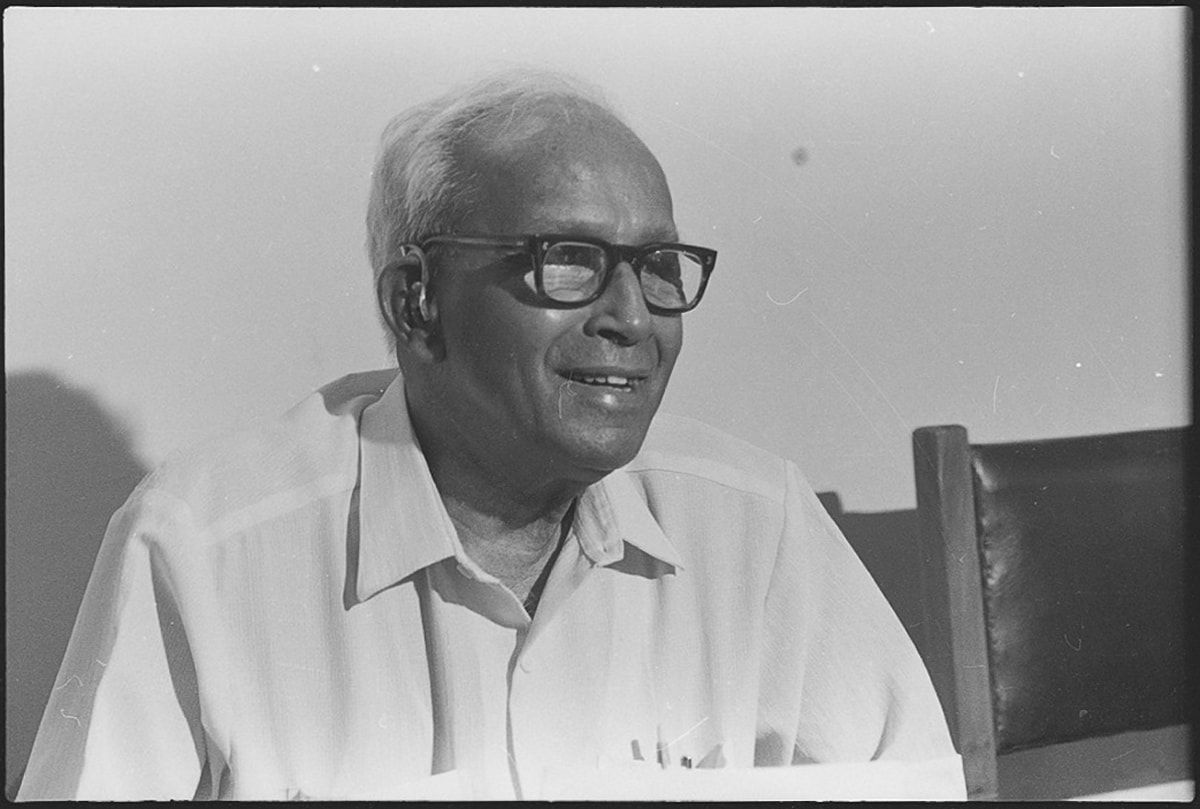
Equally compelling is Kashyap’s discussion of the Kerala textbook controversy during the first Communist government under EMS Namboodiripad in 1957. The struggle over schoolbooks appears almost as a rehearsal for later national conflicts. Catholic organisations, conservative social groups, and political opponents attacked the government’s educational reforms and textbooks as instruments of ideological indoctrination. Kashyap demonstrates how history and pedagogy became entangled with larger anxieties concerning political control, religion, and class power. Long before NCERT became a household acronym in television debates, Kerala had already demonstrated how textbooks could become proxies for civilizational anxieties and contests over legitimacy.
Particularly memorable are the pages dealing with the Emergency. Kashyap documents the uneasy relationship between historians and authoritarian power during Indira Gandhi’s suspension of democratic freedoms. What emerges is not a simplistic morality play of collaborators and resisters but a considerably more uncomfortable picture. Some historians defended the regime in the name of stability and anti-fascism. Others remained strategically silent. A few resisted quietly within academic and journalistic spaces. Kashyap’s larger point is quietly devastating. Historians who had long positioned themselves as guardians of democratic rationality often found themselves intellectually disoriented when confronted with authoritarianism emerging from within the secular state they broadly supported. Historians found themselves compelled into public life, where scholarship alone could no longer shield them from politics.
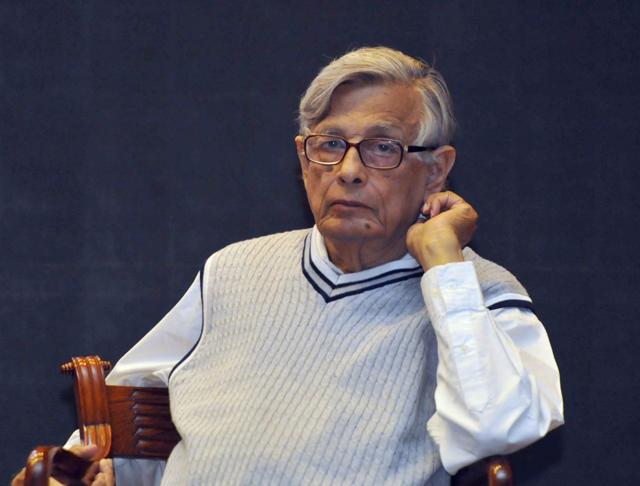
One of the book’s most revealing episodes captures this transformation with unusual clarity. In 1981, at Aligarh Muslim University, the eminent historian Irfan Habib found himself denounced as a ‘Russian agent’ and a ‘Communist dog’ amid a bitter campus confrontation involving communal politics, institutional decay, and ideological mobilisation. Kashyap reconstructs the affair not merely as a university controversy but as a revealing moment in the history of modern India, when the historian ceased to be a distant academic figure and became instead a public combatant, ideological symbol, and political target. That tension animates the entire book.
The chapters devoted to the 1980s read almost like a diagnosis of a republic moving steadily towards fracture. Kashyap moves from the Irfan Habib controversy at AMU to textbook agitations in Maharashtra, communal anxieties, the Shah Bano debate, the Rushdie affair, caste mobilisation, and the growing influence of mythological television. What emerges is a portrait of India in transition, a society in which the authority of professional historians was gradually yielding before the emotional power of identity politics and mass media.
Particularly striking are the sections dealing with Maharashtra’s textbook controversies in the early 1980s. Christians protested representations of Jesus. Muslim organisations objected to passages they considered offensive. Hindu legislators raised alarms over Urdu translations. Governments promised revisions and withdrawals. Historians, meanwhile, remained largely absent from these vernacular battlegrounds even as they continued to speak abstractly of scientific history and secular pedagogy.
Kashyap demonstrates that by the time professional historians realised that history had escaped the classroom and entered mass politics, the terrain had already shifted beneath their feet.
Some of the book’s most memorable pages are almost cinematic in their detail. Kashyap takes readers into the conference halls of the Indian History Congress (one of the largest associations of professional historians in South Asia), where solemn resolutions against communalism are passed while delegates quietly disappear for sightseeing excursions. He reconstructs newspaper debates in which Romila Thapar, Muzaffar Alam, and others publicly contested questions relating to Aurangzeb, Krishna Janmabhoomi, and historical grievance years before the Babri Masjid dispute came to dominate national life.
Throughout these chapters Kashyap repeatedly returns to an uncomfortable question. Why did the interventions of professional historians fail to travel meaningfully beyond elite academic institutions? Why did the language of scientific history fail to command wider emotional allegiance? The question becomes one of the central concerns of the book.
The work reaches its intellectual height in the chapters devoted to the turbulent years preceding the demolition of the Babri Masjid. These chapters provide the book with both its urgency and much of its emotional force.
Particularly noteworthy is the chapter titled Ram, Allah and the Illegitimacy of History. Here Kashyap examines the process by which history itself became politically illegitimate in large sections of public life. Historians insisted upon evidence, method, and complexity. Political movements increasingly relied upon memory, grievance, faith, and civilizational sentiment. The conflict was no longer merely ideological. It concerned fundamentally different conceptions of truth.
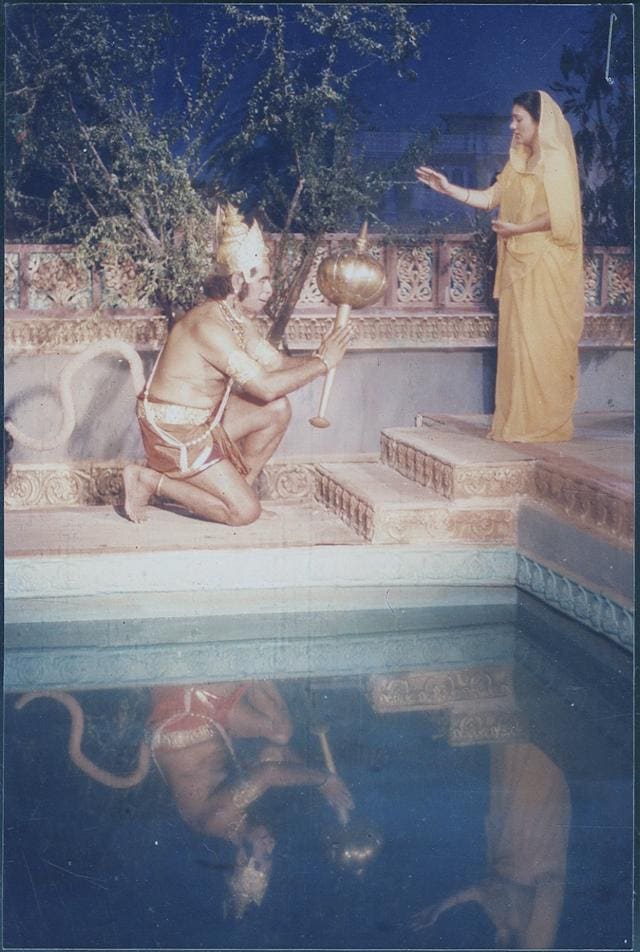
Kashyap is especially perceptive in analysing the limitations of India’s secular intelligentsia during this period. Conferences multiplied. Essays were written. Resolutions were passed. Yet mass politics moved elsewhere, into televised religiosity, symbolic grievance, and populist mobilisation. The arrival of serials such as Ramayana transformed the emotional scale of persuasion. Academic rebuttals could not compete with mythology entering millions of homes every Sunday morning. At the same time, the author recovers a more nuanced position through the interventions of historian Majid Siddiqui, whose work resisted the polarities that increasingly came to dominate the debate.
The book also carefully documents the selective silences of intellectual life during the Shah Bano controversy and the Rushdie affair. Kashyap examines these episodes with considerable care, showing how sections of the liberal intelligentsia often struggled to confront minority conservatism with the same confidence they reserved for majoritarian politics. Importantly, he avoids polemical triumphalism. His tone remains analytical even when critical.
Many sections such as these give the book unusual moral depth because the author refuses the temptations of retrospective heroism. He examines not only what historians said but also what they chose not to say.
This balance constitutes one of the book’s greatest strengths. Kashyap neither romanticises historians nor demonises them. He takes them seriously enough to criticise them honestly. The result is a work that does far more than document controversies over history. It explains why history in India repeatedly becomes combustible. The past here is never inert. It functions simultaneously as emotional capital, political resource, civilizational claim, and moral inheritance.
The prose is elegant without becoming ornamental. Kashyap writes with archival discipline but also with considerable narrative instinct. Newspaper archives, memoirs, conference proceedings, letters, speeches, and institutional records are woven together into a remarkably readable account. One senses throughout the patience of a historian who has spent years in archives, but also the awareness that history must survive beyond seminar rooms if it is to matter in public life.
By the end, one realises that Kashyap has written not simply a history of historians, but a parallel political history of the Indian republic itself. Through disputes over textbooks, archives, communalism, censorship, television, religion, and nationalism, he traces the gradual erosion of intellectual authority in public life and the emergence of new claimants to historical truth.
At a moment when every ideological camp seeks possession of the past, Who Owns the Past? returns us to a more difficult proposition: history is not an inheritance to be owned, nor a weapon to be wielded, but an argument that must be continually renewed. Evidence may not always prevail, and historians may not always persuade, but without the discipline of historical inquiry, a society eventually becomes captive to memory, sentiment, and power alone. Kashyap’s achievement lies not in resolving that tension but in compelling us to confront it. That is a rarer accomplishment than advocacy and a more enduring one than polemic.
Ather Farouqui holds a PhD from Jawaharlal Nehru University and serves as General Secretary of Anjuman Taraqqi Urdu [Hind], New Delhi.


