
 E-Paper



Power Crisis: Renewable sources helping Karnataka tide over coal deficit
Karnataka meets over half of its energy requirements through renewable sources and is also the country’s highest seller in this category, data shows.

 Prefer HTon Google


Higher generation of power from renewable sources and better diversification of energy, as compared to some states has helped Karnataka tide over the coal crisis in the country, government data shows.
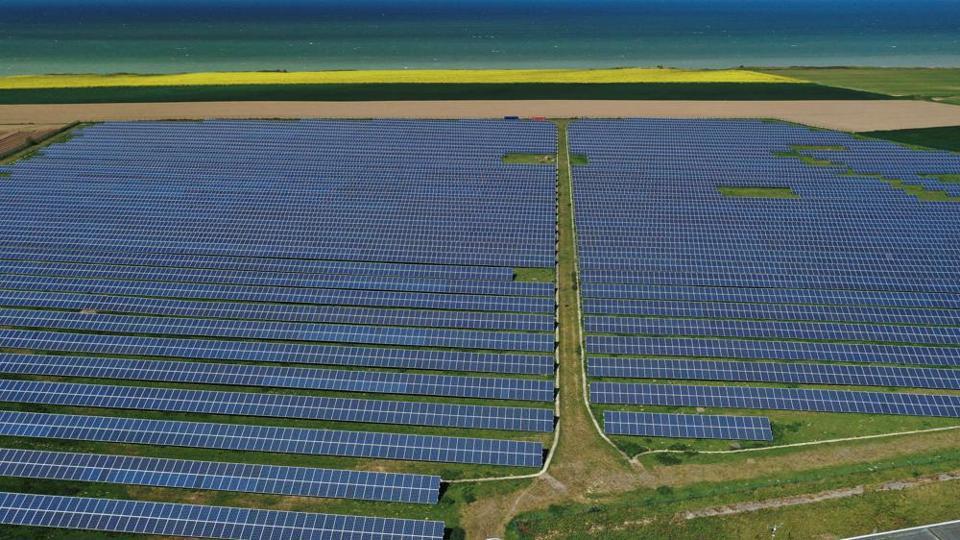
Karnataka meets over half of its energy requirements through renewable sources and is also the country’s highest seller in this category, data shows.
According to data from the energy department, renewable energy accounts for 52% of the state’s power needs, followed by thermal, hydro and nuclear at 34%, 12% and 3%, respectively.
“The 52% is of the realisation out of the total installed capacity,” G Kumar Naik, additional chief secretary to the energy department told HT.
The increased capacity building has helped Karnataka achieve its highest-ever annual generation of 32,503 MU this FY 2021-2022, as against the previous record of 29,784.72 MU during the year 2014-15, data shows.
The increasing generation of renewable energy has brought down the state’s dependence on coal-generated power for consumption which has turned into a huge crisis in several states like Uttar Pradesh, Andhra Pradesh, Jharkhand, Uttarakhand, and Madhya Pradesh, among other places, where power outages have increased.
The Prime Minister Narendra Modi-led Bharatiya Janata Party (BJP) central government has said that there is no coal shortage, but insufficient availability of rail rakes to move coal has resulted in under-utilization of electricity generation capacity of thermal power plans.
The ongoing war between Russia and Ukraine has also led to some pressure on prices as the latter is the third highest exporter of coal globally.
In over 105 thermal power plants across the country, coal stock has fallen below 25%, and in over 50 plants, below 8%, HT reported on April 26.
In comparison, Chhattisgarh’s dependence on coal is about 91%, while Delhi’s stands at 86%, West Bengal at 82%, Uttar Pradesh at 72% and 66% in Maharashtra, according to data shared by the Karnataka energy department. Karnataka’s dependency on coal is about 34% currently.
“If I (Karnataka) can bring down the (dependence on) thermal from 65% to 45%, that 20% which I am bringing down can be sourced from renewable energy,” the official added.
The southern state, which has seen the reopening of offices in almost all the big corporations located in Bengaluru, had achieved an all-time peak load of 14,818 MW on March 18 and the highest consumption in million units at 285 MU a day before.
However, there are challenges with over-dependence on renewable energy without adequate storage, leaving most of the sources at the mercy of nature and its variations.
“Renewable energy is a factor of what is available in nature. If the wind is blowing substantially during monsoons, that is when we get a lot of wind energy, in terms of a few thousand MW, and the installed capacity will be realized by almost 80%. But it is not so throughout the year, but that is the nature of renewable energy,” Naik said.
He said that there are days when wind energy has given as much as 2500 MW in a single day and sometimes just 400-500 MW, making it not the most reliable source unless there is enough storage.
The climate variations in Karnataka swing between extremes from floods to droughts, adding to the rural distress in the southern state where most of any government’s attention has been on Bengaluru.
Consumption for agriculture accounts for 31061 MW or 42% of all energy in the state, followed by industries and commercial enterprises at 22455 or 31%. Domestic consumption accounts for 21% or 20449 MW, data shows.
Karnataka is also the highest seller of green energy in the country at 2857.14 Million Units, followed by Telangana at 527.29 MU.


