
 E-Paper



4 years on, ₹650-cr Buddha Nullah revamp project yet to find its feet
Recently the Punjab governor visited the site where (Rajya Sabha) MP Balbir Singh Seechewal installed the temporary set up at Gau Ghat location and now domestic waste drain is directly going into the pipes which connect to the STP Jamalpur.

 Prefer HTon Google


Despite repeated reports, inspections and visits by cabinet ministers, the Punjab governor and the Jal Shakti Board, the much-hyped Buddha Nullah rejuvenation project has made little tangible progress. Key issues, such as the operation of common effluent treatment plants (CETPs) and establishing an irrigation path for waste discharge, remain unresolved. Meanwhile, dyeing units, electroplating businesses and dairy farms continue to violate environmental norms unabated.
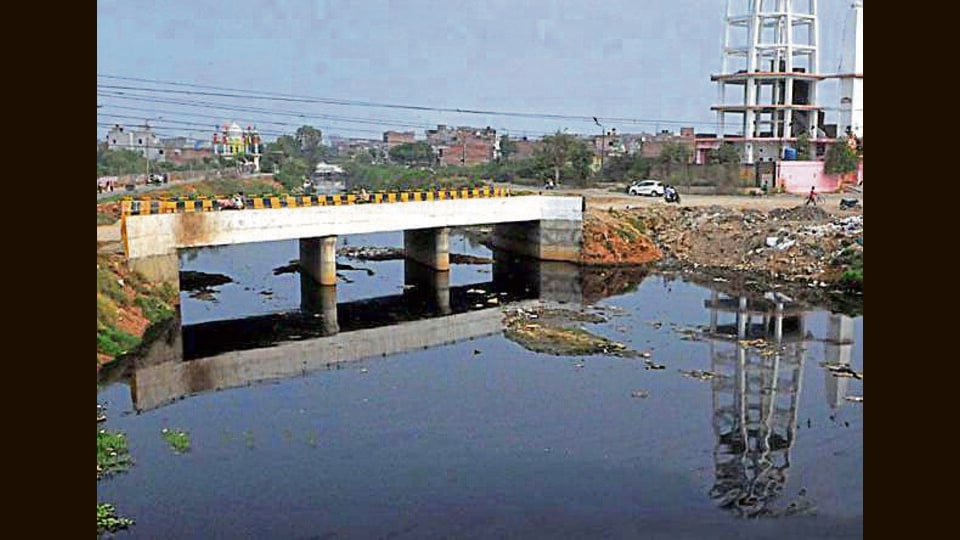
Recently the Punjab governor visited the site where (Rajya Sabha) MP Balbir Singh Seechewal installed the temporary set up at Gau Ghat location and now domestic waste drain is directly going into the pipes which connect to the STP Jamalpur. The governor also asked for a monthly meeting and report on this issue. Similarly, several ministers, Punjab Development Commission, chief secretary Punjab, cabinet minister of local bodies department and Jal Shakti Board members have been asking after and taking reports on this issue.
Officials from the municipal corporation, Punjab Pollution Control Board (PPCB), and drainage department have yet to take firm action against the violators. Insiders allege political pressure is obstructing enforcement efforts, leaving Ludhiana’s polluted drain a persistent environmental and health hazard.
The Buddha Nullah’s revival, critical to improving Ludhiana’s ecological health, has been delayed for decades. Despite spending hundreds of crores of rupees and setting up infrastructure like sewage treatment plants (STPs) and CETPs, the drain remains heavily polluted. Environmentalists claim the efforts so far have yielded negligible results.
The situation is dire near Wallipur village, where the polluted waters of Buddha Nullah merge with the relatively clean Satluj River, vividly displaying the environmental crisis. Farmers and residents living along the drain report suffering from chronic health issues, including hepatitis and severe skin conditions.
Raghvir Singh, a farmer from Wallipur, lamented, “I’ve seen this pollution for 40 years. Governments come and go, but nothing changes. Despite spending crores, the Nullah remains the same.” Another villager, Balkar Singh, added, “No medical camps have been organised to help us. We are suffering, and nothing has improved.”
The issue has been a recurring political talking point. In 1996, the Satluj Action Plan proposed setting up three STPs in Jamalpur, Bhattian and Balloke. While these facilities were eventually built, their capacity is insufficient to handle Ludhiana’s sewage load.
In December 2020, the Congress-led state government launched a ₹650-crore Buddha Nullah rejuvenation project with much fanfare, aiming to transform the drain into a clean water body called “Buddha Dariya”. However, four years later, officials claim 99% of the work is complete, yet residents and environmentalists see no improvement.
Deputy commissioner Jitendra Jorwal acknowledged the challenges, emphasising the need for a multi-faceted strategy. “Following directions from the chief secretary, a team from IIT Roorkee and another research group have been tasked with conducting a detailed study. Sampling will be done every 15 minutes to identify pollution sources and ensure no leakage points are missed,” he said.


