
 E-Paper



After high court junks flyover, Chandigarh looks at underground mobility solutions
The shift comes in the wake of a sweeping ruling by the Punjab and Haryana high court, which struck down the Tribune Chowk flyover, one of the city’s most high-profile decongestion projects

 Prefer HTon Google


Even as the fate of Tribune Chowk flyover hangs in balance following Punjab and Haryana high court’s orders, the UT administration has started exploring an alternative solution to address the city’s growing traffic issues – a mobility solution that runs beneath, not above, the city roads.
In what officials describe as a new step toward reworking the city’s traffic strategy, the engineering wing has floated a tender to undertake topographical surveys and digital mapping for a network of proposed vehicular underpasses across some of Chandigarh’s busiest junctions.
The shift comes in the wake of a sweeping ruling by the Punjab and Haryana high court, which struck down the Tribune Chowk flyover, one of the city’s most high-profile decongestion projects, holding that it violated the Chandigarh Master Plan (CMP)-2031.
Terming the Master Plan “inviolable”, the court said its provisions are mandatory and can only be altered through a formal statutory process. It underscored that flyovers are not recommended anywhere in the city due to “heritage considerations.”
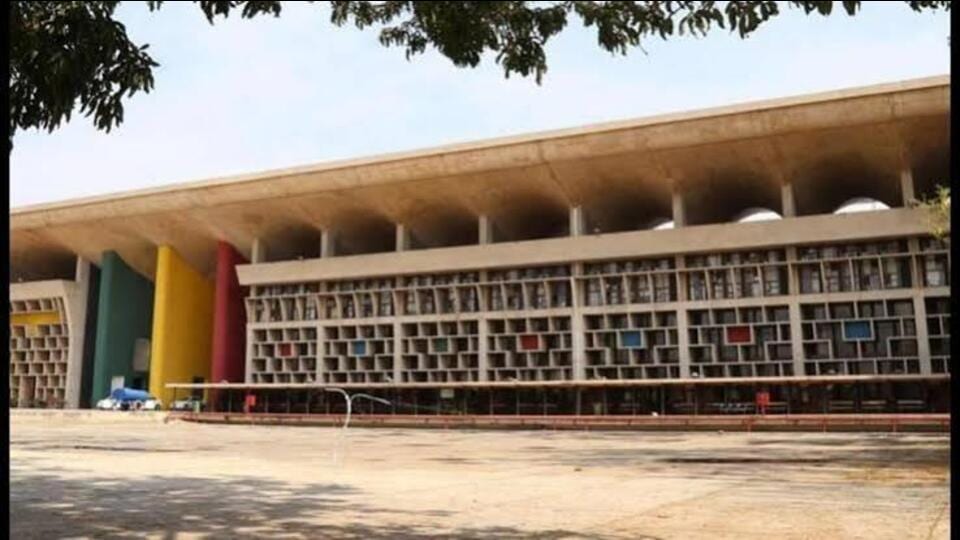
In a strongly worded observation, the bench of chief justice Sheel Nagu and justice Sanjiv Berry noted that Chandigarh remains “the last well-planned city” in the country, built on the foundational principles of architect Le Corbusier, principles that prioritise non-motorised transport over vehicular expansion.
Compatibility with city’s low-rise character
Against this backdrop, the UT’s latest tender signals a shift toward sub-surface traffic solutions, seen as more compatible with the city’s low-rise, design-sensitive character.
According to the tender, the survey will cover multiple high-traffic corridors and junctions, including Housing Board light point, key stretches of Madhya Marg and Purab Marg, Sector 22/21 dividing road and junctions near Sector 26 grain market and Elante Mall.
More specifically, the proposed study spans Junction 21 to Junction 42 on Madhya Marg, including the Sector 7-Sector 26 mandi stretch, Junction 25 to Junction 28, connecting Udyog Path near Parkview Hotel to Sector 20, Junction 27 to Junction 34, covering the Inter-state bus terminus-17 to Sector 22-35 roundabout corridor.
The work involves detailed topographical surveys and digital mapping to assess feasibility, alignment constraints, and engineering challenges for underpasses at these locations.
Officials familiar with the process said the surveys will document ground levels, right of way, and underground utilities including water pipelines, sewerage networks, and power lines, all of which have historically complicated infrastructure projects in the city.
A problem long in the making
The renewed focus on underpasses comes against the backdrop of warnings embedded within the Master Plan itself. Prepared nearly a decade ago, the CMP-2031 had flagged that the city’s transport system was already nearing saturation. Major corridors such as Madhya Marg, Dakshin Marg, Vikas Marg, Vidya Path, Himalaya Marg, Purv Marg and Udyog Path were identified as future congestion hotspots.
Even then, traffic data showed the system under strain. Madhya Marg had a volume-to-capacity (V/C) ratio of 1:2 and Udyog Path stood at 1:1. Both figures exceeded their designed carrying capacity, a signal that demand had outpaced infrastructure.
Crucially, the plan had concluded that most arterial roads had already been widened to their practical limits, leaving little room for further expansion, a constraint that now complicates any surface-level solution.
The missing piece: Public transport
More than 15 years after the Tricity Metro was first proposed, the project continues to hover in uncertainty. With the UT administration dragging its feet on a decision, the cost of the long-pending Tricity Metro project has climbed to nearly ₹25,000 crore, up from ₹23,263 crore in February 2025, according to RITES. The rising financial burden has only deepened policy indecision.
According to RITES, the Metro will reduce road traffic congestion, accidents and pollution. The maximum expenditure is expected on alignment and formation ( ₹6,256 crore) and station buildings ( ₹4,941 crore), followed by rolling stock ( ₹1,264 crore), traction and power supply ( ₹1,598 crore), signalling and telecommunication ( ₹1,523 crore), maintenance depots ( ₹559 crore) and permanent way for mainline and depots ( ₹874 crore).
Meanwhile, other mobility reforms recommended by experts, including a comprehensive parking policy, scientific parking management, park-and-ride systems, and Bus Rapid Transit System (BRTS), have also remained largely on paper.
Other projects in limbo
The uncertainty extends beyond the Tribune Chowk flyover. The PGI-Sarangpur flyover, a ₹90-100 crore project aimed at easing congestion on the PGI-Khuda Lahora corridor, had recently secured planning clearances and was moving toward DPR and tendering stages. Now, with the high court’s observations casting doubt on the permissibility of flyovers, its future too remains unclear.
At the same time, officials said the administration is awaiting guidance from the Ministry of Road Transport and Highways (MoRTH) on whether to challenge the high court ruling in the Supreme Court.


