E-Paper



Why can't Delhi trace half of its dengue patients?
Despite declaring dengue as a notifiable disease under "Epidemic Diseases Act", here's why Delhi cannot trace half of its dengue patients

 Prefer HTon Google


New Delhi: The weekly count of dengue cases in the capital has started to rise, with close to 40-50 cases now being reported over the last two weeks against an earlier level of 5-15 per week. Despite the disease being declared as a "notifiable disease" under the Epidemic Diseases Act, a majority of dengue cases remain "untraceable".
According to the latest vector-borne disease report issued by the anti-malaria operations headquarter of the Municipal Corporation of Delhi (MCD) on September 12, 2022, the city has so far witnessed 295 dengue cases out of which 156 cases — around 52.8% — are classified as "untraced after investigation" — meaning it is unable to locate the address or locality from where the case emerged.
A senior municipal official from the public health department said that the problem of "untraced cases" acts as a hurdle in the fight against the mosquito-borne disease, defeating the purpose of the order issued by the Delhi government to declared the disease as a "notifiable disease" in the city.
On October 14, 2021, the Delhi government made dengue a notifiable disease under the Epidemic Diseases Act, making it mandatory for all hospitals and healthcare institutions to report any case that they receive to the government.
According to the Delhi Prevention and Control of Vector Borne Disease Regulations, 2021 the data provided by the hospitals will be used to map out regions where the diseases are spreading and declare them an “infected” or “threatened” area for targeted mosquito control measures.
Dengue surveillance in the city
While the notification improved the number of cases being reported by the various health care institutes, the tracing of these cases remains problematic. A senior MCD official explained that the municipal body was earlier using a sentinel surveillance system under which 36 major hospitals used to share data on dengue, malaria and Chikungunya cases on a weekly basis with the malaria operations headquarters. "This count has gone up more than 5 times. Now more than 180 hospitals and clinics are sharing the disease data on the portal run by the health services department," the official explained. However, the data remains faulty with a large proportion of cases not having any specific address or contact number of the patient.
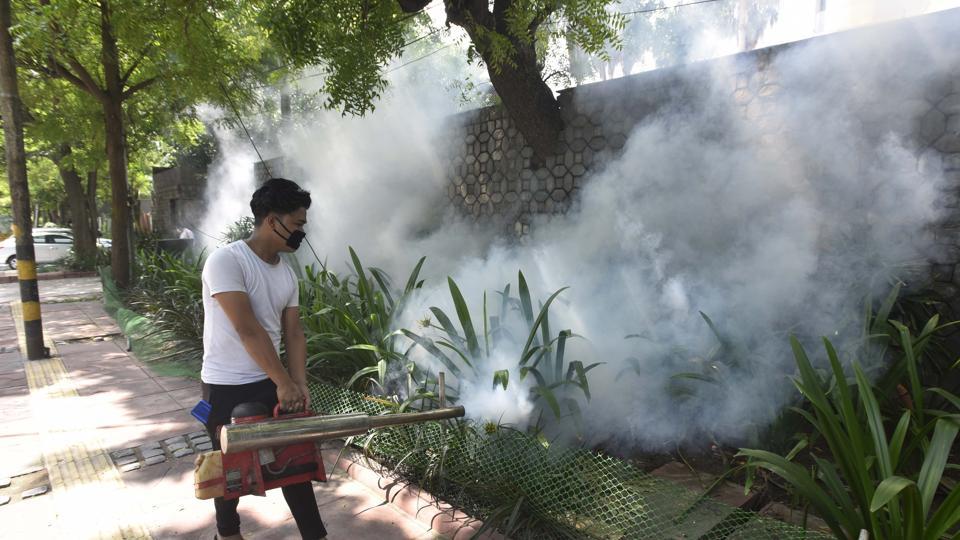
In the majority of cases, the addresses are untraceable. "For instance, if the data says Ram Singh from Burari but does not provide any contact details or specific address, our field workers can't conduct concentrated anti-mosquito activities such as fogging, larvicide sprinkling or IEC awareness activities in the affected area," another official at the anti-malaria headquarters explained.
Untraceability: long-standing problem
The problem of untraceable dengue cases is not new and Delhi has so far been unable to tackle this flaw in its mosquito-borne diseases control strategy. Similar, poor rates of traceability of dengue cases have been observed over the last 5 years. Last year, Delhi recorded 9,613 dengue cases and 23 fatalities, making it the second worst annual outbreak on record. The municipal records show that around 1/3rd of these cases (2,971 out of 9,613 ) were marked as untraced.
In 2020, 15.57% (167 out of 1,072 cases) of reported dengue cases were untraceable while 47.34% of dengue cases (964 out of 2,036) were marked untraced in 2019. The lack of supporting data makes it difficult for the field staff to undertake mosquito control activities in vulnerable hotspots from where a cluster of dengue cases may be emerging.
The civic official says that reminders have been sent to hospitals, the department of health services and the National Vector borne disease control programme red flagging the issue. "Hospitals have been requested to notify the confirmed cases within 24 hours along with accurate information such as patient details, residential address, and contact number. Delhi government's health department is also starting a new portal for collating the disease-related data and we hope that it will help in the gradual decline of untraced cases," an official added.
Vulnerable period: Rise in cases starts in Delhi
Delhi reported a spike in the number of dengue cases in the week that ended on September 10, 2022, when 51 cases were reported. The city had reported 39 dengue cases in the preceding weekly cycle ending on September 4, 2022. Last month, the number of cases per week varied between 5 to 16 dengue cases. Delhi had registered 16 cases in the weekly cycle ending on August 27; and 11, 4 and 5 dengue cases in the preceding three weeks.
September and October are considered to be the most vulnerable months for dengue cases in the city, an official explained. The five-year data on the detection of mosquito breeding shows that the weekly count of mosquito larva detection peaked between the 32nd and 38th week of the year — with September witnessing maximum detection. The peak of mosquito-borne diseases case distribution in 2016 was around the 35th week, in 2017 it was between the 32-33rd week; in 2018 it was the 35th week; in 2019 it was between the 35-36th week while it peaked between the 37-38th week in 2020, the analysis by public health department shows.
Distribution of mosquito breeding sites
Besides monitoring the dengue cases, the public health department is also tasked with checking the mosquito breeding sites and destroying the mosquito larvae. The domestic breeding checkers have detected 1,05,976 positive mosquito breeding sites during this year — out of which 8,994 sites have been detected in the last week alone. Analysis of mosquito breeding data shows that peri-domestic containers — such as moneyplant vases, flowerpots, bird pots, tin, tyres, fountain water — account for the largest chunk of mosquito breeding sites (38%). The domestic water storage containers (drums, buckets, jerrycans, etc) which are usually used in water-stressed regions account for the second-highest share of sites (33%). Desert coolers — which find significant usage in Delhi's arid weather over summers — and overhead tanks come third and fourth, respectively.
The contribution of each category keeps varying through the year. While domestic water storage containers and desert coolers are the largest contributors in the summer, peri-domestic containers assume a larger proportion in the ongoing monsoon season, the corporation analysis report says. A senior public health official advised that people should not allow water to stagnate in their surroundings and clear the indoor water containers on a regular basis.