
 E-Paper



Delhi govt ramps up Covid Health Centre beds capacity to around 17 times
While CHCs cater to patients with symptoms ranging between moderate and severe, the CCCs are supposed to isolate patients with mild symptoms.

 Prefer HTon Google


With the city reporting an average of 2,652 cases every day over the past one week, the Delhi government is working to augment bed capacity in its Covid health centres (CHCs) in order to ensure that maximum hospital beds can be kept free for critical patients.
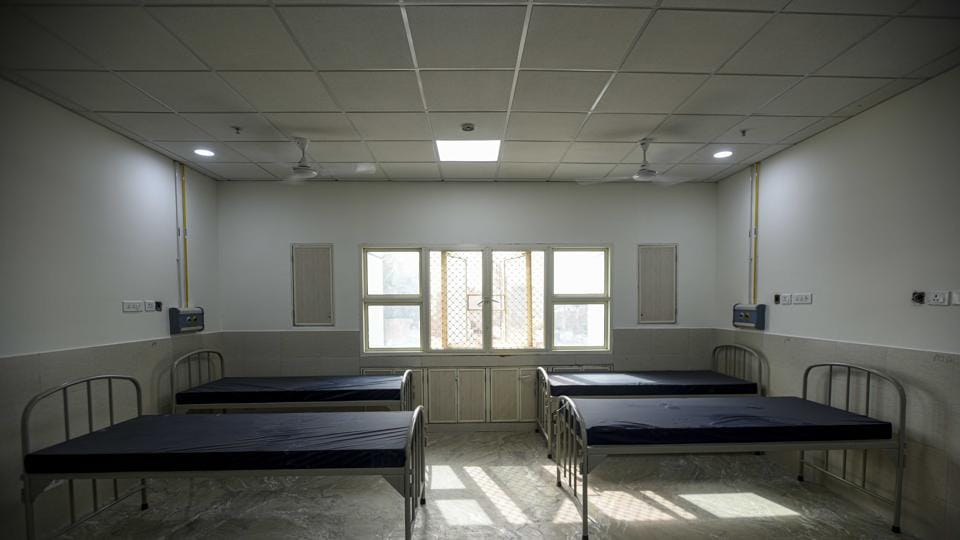
In order to achieve the task, a rearrangement of beds from Covid care centres or CCCs was being done and, according to officials, the government has reduced capacity of its 10 Covid care centres (CCC) by more than 93% to enhance the bed capacity in its CHCs to around 17 times.
While CHCs cater to patients with symptoms ranging between moderate and severe, the CCCs are supposed to isolate patients with mild symptoms. The CHCs are required to have beds with oxygen facility, dedicated team of doctors, nurses and paramedics working in shifts, tie-up with a nearby Covid-19 hospital for assistance and at least one dedicated ambulance with oxygen support, among other requirements drafted by the Union health ministry, senior government officials said.
With Covid-19 patients who have mild or no symptoms no longer needing mandatory institutional quarantine after the revision of an order to this effect by the Lieutenant Governor (L-G) on Saturday, the government has embarked on its plan to rearrange beds from CCCs to CHCs. The rearrangement of beds had stopped soon after the L-G’s order on Friday but was restarted on Saturday soon after a revised order was issued.
Senior government officials said bed capacity at CCCs will also be enhanced in the days to come as the government acquires more banquet halls, sports complexes, etc – facilities that may not be suitable for being converted into CHCs.
The CCCs are simple isolation wards with beds without oxygen support, they have nurses and paramedics deployed, and health officers visit the centres every day to check on the health status of those lodged. Doctors are kept in the loop only for emergencies.
Most patients lodged in the CCCs are individuals who do not have the facility of a separate room for isolation in their residence or those sharing the residence with elderly people, pregnant women or relatives with co-morbidities, said a senior government official.
Other than the 10 CCCs, which are managed by the government and are free, several hotels in the city have also been offering paid isolation facility to Covid patients with mild symptoms.
WHAT’S THE REARRANGEMENT?
According to Delhi government records, till Saturday, when the rearrangement was finalised, Delhi had 5,974 beds spread across 10 Covid care centres – the infrastructure ranged from a hotel and a community centre to several unoccupied apartments under different government agencies. The Capital also had 344 beds spread across three Covid health centres – one of them an Ayurveda college, one a hospital and the other a dharamshala.
Before the rearrangement on Saturday, less than 20% beds in the 10 CCCs were occupied, compared to more than 40% beds occupied in the three CHCs, the records showed.
“With the home isolation management system working fine, the occupancy percentage of Covid care centres in the city dropped. Most of them are patients with mild symptoms who do not qualify for home isolation for some reason or the other,” said a senior official in the Delhi health minister’s office.
After the rearrangement on Saturday, government records showed, the Capital now has 344 beds spread across the same 10 CCCs as large parts of them have been separated, upgraded in terms of infrastructure requirement and converted into CHCs. So, now there are 13 CHCs in the city in total, including the three which already existed earlier. The CHCs cumulatively have as many as 5,909 beds.
WHY WAS IT DONE?
“The rearrangement was necessary because, in the days to come, the city will need more beds in Covid health centres so that more hospital beds can remain free for severe patients. And not all temporary facilities in sports complexes and banquet halls will be suitable for being converted into CHC. So, those can be turned into new CCC facilities,” said a senior official in the Delhi health minister’s office.
He further said, “At this stage, we have adequate oxygen facility and all required resources available with us to run Covid health centres with augmented capacity.”
The official further said, the rearrangement exercise was in the final stages but it had to be stopped on Friday evening when the L-G issued an order making five days of institutional quarantine mandatory for all individuals who test Covid-positive. The Aam Aadmi Party (AAP) government protested against the order and, on Saturday, Baijal rolled it back.
“The government wasted no time and finalised the rearrangement on Saturday night. The patients with some symptoms were moved to the CHCs for the remaining period of their quarantine and around 10% of them who have no symptoms are still in the CCCs with few days of quarantine left,” the official said.
After the rearrangement on Saturday, around 43% of beds in the CCCs are occupied against around 19% in the CHCs, the government records showed.
Jugal Kishore, head of community medicines department in Safdarjung Hospital, said: “It is a good move to augment the capacity of CHCs as long as the government can ensure that the quality of service does not drop and there is no compromise on the parameters set by the Union government. The government should also have trained staff for the CHCs. It should be treated as a semi hospital.”


