
 E-Paper



Cal HC pulls up Bengal govt for not letting 13 Bengali movie directors work for a yr
The directors include prominent figures such as Parambrata Chatterjee, Anirban Bhattacharya, Indranil Roychowdhury, Subrata Sen and Sudeshna Roy

 Prefer HTon Google


The Calcutta high court on Wednesday pulled up the West Bengal government for violating the court’s directive by holding separate meetings with a group of directors from the Bengali movie industry and the Trinamool Congress-controlled umbrella body of cine technicians accused of not letting these directors work since July 2024, lawyers who attended the hearing said.
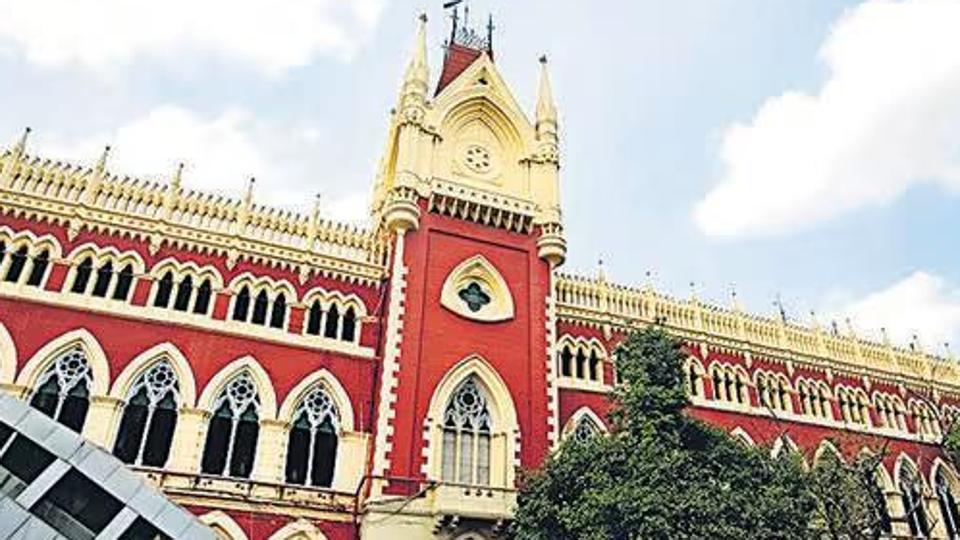
The directors include prominent figures such as Parambrata Chatterjee, Anirban Bhattacharya, Indranil Roychowdhury, Subrata Sen and Sudeshna Roy.
TMC leader Swarup Biswas, the younger brother of cabinet minister Aroop Biswas, is president of Cine Technicians’ Workers of Eastern India (FCTWEI).
“During Wednesday’s hearing on writ petitions filed by 13 directors, Justice Amrita Sinha asked former advocate general Anindya Mitra, who represented the state, why Shantanu Basu, secretary of the information and cultural affairs department held separate meetings with the petitioners and the technicians’ union,” a lawyer said, requesting anonymity.
“’Who authorised the secretary to hold separate meetings after the court directed the government to hold a meeting with all the parties?” the judge observed according to lawyers.
Also Read:Calcutta HC to hear RG Kar Hospital rape-murder convict Sanjoy Roy’s plea in Sept
The court ordered the government to hold a meeting with all the parties on July 30 and file a report during the next hearing on August 8 stating that the crisis has been resolved.
Bidula Bhattacharya, an independent director, submitted the first writ petition before the single bench of Justice Sinha in April this year, nine months after Tollywood, Bengal’s movie industry based at Kolkata’s Tollygunge, witnessed an unprecedented impasse.
Following Bhattacharya, 14 more directors filed separate writ petitions saying conditions and demands imposed by FCTWEI had affected their fundamental right to work guaranteed by the Constitution. Two of the petitioners later backed out.
On April 3, Justice Sinha said in her order that FCTWEI cannot interfere in the fundamental rights of directors and directed the secretary of the information and cultural affairs department to intervene.
The state challenged this order at the division bench of justices Reetobroto Kumar Mitra and Tapabrata Chakraborty. The state argued that it cannot be a party to a civil dispute between trade unions.
On July 2, the division bench referred the case back to the single bench.
“We deem it fit not to interfere with the order passed by the learned single Judge,” said the division bench order, a copy of which was seen by HT.
The West Bengal government held a meeting with 11 of the directors on July 16 following the single bench order. Two of the directors were out of town and could not attend the meeting.
“The meeting was called by Shantanu Basu and some officials. They wanted to know what we were facing. We narrated everything,” director Sudeshna Roy, who is also the FCTWEI vice-president and secretary of the Directors’ Association of Eastern India (DAEI), told HT.
Tollywood’s directors and actors are also FCTWEI members although they have their respective federations.
“This is the first time the government talked to us. That is only the positive aspect,” Roy, who had to call off several shootings over the past months as no technician turned up for work, said.
“All the petitioners are suffering because of the federation’s stringent rules that no trade union can make. Several producers left our projects in these 12 months. At least three producers from Mumbai have refused to work here,” Roy added.
The government held a separate meeting with the FCTWEI on July 18.
“We will attend the meeting but how can I say for sure whether the impasse will end. Does it depend on me only?” Swarup Biswas, the FCTWEI president, told HT on July 17.
“There has been no change in the scenario after these meetings. The impasse continues,” Subrata Sen, the DAEI president, said on Thursday.
No official of the information and cultural affairs department commented on the issue. The copy will be updated whenever a response is received.
The impasse started in July 2024 when FCTWEI called a strike saying Rahul Mukherjee, a young director, could not be allowed to work as director as he “violated rules” by completing the shooting of a Bangladeshi television series in Bangladesh after shooting for only four days in Kolkata.
The strike was called because the directors’ federation, which had to suspend Mukherjee for three months following FCTWEI’s decision, lifted the suspension order so that he could start shooting for another movie. FCTWEI said it had selected another person as director of that movie.
“How can the technicians’ body decide who can be a director and who cannot. This is unheard of,” national award -winning director Gautam Ghosh said on July 29,2024. Top actor Prasenjit Chatterjee, director Raj Chakraborty, a TMC legislator, and actor Deepak Adhikari, a TMC Lok Sabha member, expressed solidarity with the directors on that day.
The directors resumed work on July 31 after chief minister Mamata Banerjee met some of them and said differences with the technicians’ body should be resolved through talks. The situation, however, did not change and the directors were compelled to stop work again.


