
 E-Paper



Dr. Sunil Pandya: In memory of a teacher, a neurosurgeon, Gandhian
Dr. Sunil Pandya, a revered neurosurgeon and ethicist, passed away on December 17, donating his body for research, leaving a legacy of integrity in medicine

 Prefer HTon Google


Once he knew you well, he would send email attachments of what he thought were articles that may interest you. A one-line introduction ‘This may be of interest ’ and signed ‘Sunil’ as he urged everyone to call him. They covered a wide sweep. Last year I received a review of a new book on whistle blowers in medicine to a piece on what makes the Mumbai neighbourhood of Shivaji Park special. Around August some of us received a somewhat different email. It was an update on his health in which he described his afflictions. And soon I received a copy of Dr Sunil Pandya’s living will.
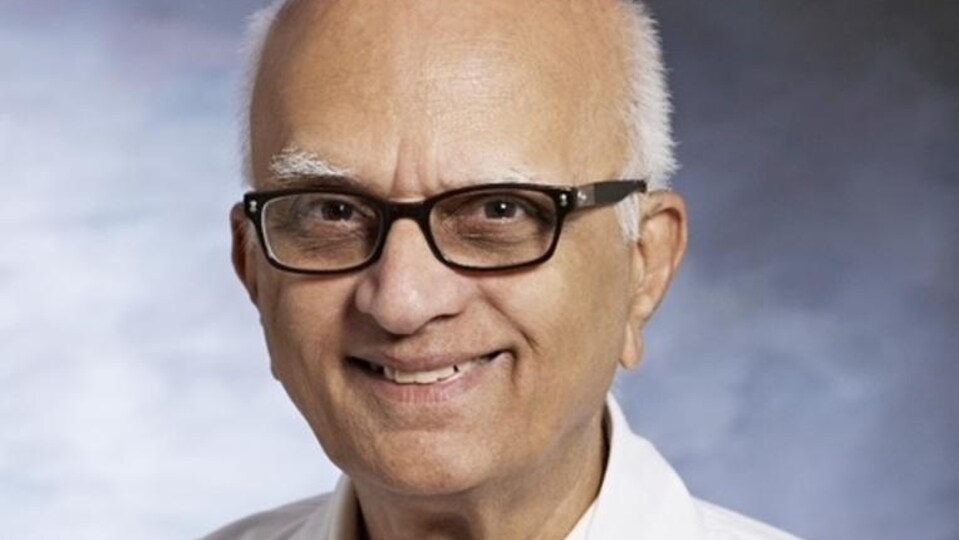
An excerpt. “ I do not wish to exist without a meaningful and productive life. I have been blessed throughout my life with rewards beyond my dreams. I have done what I can to help others. In dying I would like to continue doing so by two means. I want to donate whichever of my organs and tissues are suitable for transplantation. I wish to donate my body for dissection and research to the Department of Anatomy at GS Medical college.” Sunil Pandya passed away on December 17. His body was donated to the Anatomy Department of GS Medical. He was a neurosurgeon, teacher, book lover, writer, historian, ethicist and a Gandhian. Such compartmentalisation is necessary for the record but after his death several described him as a man in whose life the gap between what he espoused and the way he lived was the least.
Sunil Pandya completed his MBBS and MS in surgery from the Grant Medical College and then trained in London at the Institute of Neurology to come back and join the Department of Neurosurgery at KEM in 1975. I first saw him when I was a student at KEM. A figure strangely dressed in white khadi shirt and trouser, he strode the corridor inspiring awe and some fear. I can’t locate the precise moment I first met him but after being involved in the junior doctor’s movement I had developed a curiosity about his interest in ‘ethics’. In the early 90’s at a meeting at the Tata Institute of Social Sciences I heard him speak about declining values in medical practice and the need for doing something. That something took two forms. One a panel to contest elections to the Maharashtra Medical Council and the second, the launch of a small journal called ‘Issues in Medical ethics’ which later became the ‘Indian Journal of Medical Ethics’ now a peer reviewed journal in its 32nd year of publication. It has grown not only to be South Asia’s leading voice in bioethics but has also attracted attention for its policy of refusing advertisements from pharma and the health industry, a rarity in medical journals.
The early years of the journal were when I began to understand Sunil Pandya as a person and this had nothing to do with medical ethics. In its first decade he singlehandedly built the journal by spending hours late in the evenings typing away furiously on his computer in the Department of Neurosurgery office. Writing to potential authors, typesetting the pages, sending them to the printer, putting in personal money. He ensured that not a single issue was missed or late even by a day. The weekly meetings of the small group which coalesced around the journal also gave me a peek into his department. Its library, the records of all patients filed by name and disease, the late evening meetings of the entire staff, the brain cutting sessions in the mortuary and CT reading sessions in the office. This meticulousness was very different from what I saw in the rest of the hospital. A thriving academic department treating a large number of poor with high quality specialist care in a matter-of-fact way. On the day he retired from KEM at a farewell meeting after speakers had waxed eloquent about his contribution he stood up to say ‘ I did nothing special. I just carried forward the legacy of my teacher Dr Homi Dastur’.
It was not really by design that I became his colleague at Jaslok Hospital within months of his joining it in 1998 after retirement. Though I was contemplating the move for more than a year I suspect his presence did play a subconscious role. It was soon obvious to me that he was uncomfortable in the world of private medicine. Though he continued to treat a large number of patients with the same focus, empathy and effort he seemed rather aloof from the institution. As he would commute by BEST bus, I remember ward boys and nurses at Jaslok discussing with some amusement about how he was the only consultant to not own a car. He didn’t buy one till the end.
It was only a few years ago that I had a chance to see his personal collection of books at his flat in an Art Deco Marine drive building which was inherited by his wife Shubha. Last year in maybe a premonition he nudged me to start taking away some of them. I happily took away Hemingway, Rilke, Shaw. A few weeks before his death, exhausted and frail, he took me to his library opened out his book shelf and urged me to take Doctor in the House by Richard Gordon and Compassions Way by Crawnshaw. In a piece he wrote in 2006 on his influences he included William Osler and Albert Schweitzer. Several of his books have been donated to the Museum of the History of Medicine at St John’s Medical College in Bengaluru with which he had a close relationship.
A number of medical professionals reject mainstream practice choosing alternative paths away from the mainstream. Dr Pandya worked in the mainstream but chose to do things differently. He was a role model of a doctor who was not swayed by money, fame or power and who was interested only in the welfare of his patients. And yet, Dr Pandya was wildly successful in an entirely different sense. If that sounds exceptional it also says something about the direction mainstream medicine is taking. Which is today we need many more Dr Pandyas.


