
 E-Paper



Maratha quota expected to be 10-12%; lower than last time
The basis of the law will be the report of the Maharashtra State Commission for Backward Classes (MSCBC), which has termed the Maratha community “backward” and reportedly recommended a separate quota for it

 Prefer HTon Google


MUMBAI: The state government is expected to give 10 to 12 percent reservation to Marathas by enacting a fresh law in a special session of the state legislature to be held on Tuesday. The basis of the law will be the report of the Maharashtra State Commission for Backward Classes (MSCBC), which has termed the Maratha community “backward” and reportedly recommended a separate quota for it.
The MSCBC, headed by retired judge Sunil Shukre, submitted the report to chief minister Eknath Shinde on Friday morning. The government has issued an order for a state cabinet meeting on Tuesday, followed by a session of both the houses to discuss a separate law for Maratha reservation. After the MSCBC report and draft bill is passed in the cabinet, it will be tabled in the legislative assembly and council.
The law is expected to be on the lines of the Maharashtra State Reservation for Socially and Educationally Backward Classes (SEBC) Act 2018, which granted a quota of 12 percent and 13 percent to Marathas in education and jobs respectively. It was, however, quashed by the Supreme Court in May 2021.
This time around, the quota is expected to be lowered for a couple of reasons. “It may be between 10 and 12 percent, based on the Maratha population,” said a legal expert who is part of the process. “The MSCBC headed by M G Gaikwad had projected the Maratha population to be 32 percent in its 2018 report. However, this was challenged by OBC organisations, which pointed out that the commission had included Kunbis, Kunbi-Marathas, Leva Patils, Leva Patidars and Leva Kunbis, who were already part of the OBC category and collectively accounted for about 12 percent. If these communities are excluded, the Maratha population drops to 20 percent, and thus a 10 percent quota is justified.”
The legal expert added that over 60 percent of Marathas had already been included in the Kunbi category over the years and more so after 5.7 million records of families with Kunbi antecedents were found recently. “Given these facts, the reduction in the quota is inevitable,” he said.
An official said that, apart from backwardness, the report had also stated that Marathas were inadequately represented in government service, and were thus entitled to reservation.
OBC organisations and leaders, including NCP minister Chhagan Bhujbal, have expressed a fear that the Maratha community could eventually be included in the OBC category, as the court will not allow a breach of the 50 percent reservation cap laid down by the Supreme Court. However, Baban Tayawade, president of the Rashtriya OBC Mahasangh, said the fear was unwarranted. “In the absence of a recommendation by the MSCBC, no court will give any such direction,” he said.
Balasaheb Sarate-Patil, one of the Maratha quota petitioners, said, “The central government empowered the state government, through the 105th constitutional amendment, to enlist backward classes. The proposed reservation to Marathas will be according to Article 342 A of the Constitution and by following due process of review of backwardness. Thus, the Maratha community is the only one to have a ‘scientific’ backward class reservation. None of the OBC communities have been scientifically included in the OBC category. Which means that even if the government’s present quota is challenged for being above 50 percent, we will be entitled to a quota in the OBC category.”
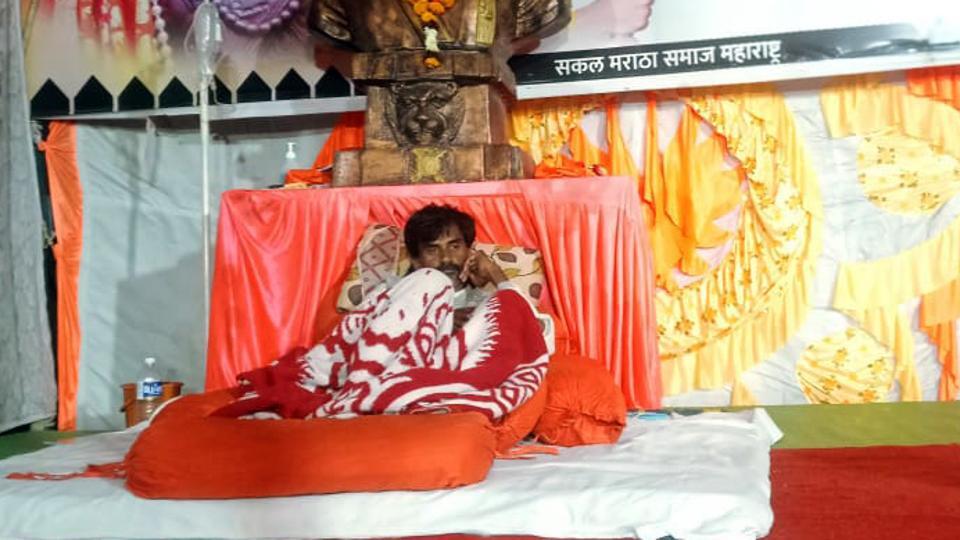
Meanwhile, Maratha reservation activist Manoj Jarange-Patil, on the eighth day of his indefinite hunger strike in Antarwali Sarati, said he would decide his further course of action on Tuesday after the government’s special session. “We have no issue with the new law, but at the same time the process of issuing Kunbi certificates to blood relatives (sage soyare) should not be stopped,” he said. “Let Marathas have all windows open. My agitation will continue until the process of issuing certificates to sage soyare does not begin.”


