E-Paper



‘Genuine efforts’: Supreme Court drops criminal cases against Samay Raina, 4 comedians
The court kept the broader issue arising from the case alive, saying it would issue directions on ensuring greater sensitivity and safeguards in online content

 Prefer HTon Google


The Supreme Court on Friday quashed criminal proceedings against comedian Samay Raina and four other comedians over insensitive remarks concerning persons with disabilities on the show “India’s Got Latent”, appreciating their subsequent efforts to organise events and raise awareness and funds for people suffering from spinal muscular atrophy (SMA).
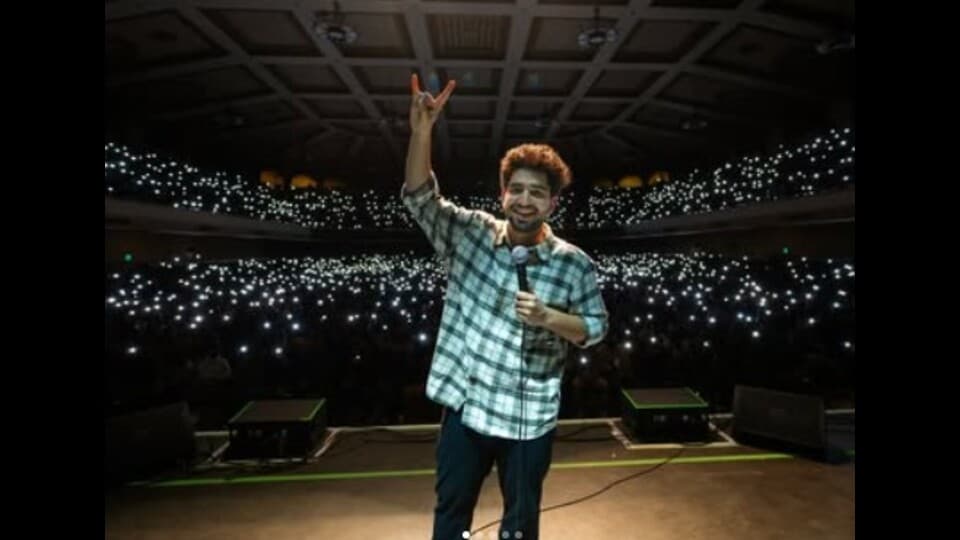
“Once there are genuine efforts, positive results are bound to be there. They are very bright youngsters. If they have started working in positive direction, there will be positive output,” a bench of Chief Justice of India Surya Kant and justices Joymalya Bagchi and V Mohana said, closing the proceedings against Samay Raina, Vipul Goyal, Balraj Paramjeet Singh Ghai, Sonali Thakkar alias Sonali Aditya Desai and Nishant Jagdish Tanwar.
The court, however, kept the broader issue arising from the case alive, saying it would consider suggestions from persons with disabilities and issue appropriate directions on ensuring greater sensitivity and safeguards in online content.
The court recorded that the five respondents organised a chess tournament for persons with disabilities from March 14 to 16 this year, which received widespread media coverage and generated awareness about organisations working for persons with disabilities, including SMA. The event also involved donations to organisations working for the cause.
Four further shows had been planned for fundraising, but could not be organised with the participation of persons with disabilities because of logistical difficulties. The respondents have now expressed their willingness to invite persons suffering from SMA and provide financial support, the court noted.
The bench also appreciated the “constructive conversation” that had taken place between the comedians and the Cure SMA Foundation, which had approached the court over the content concerning persons with disabilities.
The respondents and the NGO had discussed the structure and material for programmes aimed at celebrating the lives of SMA warriors. The respondents had expressed gratitude for the foundation’s guidance and were in the process of obtaining consent from SMA warriors for their participation, the court noted.
“We have no doubt that respondents 6 to 10 will work hard in their endeavour to organise events for celebrating the lives and increasing dignity of SMA warriors,” the bench said.
The court accordingly ordered: “Matter qua respondents 6-10 is closed. Criminal proceedings against respondents 6-10 are hereby quashed. All other related proceedings are set aside.”
The development marks a significant development from the court’s criticism of Raina and the other comedians last month, when it had imposed a cost of ₹3 lakh each for failing to comply with an undertaking given to the court.
On July 13, the bench noted that Raina had taken the court “for a ride” after he failed to comply with an undertaking to make amends for the depiction of persons suffering from SMA on online shows.
“If this is not arrogance, then we may have to change the definition of this term in the Oxford Dictionary,” the bench had said.
The court had earlier directed the five comedians to show remorse and engage with members of the SMA Cure Foundation, including by featuring them on their shows to raise funds and awareness about the condition.
They initially told the court that they had been unable to contact members of the foundation and had instead organised programmes involving other specially abled persons. The explanation had not satisfied the court at the time, prompting it to impose the costs and warn of coercive action if the amount was not deposited.
On Friday, however, senior advocate Aparajita Singh, appearing for the foundation, told the bench that there had since been genuine efforts to engage with the respondents and that discussions were underway on the proposed programmes. “Our main prayer was for the guidelines,” said Singh, adding that the foundation remained receptive to further suggestions and the process was “a work in progress”.
The bench then said that the court was confident that genuine efforts would produce positive results. The court also explained why it was keeping the larger issue open despite closing the criminal proceedings against the five comedians.
The CJI said that he had interacted with several persons with disabilities on Thursday and that the interaction had been “quite a learning and eye opener”.
“Sometimes we feel that we have a fair bit of information but that is not the truth. There are many things that we learn when we meet them and the challenges which they face,” he added.
The court asked persons with disabilities and the NGO to submit their suggestions on measures that could address the broader concerns arising from online content. “You are also going to give us a lot of recommendations. We will wait for that also and then some comprehensive directions can be issued,” it said.
The proceedings had arisen in the larger controversy surrounding the online show “India’s Got Latent”, which had earlier led the Supreme Court to examine the need for safeguards governing online content, and the balance between freedom of speech and the right of individuals and sections of society to live with dignity.
The court had previously asked Attorney General R Venkataramani to assist it on the broader question of framing guidelines to ensure that freedom of speech and expression does not infringe the right of others to live with dignity.