
 E-Paper



Hinjewadi-Shivajinagar metro phase 1 services to begin in May
Work on the corridor is progressing rapidly and services on the first stretch could start by May while the remaining section will open by July; Fadnavis said. He was speaking at the inauguration of Pune Metro Bhavan near Civil Court metro station.

 Prefer HTon Google


PUNE: Pune is likely to see expanded metro connectivity from May, with the first phase of the Hinjewadi-Shivajinagar metro corridor expected to become operational then, Maharashtra chief minister Devendra Fadnavis said on Sunday. Work on the corridor is progressing rapidly and services on the first stretch could start by May while the remaining section will open by July; Fadnavis said. He was speaking at the inauguration of Pune Metro Bhavan near Civil Court metro station.
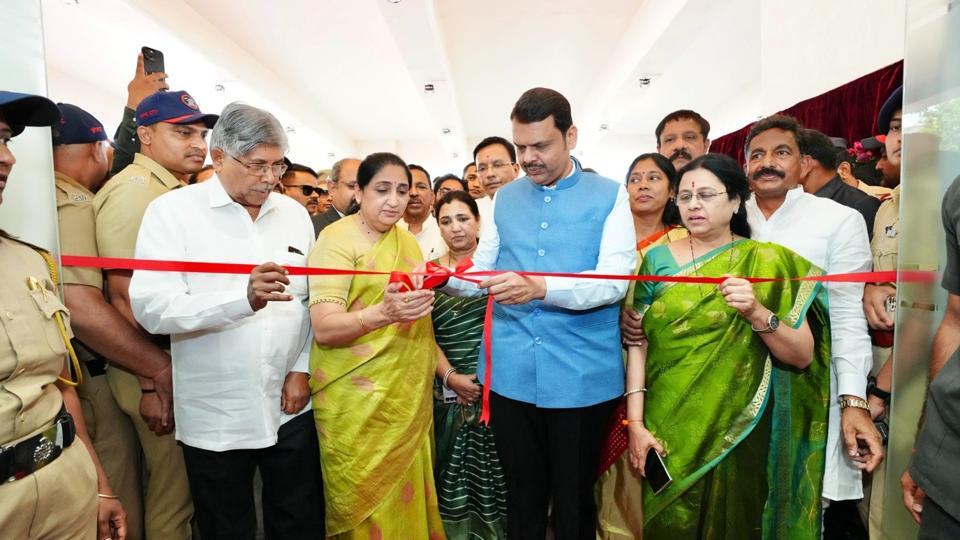
“I am very happy that today, we have inaugurated Pune Metro Bhavan. The Hinjewadi-Shivajinagar metro corridor is progressing at a fast pace. The first phase could begin operations around May and the second phase around July,” Fadnavis said.
He added that once this corridor becomes operational, Pune will have nearly 55 kilometres of functional metro network even as work on an additional 55 kilometres is currently underway across Pune and Pimpri-Chinchwad. Metro projects covering more than 80 kilometres are also in the planning stage, Fadnavis said. According to the chief minister, the long-term goal is to develop a 200 kilometres metro network across Pune, Pimpri-Chinchwad and the Pune Metropolitan Region (PMR) areas.
“A total of about 200 kilometres of metro rail is planned for Pune and Pimpri-Chinchwad. The aim is to strengthen mobility and gradually make the city’s transportation system congestion-free,” Fadnavis said. He said he had instructed officials that metro projects should be executed at a faster pace rather than being delayed due to multiple construction phases. “Work should be planned in a way that projects are completed quickly and efficiently,” he said.
According to officials, around 11 kilometres of the Hinjewadi-Shivajinagar metro corridor are expected to become operational by May while the remaining 12 kilometres may open for public use by July.
The 23 kilometres fully elevated metro corridor with 23 stations will connect Pune’s central transit hub at Shivajinagar with the city’s largest information technology (IT) cluster at Hinjewadi. The line is expected to significantly improve the daily commute for thousands of employees working in the Rajiv Gandhi Infotech Park that houses several major IT companies. Officials said that the corridor is around 94% complete with trial runs already underway on certain sections. The remaining work primarily involves finishing stations, installing systems and completing safety clearances.
The project is being implemented by the Pune Metropolitan Region Development Authority (PMRDA) through Pune IT City Metro Rail Limited, a special purpose company formed under a public–private partnership model. The consortium executing the project is led by the Tata Group and Siemens.
Once operational, the metro line is expected to ease traffic congestion along the Hinjewadi-Baner-University Circle-Shivajinagar corridor, which currently witnesses severe peak-hour traffic due to the large number of IT employees commuting to and from the technology hub.
Fadnavis also highlighted the broader importance of strengthening transport infrastructure in Pune, especially as the state seeks to attract more global investment.
“Maharashtra is the first state in the country to introduce a dedicated policy for Global Capability Centres (GCCs). In such a scenario, efficient mobility becomes extremely important,” he said. He added that the state government is committed to expanding metro connectivity to support Pune’s growth and improve urban mobility. “We are working towards making Pune congestion-free by expanding the metro rail network. Plans are also underway to develop underground tunnelling projects to ensure seamless and uninterrupted mobility in the city,” the chief minister said. According to Fadnavis, the growing acceptance of metro services among residents is encouraging. “Punekars have responded positively to the metro system. Around 25,000 passengers are using the service daily, and this number will increase significantly as more routes become operational,” he said.
Officials said further metro expansion projects are being planned in the PMR to strengthen the public transport network and improve connectivity between residential areas, employment centres and transit hubs.


