


 Live Score
 Cricket Teams
 Cricket Players
Pakistan's boycott drumbeat vs reality: Who actually funds world cricket and who just claims clout?
While Pakistan is vital for ICC's marketing, boycotts may create discomfort but lack the financial power to dictate outcomes.

 Prefer HTon Google


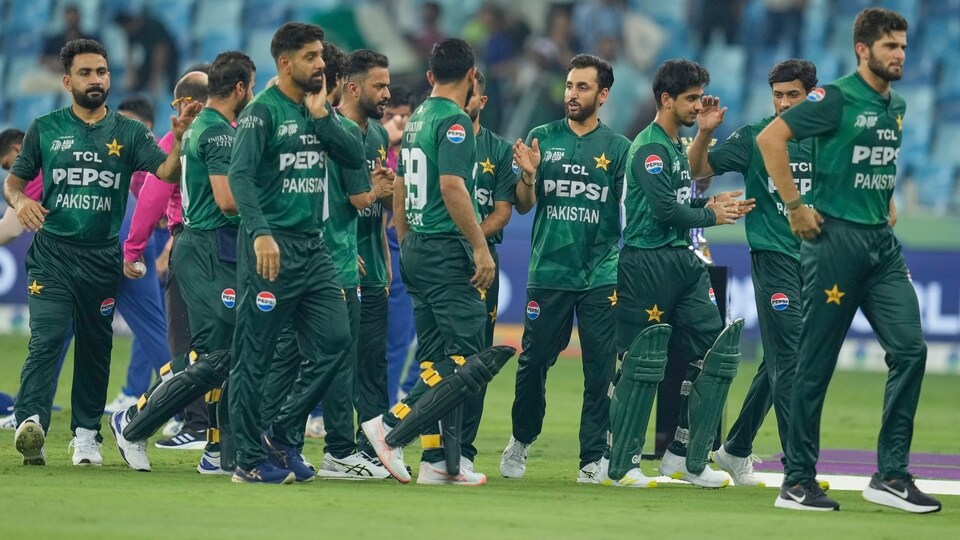
When Pakistan talks about boycotting an ICC event, it is not just a sporting threat. It is a business claim: remove us, and the ICC’s tournament economics wobble. The problem with that claim is that ICC’s own financial structure, and the published shape of its revenue model, suggest Pakistan can create disruption, not dictate outcomes.
The ICC is an events business, not a member-funded club
The ICC’s audited accounts show where its strength and vulnerability lie: global tournaments. For the year ended December 21, 2024, the ICC reported total revenue and income of $777.9 million, with events revenue of $728.5 million and a net surplus of $474 million. For 2023, it reported total revenue and other income of $904.4 million, events revenue of $839.2 million and a net surplus of $596 million. This matters because the boycott leverage is only real if it threatens the ICC’s central cash machine: the valuation and saleability of its events.
Pakistan’s share of the ICC pie is meaningful - but it is not dominance
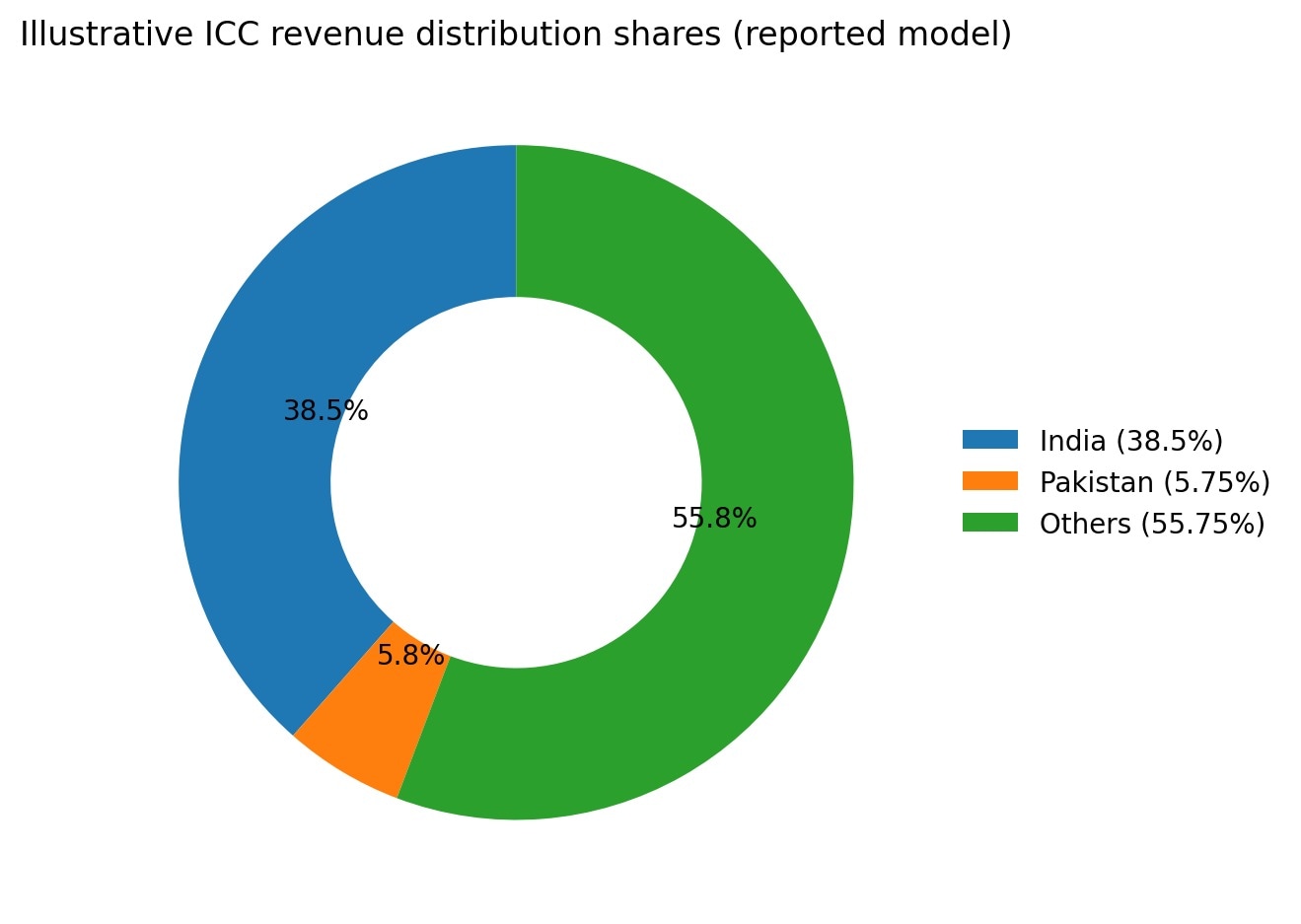
The most frequently cited “power marker” is revenue distribution. Under the widely reported distribution model for the 2024-27 cycle, Pakistan’s share is 5.75%, while India’s is 38.5%. The same reporting around the model also states India is estimated to generate around 80% of ICC revenue and that Indian-market ICC media rights for the 2024-27 cycle were acquired for $3 billion.
These numbers do two things at once.
First, they confirm Pakistan is not a fringe stakeholder - a 5.75% share is substantial in a global federation. Second, they underline the hard limit of Pakistan’s economic leverage: the ICC’s commercial centre of gravity is not Pakistan. A board that is structurally a recipient in the distribution ecosystem is not naturally positioned to hold the whole ecosystem hostage.
What Pakistan brings to the ICC
Pakistan is an important broadcast market. The ICC has confirmed Pakistan Television Corporation and Myco as its broadcast and digital rights partners in Pakistan through 2027. However, the ICC has not publicly disclosed the value of that deal. That absence of an official rights fee is crucial: without it, claims that Pakistan’s domestic broadcast market can materially shake the ICC’s annual revenues remain speculative.
The stronger, more credible argument is indirect: Pakistan’s presence enables the India-Pakistan match-up inventory that sits at the top of any ICC event’s commercial hierarchy. That single fixture is premium inventory for broadcasters and advertisers in a way few other match-ups can match.
So Pakistan’s leverage is less about what it pays the ICC as a market, and more about what it enables the ICC to sell everywhere.
Where does Pakistan’s leverage stand
If Pakistan boycotts the World Cup, the ICC would face three distinct layers of impact.
1. Product and optics
A tournament missing Pakistan is weaker competitively and noisier politically. That brand hit is real.
2. Inventory loss: the tentpole fixture disappears
The biggest commercial dent is the removal of the India-Pakistan match that typically anchors premium advertising and viewership spikes.
3. Contract reality
The ICC’s main rights deals are typically multi-layer bundled agreements. A boycott can reduce match-level value and create broadcaster/sponsor resentment, but unless contracts contain explicit rebate or contingency triggers, the cheque already signed does not get automatically rewritten. The bigger consequence is forward-looking: softer bidding behaviour next cycle, increased risk discounting, and more conservative sponsor packaging.
That is a meaningful pressure - but it is not the kind of immediate, guaranteed financial chokehold that gives Pakistan an outright authority.
The asymmetry Pakistan cannot escape
Boycotts are expensive for the boycotter too. Pakistan’s own costs rise the longer a standoff lasts: lost tournament participation, reduced global exposure, competitive fallout, and potential strain in an ecosystem where ICC distributions matter materially to member boards. Meanwhile, the ICC’s published commercial reality remains India-centric - in revenue generation estimates, in rights valuations, and in the way the event economy is priced.
This asymmetry is why boycott threats often function best as short-term political signalling rather than a sustainable economic weapon./
Verdict: Pakistan can disrupt the ICC, but it cannot dictate it
Pakistan does have leverage - largely because its presence strengthens the ICC’s most marketable match inventory. But the verified numbers that define ICC economics also set the ceiling on that leverage. With Pakistan’s reported distribution share at 5.75% against India’s 38.5% and with the Indian market cited as the dominant revenue generator backed by a $3 billion rights cycle, Pakistan’s boycott threat looks less like a power to dictate and more like a tool to create discomfort, headlines, and negotiation pressure.


