
 E-Paper



Forests: The good news and bad news
While this increase in forest cover is welcome news, there are some points of concern

 Prefer HTon Google


Last week, the Union ministry of environment, forest and climate change released the India State of Forest Report 2021 (ISFR-2021), by the Forest Survey of India. According to ISFR-2021, the total forest and tree cover is 80.9 million hectares — 24.62% of the geographical area of India. Compared to the 2019 assessment, there has been an increase of 2,261 sq km in the total forest area and tree cover.
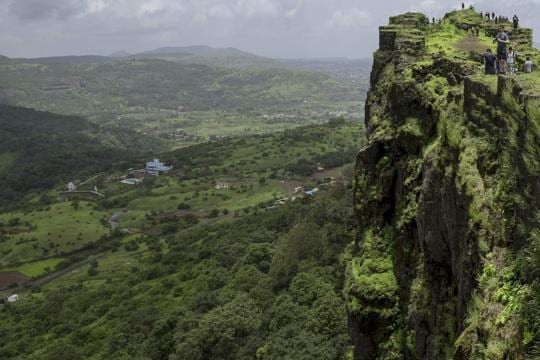
While this is welcome news, there are some points of concern. One, India is not adding to the dense forest (with tree canopy density of 70% or above) and the country has more forest cover with tree canopy density in the range of 10% to 40%. Two, the Northeastern states have lost 1,020 sq km of forest in the last two years and there has been a decadal decline in forest cover across the 52 tiger reserves and the lion conservation area (Gir). Three, there has been an increase in forest loss in the Himalayan states. Four, India reported 345,989 forest fires (November 2020-June 2021), the highest recorded for this period. For the first time, ISFR maps the impact of the climate crisis on forests and estimates that by 2030, 45%-64% of Indian forests will be affected by it.
Forests are the biggest terrestrial carbon reservoirs, but become a source of CO2 and other greenhouse gases if they are destroyed. As India mulls changes to the Forest Conservation Act, 1980, to accommodate development projects, the report provides a picture of the challenges, and what could be the impact of destroying pristine forests that are critical to meet India’s Nationally Determined Contributions on creating an additional carbon sink of 2.5-3 billion tonnes of carbon dioxide equivalent through additional forest and tree cover by 2030.


